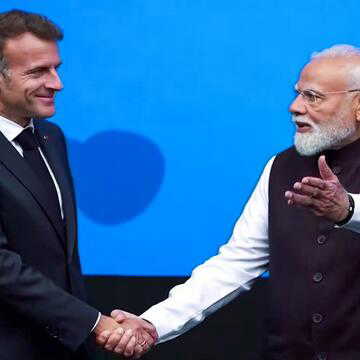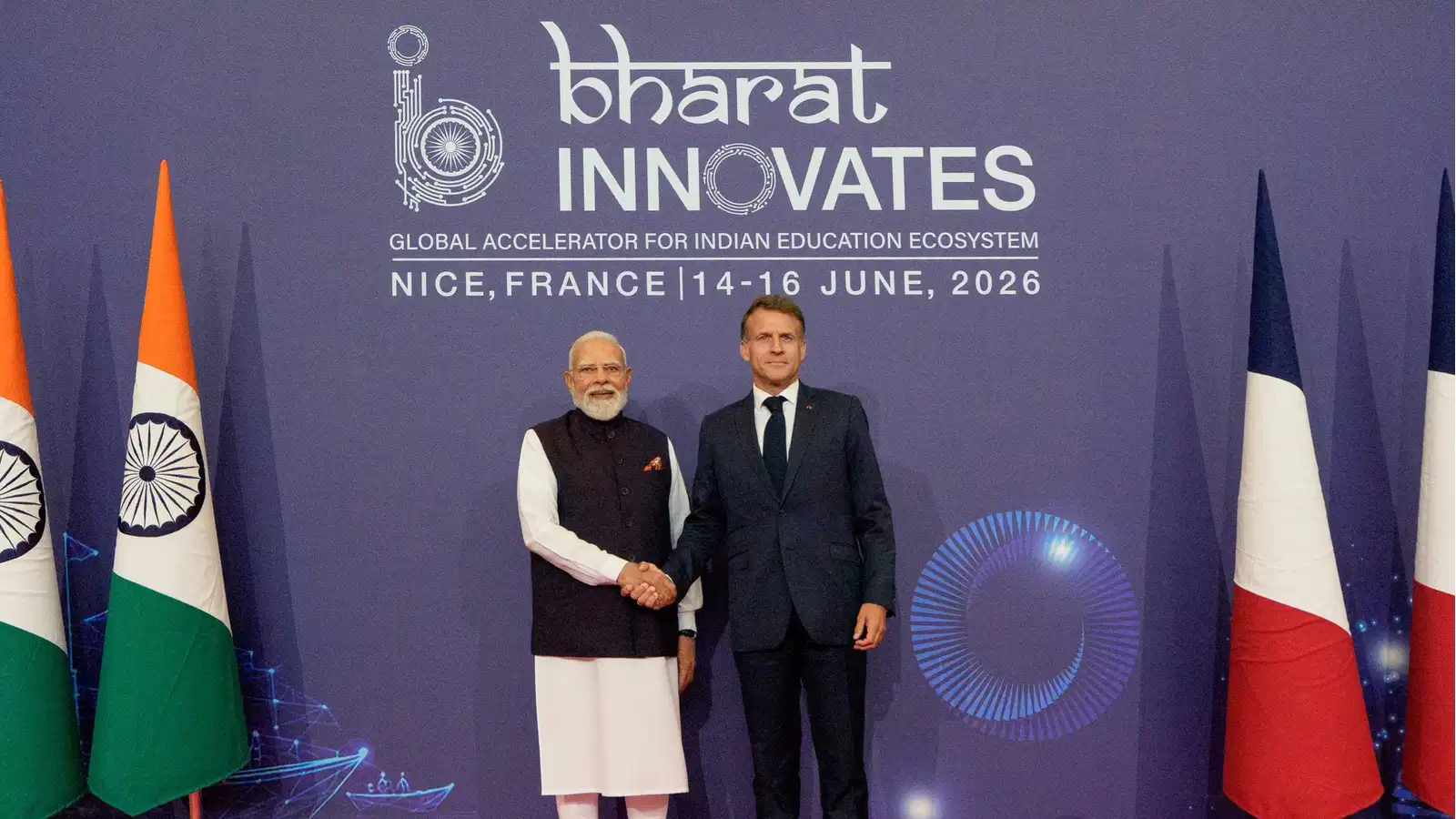
India and France have set an ambitious target of doubling bilateral trade from the current level of nearly $16 billion within the next five years. The decision was taken during talks between Prime Minister Narendra Modi and French President Emmanuel Macron in Nice, where the two leaders reviewed cooperation across key sectors and discussed major global developments, including the conflicts in Ukraine and West Asia.
The meeting took place at Villa Kerylos after the two leaders jointly inaugurated Bharat Innovates 2026, an initiative designed to connect Indian deep-tech startups with global investors.
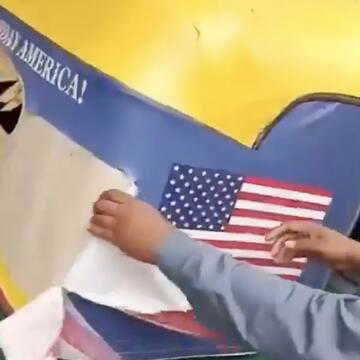
Also Read | Trump posters torn down in Delhi as anger grows over deaths of Indian sailors
Following the talks, Modi described the discussions as “exceptionally productive”.
“India and France will keep working together to boost economic ties. The India-EU FTA provides unparalleled momentum in this regard,” Modi said. “We are also launching an Economic Security Dialogue to ensure stronger supply chains in critical minerals and technology.”
Here are highlights from Nice…a great start to my France visit.
— Narendra Modi (@narendramodi) June 15, 2026
May the India-France friendship keep getting stronger.@EmmanuelMacron pic.twitter.com/2GMFQDhecE
Trade, innovation and economic security in focus
Foreign Secretary Vikram Misri said both countries agreed to establish a high-level mechanism aimed at doubling bilateral trade within five years. They also decided to launch a dialogue on economic security and adopt an Innovation Roadmap 2030, reported Hindustan Times.
France is currently India's third-largest trading partner within the European Union. Bilateral trade reached $15.81 billion in 2025-26, with Indian exports accounting for $7.1 billion.
“A key focus of the discussions was on strengthening and diversifying bilateral ties in the fields of economic growth, technology and innovation. This is especially relevant in view of the conclusion of negotiations earlier this year on the India-EU FTA,” Misri told HT.
Also Read | Delhi Police launches weekly public hearings at all police stations, calls it 'Thana Divas-Jan Sunwai'
Push for defence and nuclear cooperation
Defence cooperation featured prominently during the discussions, including India's plans to acquire 114 Rafale fighter jets. Misri said talks have progressed on increasing indigenous content in the aircraft under the Make in India initiative.
“As far as the indigenisation of the Rafale is concerned, the PM emphasised at all his meetings that as much as possible should be done to take forward the Make in India concept in the defence sector. We want to move towards co-development, co-design, co-production and co-manufacturing,” he told HT.
The leaders also explored opportunities in civil nuclear energy. According to the external affairs ministry, they noted that India's SHANTI Act creates “new opportunities” for cooperation in areas such as small modular reactors and advanced modular reactors.
Quel plaisir de vous avoir retrouvé à Nice. Une première étape résolument productive. Le partenariat entre l’Inde et la France continuera de franchir de nouveaux sommets.
— Narendra Modi (@narendramodi) June 14, 2026
Rendez-vous à Évian et à Paris…@EmmanuelMacron https://t.co/N84iSN7aDQ
New agreements across sectors
The meeting also produced several outcomes, including a General Security Agreement on classified information, a joint working group on artificial intelligence governance, greater use of UPI in France, cooperation in high-speed rail, and a new aeronautics skilling centre at IIT-Kanpur.
Also Read | 'So deeply insensitive?': Shashi Tharoor slams US over silence on Indian sailors' deaths
The two sides also discussed collaboration in space exploration, talent mobility, education, and ways to deepen people-to-people ties. Modi thanked Macron for the operationalisation of visa-free transit for Indian nationals at French airports and said he looked forward to participating in the upcoming G7 Summit later this week.
FAQs:
What trade target have India and France set?
The two countries aim to double bilateral trade from about $16 billion to roughly $32 billion within five years.
Which key sectors were discussed during the Modi-Macron talks?
Trade, defence, civil nuclear energy, technology, innovation, artificial intelligence, space cooperation and education were among the major areas discussed.