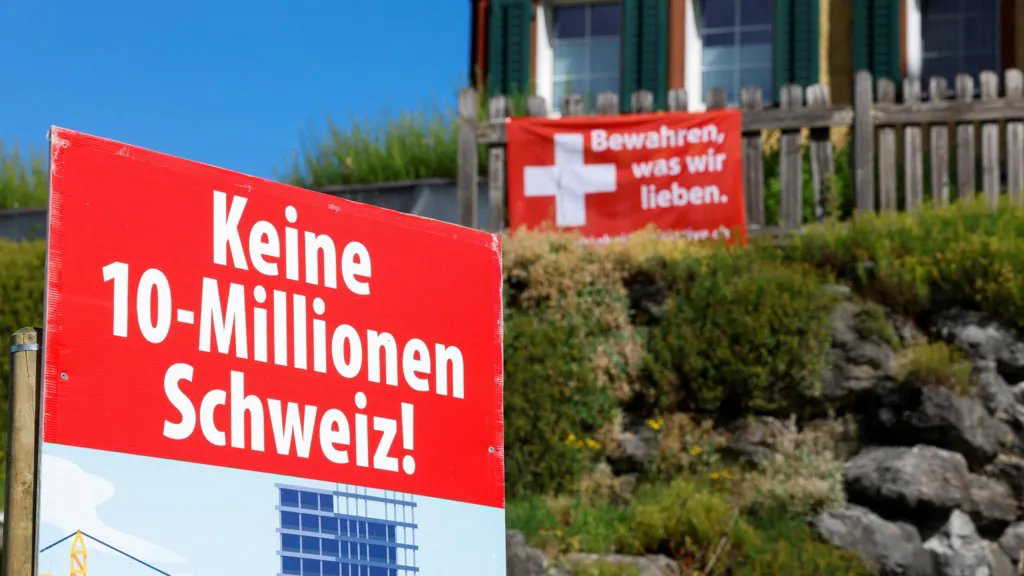
Swiss voters rejected a proposal to cap the country’s population at 10 million, with a preliminary tally showing about 55% voting against the measure and 45% in favor.
The vote drew a turnout of about 59%, above the recent average for Swiss referendums, and came after weeks of debate over immigration, housing, and the strain on public services.
The initiative had been framed by supporters as a response to rapid population growth, but opponents cast it as a risky break with Switzerland’s long-standing economic and political arrangements with Europe.
Also Read | America's 250th birthday mood check: Pessimism rises, hope refuses to quit
Switzerland votes to reject a population cap, after being the first country to hold a referendum on such a proposal.
— Eddie Du (@Edourdoo) June 14, 2026
55% voted against limiting the population to 10 million. pic.twitter.com/z38b4OPqpO
Population cap and the EU question
The proposal was backed by the right-wing Swiss People’s Party and would have required the government to tighten immigration rules once the population reached 9.5 million, with a hard limit of 10 million before 2050.
If the cap were exceeded for two years, Switzerland would have been forced to end its 1999 free-movement agreement with the European Union at the next possible date, a step that could have affected access to foreign labor and strained relations with Brussels.
The current population stands at 9.1 million; foreigners make up nearly 28% of residents, and official projections put the 10 million mark in the early 2040s. The outcome, therefore, preserved, at least for now, a central pillar of Switzerland’s economic relationship with the EU.
Why voters turned away?
Justice Minister Beat Jans welcomed the result and said, “With today’s decision, the electorate has sent out a signal of stability, openness, and reliability,” while also saying the government would look at further steps to address concerns over housing and immigration.
Pollster Urs Bieri said the initiative failed because, even though worries about population growth were widespread, many voters feared it would harm Swiss ties with the EU and make it harder to recruit workers.
“Also there’s a feeling that in the current international environment, it’s not sensible for a small country to do this,” he said. Zurich schoolteacher Jan Hesselmann, one of the voters, said support for the cap worried him because “it fuels xenophobia.”
SWITZERLAND JUST VOTED ON HOW MANY PEOPLE GET TO LIVE THERE.
— frostzy (@lmkifiwin) June 14, 2026
Not a tax. Not a budget. The actual number of human beings allowed inside the borders.
And every citizen got a say in it.
- The plan: hold the population under 10 million through 2050, forcing cuts to asylum,… https://t.co/7O1a5H5jbZ pic.twitter.com/azh5zjsBbI
Political fallout and business relief
Business groups welcomed the result after warning that a population cap would reduce access to foreign workers, damage the economy, and sour relations with Brussels.
The business association economiesuisse urged Switzerland to use the momentum from the vote to ratify a deal reached with the EU in late 2024 to deepen bilateral economic ties.
Swiss People’s Party president Marcel Dettling said the party would keep pressing the issue, saying, “Not a single problem has been solved,” and adding, “We will continue to push for sensible immigration.”
Green Party lawmaker Sibel Arslan said the result showed Switzerland remained committed to cooperation with its neighbors but warned the debate had crossed a line, saying, “The damage is done,” and that the issue had been normalized in public discourse.
Also Read | Iran's uranium puzzle: 'About 440 kilograms' now at heart of high-stakes US negotiations
FAQs
Q1: Why did Swiss voters reject the population cap referendum?
Ans: Swiss voters rejected the proposal amid concerns that it could harm the economy, restrict access to foreign workers and strain relations with the European Union.
Q2: What would the population cap referendum have done?
Ans: The measure would have limited Switzerland’s population to 10 million and could have required the country to end its free-movement agreement with the EU if the cap was exceeded.