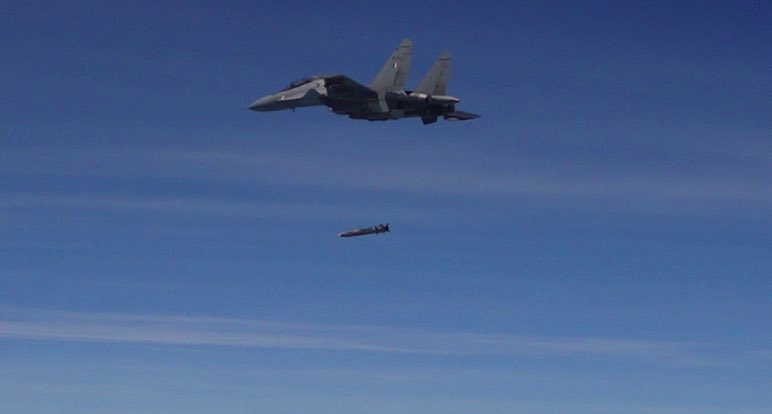
Modern air warfare often begins with a battle that unfolds long before aircraft reach their targets. The first objective is usually to blind the enemy's air defence network, and anti-radiation missiles play a crucial role in achieving that goal.
These specialised missiles are designed to detect and follow radio frequency emissions generated by radar systems. Once launched, they trace the source of the radiation and strike the radar installation, disabling a key component of the enemy's air defence architecture. Even when radar operators switch off their systems to avoid detection, many modern anti-radiation missiles can continue towards the last known location of the target using onboard navigation systems.
By neutralising surveillance and fire-control radars, these missiles create safer corridors for friendly aircraft to conduct strike missions, reconnaissance operations and other combat tasks.
Designed to hunt radar signals
According to The Times of India, unlike conventional missiles that rely primarily on visual, infrared or GPS guidance, anti-radiation missiles are specifically built to seek electromagnetic emissions. Radar systems constantly emit radio waves to detect and track aircraft, making them vulnerable to these weapons.
The mere presence of anti-radiation missiles can force radar operators to shut down their systems. While this may save the radar from immediate destruction, it also prevents it from performing its primary function of detecting and guiding weapons against incoming aircraft.
Advanced variants are capable of targeting electronic warfare systems and jammers, including GPS-jamming equipment, further improving the effectiveness of air operations.
Also Read | From fake bookings to food safety, IRCTC cracks down on fraud, deactivates 3 crore suspicious accounts
A key weapon in modern air campaigns
According to The Times of India, anti-radiation missiles have become an essential tool in Suppression of Enemy Air Defences, commonly known as SEAD missions. Military forces around the world use them to degrade an adversary's radar network before launching larger air offensives.
India reportedly employed loitering munitions against Pakistani air defence radars during the final phase of Operation Sindoor. Similar tactics have been used by countries such as the United States and Israel, which have targeted hostile radar installations even while operating advanced stealth aircraft.
The objective remains the same: reduce the enemy's ability to detect, track and engage friendly aircraft.
Also Read | NTA cracks down on fake Re-NEET 2026 paper leak claims ahead of June 21 exam
India’s growing anti-radiation missile capability
According to The Times of India, India is developing an indigenous family of anti-radiation missiles under the Rudram programme. The series consists of multiple variants designed to engage targets at different ranges and operational scenarios.
Rudram-II, developed by the Defence Research and Development Organisation through the Research Centre Imarat, represents a significant step towards self-reliance in advanced missile technology. The missile is intended to provide the Indian Air Force with a domestically developed capability to suppress hostile radar networks.
Alongside indigenous systems, the Indian Air Force also operates the Russian-origin Kh-31, which can be launched from the Sukhoi Su-30MKI.
Earlier this week, the Defence Research and Development Organisation and the Indian Air Force successfully conducted flight tests of Rudram-II from an airborne platform at the Integrated Test Range, marking another milestone in India's effort to strengthen its precision strike and air dominance capabilities.