India and the European Union have finalised a long-pending free trade agreement (FTA) that will together account for nearly 25% of global GDP and about one-third of global trade, Prime Minister Narendra Modi said on Tuesday. The deal brings to a close nearly two decades of intermittent negotiations and is being described by the Prime Minister as a “landmark” accord with wide-ranging economic implications.
Speaking at India Energy Week, Modi said the agreement would open major opportunities for businesses and consumers across both regions, calling it “the mother of all deals.” The announcement comes amid shifting global trade dynamics and growing uncertainty in India’s trade ties with the United States.
Also Read | What are the rules and timings of Indian flag unfurling? Complete details here on Republic Day 2026
PM @narendramodi’s remarks during the India Energy Week. https://t.co/AzhUyYCQR0
— PMO India (@PMOIndia) January 27, 2026
Nearly two decades in the making
The trade agreement will pave the way for India to gradually open its tightly regulated domestic market to free trade with the 27-nation European Union, its largest trading partner.
“Yesterday, a big agreement was signed between the European Union and India,” PM Modi said. “People around the world are calling this the mother of all deals. This agreement will bring major opportunities for the 1.4 billion people of India and millions of people in Europe,” he added.
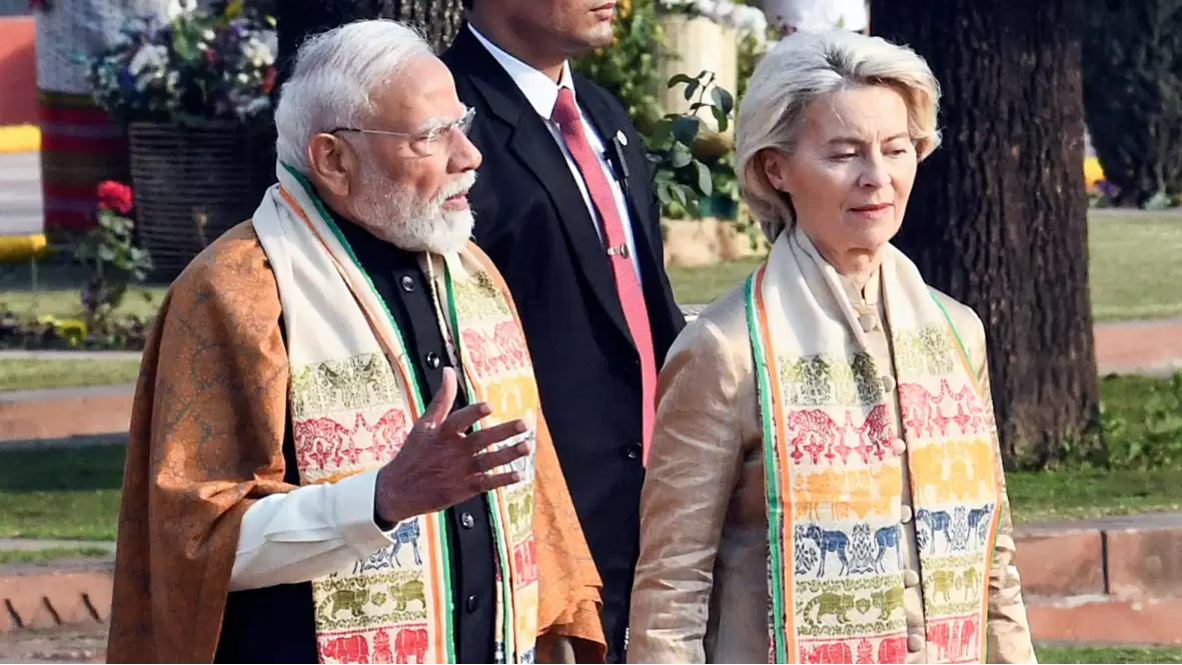
Modi and Ursula von der Leyen, President of the European Commission, are expected to issue a joint statement later on Tuesday at the India–EU summit in New Delhi, outlining the contours of the agreement.
Trade volumes and key sectors
Trade between India and the EU stood at $136.5 billion in the fiscal year ending March 2025, according to Reuters. The EU currently accounts for India’s largest share of goods trade, while India ranks as the bloc’s ninth-largest trading partner.
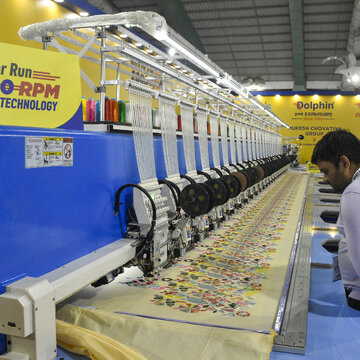
India’s key exports to the EU include machinery, chemicals, base metals, mineral products and textiles, while the EU exports machinery, transport equipment and chemicals to India.
Modi said sectors such as textiles, gems and jewellery, leather and footwear would benefit significantly from the agreement.
Strategic shift amid US trade pressures
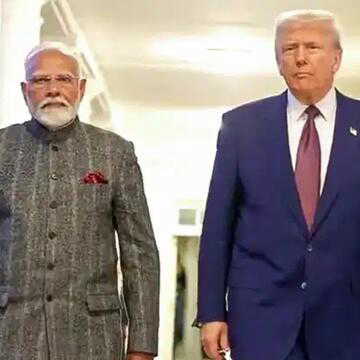
The agreement comes at a time when India is seeking to diversify its export markets after the United States imposed 50% tariffs on Indian goods last year. The breakdown of an India–US trade deal in 2025 has accelerated New Delhi’s efforts to secure alternative trade partnerships.
Also Read | Who are this year's chief guests at India’s 77th Republic Day?
India has recently concluded trade agreements with the United Kingdom, New Zealand and Oman, while the EU has signed new deals with Mercosur, Indonesia, Mexico and Switzerland.
The spate of trade agreements reflects broader global efforts to hedge against economic uncertainty and strained ties with Washington.
While the deal has been politically finalised, formal signing will take place after legal vetting, which is expected to last five to six months, an Indian government official told Reuters. The agreement is likely to be implemented within a year, the official added.