The US administration has decided to rename its largest military command from the Indo-Pacific Command back to the Pacific Command, a move that has sparked debate in India over Washington's commitment to the Indo-Pacific framework and the Quad grouping.
The Pentagon announced that the command would “officially restore its name to the US Pacific Command” while retaining the same area of responsibility stretching from the US West Coast to India's western border.
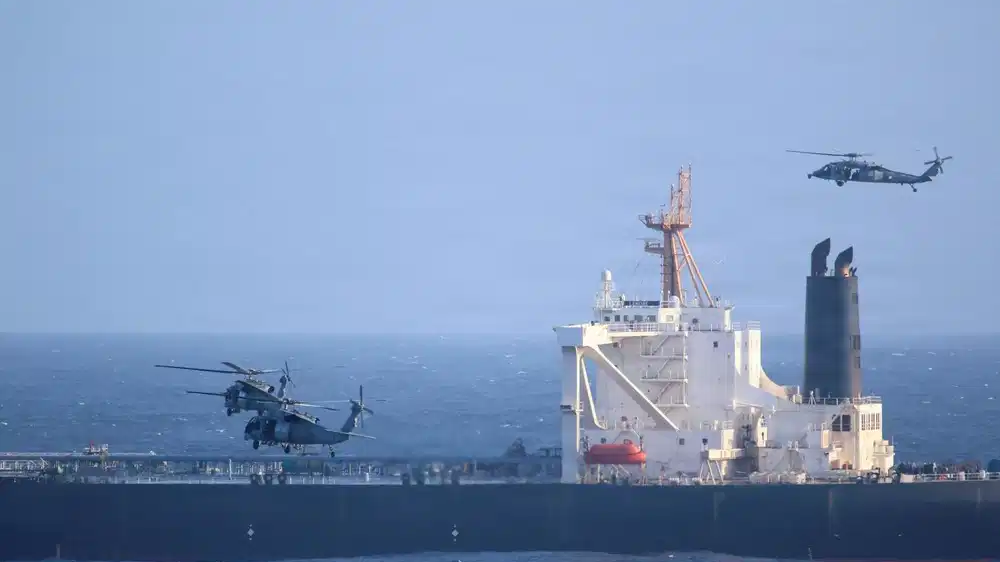
The decision came just hours before a planned meeting between Prime Minister Narendra Modi and US President Donald Trump on the sidelines of the G7 Summit in France. It also follows recent strains in bilateral ties after three Indian seafarers were killed in a US Navy attack on a merchant vessel off Oman.
Also Read | NEET-UG 2026 retest: Indian Air Force airlifts question papers to 18 cities ahead of June 21 exam
Why the name change matters
The command was renamed the Indo-Pacific Command in 2018 under the Trump administration. At the time, then US defence secretary James Mattis had said the change reflected the “increasing connectivity between the Indian and Pacific oceans” and recognised India's growing role in regional security.
The latest move comes amid what US defence secretary Pete Hegseth recently described as a “return to realism” in the Pacific and efforts to chart “a new course for our alliances and partnerships” based on strategic interests, per a report by Hindustan Times.
Experts see shift in US priorities
Former Indian Navy chief Admiral Arun Prakash criticised the move, saying it reflected how “unreliable and poorly thought through” Washington’s policies are, and “borders on deceit and deception”, reported HT.
He argued that the Indo-Pacific concept had originally been promoted by the US as part of a broader strategic approach involving India. “At the time when (the command’s name was changed in 2018), it was set up as a major step. Now their interests have changed and they’ve changed their policy.”
Per HT, former ambassador Rajiv Bhatia said there were three key reasons behind the development. “First, the concept of the Indo-Pacific has lost some salience since the Covid-19 pandemic. It has become even less important between the war in Ukraine and the West Asia conflict.”
“Two, everything is connected to US policy on China, and there appears to be clarity after Trump’s recent visit to Beijing, and Hegseth’s speech at the Shangri-La Dialogue, where he spoke about a pathway for constructive ties with China based on strategic stability,” Bhatia said.
Also Read | Will petrol prices fall next? Fuel rates unchanged despite global oil price drop; check city-wise rates
India-US ties under scrutiny
Former foreign secretary Nirupama Menon Rao described the move as a “healthy correction because it forces us to make a more realistic assessment of where our interests converge with the US and where they do not”, reported HT.
While she said the Indo-Pacific framework had limitations, Rao noted that several recent developments collectively suggest the “exuberant phase of India-US relations may be ending”.