The United States has quietly overseen a large-scale offshore oil transfer operation near the Strait of Hormuz to keep Gulf energy exports moving amid disruptions caused by the Iran-Israel conflict, according to a Reuters investigation based on satellite imagery, shipping data and interviews with multiple sources.
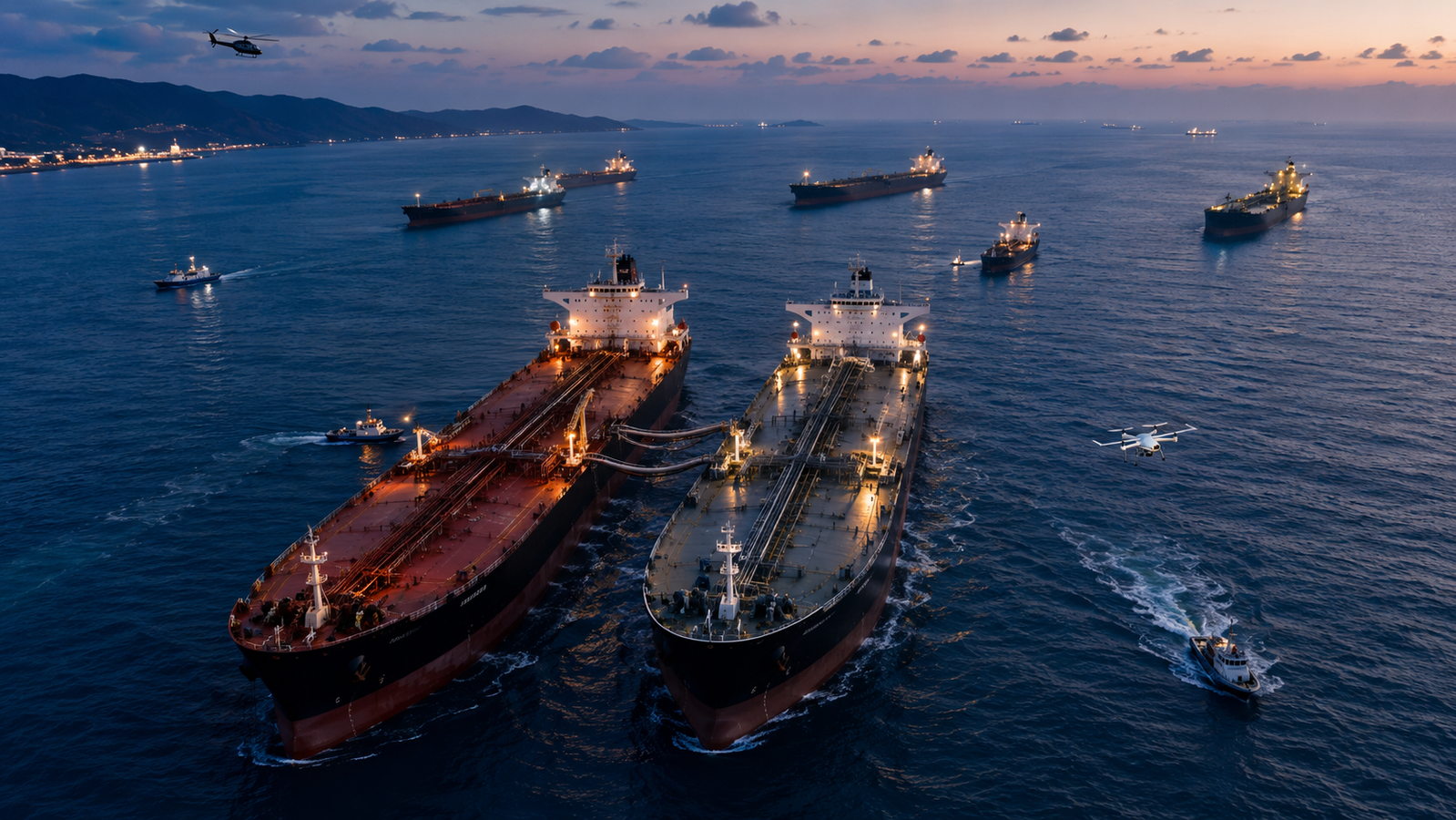
The operation, which began in early May, involves ship-to-ship oil transfers at two locations: one off Fujairah in the United Arab Emirates and another near Oman's port of Sohar. Reuters reported that at least 92 ships have participated in the transfers, with satellite images from June 11 showing 17 pairs of vessels carrying out simultaneous operations.
Also Read | Grok, 2,000 targets and 96 hours: What a US filing has revealed
How the operation works
According to sources familiar with the process and cited by NDTV, tankers first travel to designated meeting points before approaching the Strait of Hormuz. Their departures are staggered and vessels move with transponders switched off and lights dimmed.
Once beyond areas claimed by Iran's newly-established Persian Gulf Strait Authority, smaller tankers transfer crude oil and petroleum products to larger Very Large Crude Carriers (VLCCs). The process can take between 24 and 40 hours before the loaded vessels continue to international destinations.
Reuters reviewed satellite images and shipping records suggesting that roughly 90 million barrels of crude oil and petroleum products may have moved through this offshore network since early May.
Risks amid heightened tensions
The operation comes after Iran effectively closed the Strait of Hormuz, a key global energy chokepoint through which around one-fifth of the world's oil consumption normally passes.
Also Read | 'Restoring the legacy...': US replaces Indo-Pacific Command with historic military title
Security concerns remain high. “You just don't know when Iran might just decide to start using drones or even gunboats in order to prevent even those ships from transiting the strait,” said Noam Raydan, a senior fellow at Washington Institute who reviewed Reuters' findings.
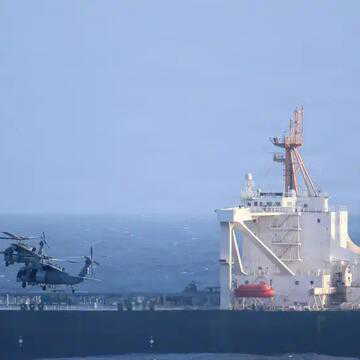
A US Apache helicopter shot down by Iran on June 9 was reportedly involved in the broader mission, although Reuters could not independently confirm its specific role.
A tactic long associated with Iran
The ship-to-ship transfer method has traditionally been used by Iran to bypass sanctions by obscuring the origin of oil cargoes. Reuters noted that the current operation is being conducted on a much larger scale.
Michael Froman, president of the Council on Foreign Relations, highlighted the irony of the situation. “As the old rules weaken, it's ironic that the United States is now taking a page out of the playbook of China, Russia, North Korea, and even Iran, whose so-called ‘dark fleets' pioneered these techniques precisely to evade US and UN sanctions,” he wrote, per a report by NDTV.
Despite helping maintain some oil flows, experts remain cautious. “I don't see a permanent solution in all of this,” said Raydan. “This is a temporary solution amid exceptional times.”
Also Read | 'Without the US, there would be no Israel': Trump blasts Netanyahu's Lebanon strikes
FAQs:
What did the satellite images reveal?
They showed dozens of ships carrying out offshore oil transfers near the Strait of Hormuz.
Why are ship-to-ship oil transfers being used?
They help move Gulf oil exports despite disruptions and security risks in the Strait of Hormuz.