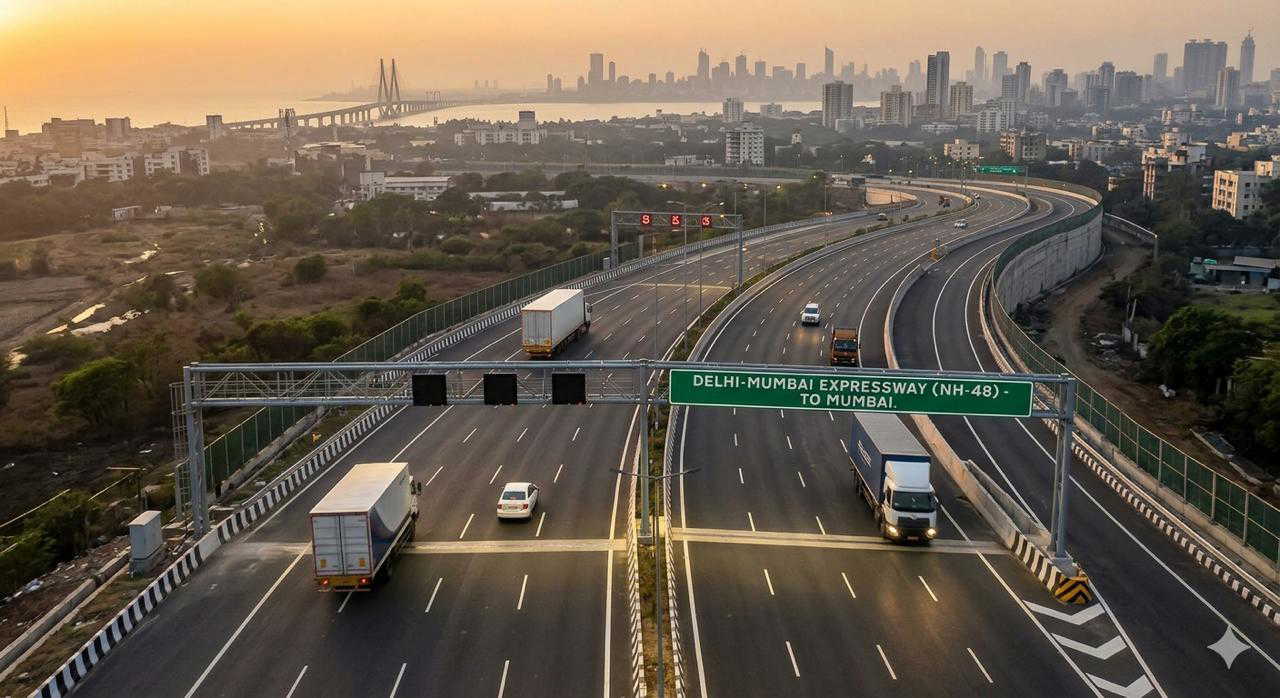
The Delhi Mumbai Expressway is one of India's biggest infrastructure projects that is nearing completion. As per reports, the majority of the 1350 kilometer-long route is already in operation with the remaining sections being worked on fast.
On completion of the entire expressway, commuters will be able to travel from Mumbai to Delhi in little over 12 hours compared to the present time of over 24 hours.
Also Read | What was hidden inside an IndiGo lavatory speaker? Customs finds Rs 4.26 crore gold
Key Sections Making Progress
Recent progress has been made on key sections to make the project more complete. The Godhra-Vadodara corridor in Gujarat is said to have been opened in the state for trial operations, boosting connectivity on the western leg of the corridor.
Meanwhile, work on the DND Flyway-Jaitpur-Faridabad link, which will be a key gateway from Delhi-NCR has made significant progress. This will be a key segment in providing uninterrupted access from the capital region to the expressway.
Route Across Six States
The route would cross six states and encompass the entire coastline.
The expressway was designed by the National Highways Authority of India (NHAI), and runs through the Indian states of Delhi, Haryana, Rajasthan, Madhya Pradesh, Gujarat and Maharashtra. The corridor is intended as an eight-lane, access-controlled toll highway, designed to provide quicker, safer and more efficient travel, and to be expandable to accommodate the growing demand for more lanes and new access points.
The project links together key industrial and commercial hubs and is a vital logistics corridor for the transport and business sectors.
Economic Benefits and Sustainability
The government has stated that the expressway will not only save time on the journey but will also have other benefits. The project will be expected to help reduce the transportation costs, enhance freight movement and increase economic activity along the route.
Enhanced connectivity will likely stimulate local investment and industrialisation in cities like Kota, Ratlam, Vadodara, Bharuch and Surat, leading to development in their surrounding areas. The expressway also has several environmentally friendly features. Minimising disruption to natural habitats along the route with the inclusion of dedicated wildlife crossings, animal underpasses and eco-sensitive infrastructure.
Several sections of the tunnel are currently open, with the other sections set to open over the coming years following the completion of construction and regulatory approval. The Delhi-Mumbai Expressway will be the longest high-speed road corridor in India once completed, paving the way for a significant milestone in the country's infrastructure development.
Also Read | Football coach arrested under POCSO after minor player alleges years of abuse and blackmail
FAQs
Q1: How much time will the Delhi-Mumbai Expressway save?
Ans: The journey between Delhi and Mumbai could be reduced to around 12 hours.
Q2: Which states does the expressway pass through?
Ans: Delhi, Haryana, Rajasthan, Madhya Pradesh, Gujarat and Maharashtra.