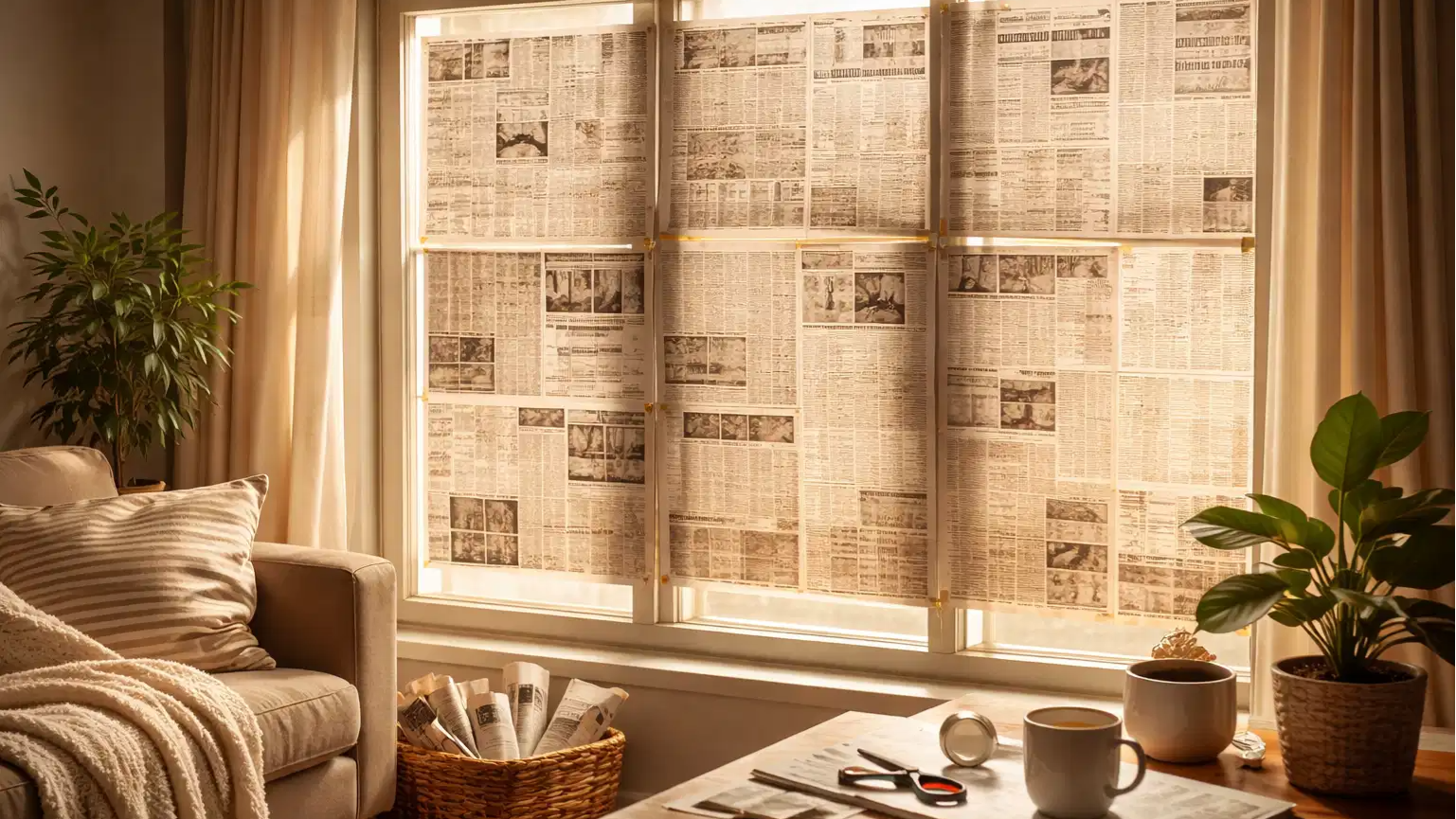
Usually, when you first move into a new place, you quickly notice one thing: the windows are see-through by design, but buying curtains is not cheap. Whether you're a student in a dorm, a renter in a city apartment, or a homeowner fixing up a place, you need privacy fast and often before you have the money to buy or make proper curtains.
A new alternative
Many people opt for the cheaper alternative of plastic shades; there is an inventive set of individuals who are reviving a traditional window covering. This is the use of a newspaper to temporarily cover windows in a more appealing way. The idea might seem unconventional at first, but it is far from a modern desperation tactic; historically, paper was a widely recognised material for home décor.
Also Read | What is ‘friendfluence’? Inside the new dating trend might save your love life
In the past, people liked paper window coverings because they looked beautiful, soft light passed through them, and the raised patterns on the paper felt nice to touch. Today, the style has changed. People now prefer a bolder, edgier look. Newspaper, with its bold black letters and black-and-white design, gives windows a cool, industrial-chic appearance.
Science and looks both in same combo
While privacy might be the reason why one would use a newspaper for a window, there are some environmental benefits too that come with such an unorthodox choice for covering a window opening. Windows are major conduits of heat flow in a house, and when covered by paper, their climate changes significantly.
This functional aspect is a major reason why it persists among energy consious DIYers who are looking for resourceful ways to manage their indoor temperature without installing permanent fixtures.
According to the research findings presented in Window Treatment and Energy Conservation published via ResearchGate, window covering acts as an essential barrier to energy transmission.
The study highlights that interior window treatments can significantly reduce heat transfer between the interior and exterior environments by modifying air convection loops. By placing a newspaper against the glass, you create a rudimentary insulating layer that traps a small pocket of still air. This minimises the "weak energy performance" often associated with bare windows, helping to soften the glare and blunt the edge of a cold breeze during chilly months.
Highly effective at reducing solar heat gain
The demand for adaptable, non-permanent solutions is further supported by the US department of Energy in its comprehensive guide, Energy Efficient Window Coverings. This resource confirms that temporary window coverings are highly effective at reducing solar heat gain in the highly effective at reducing solar heat gain in the summer and providing an extra layer of thermal resistance in the winter. With a newspaper, the renters or homeowners will have a chance to regulate their warmth without any irreversible alterations to their frame or any drilling on it. The only thing that needs to be done is to apply some newspaper to the pane using tape.
A great advantage that comes with paper as an insulating agent is its convenience. The user does not need any machine, like a sewing machine, nor is there the necessity to measure anything with a drill. Newspaper covers large areas because of its wide, uniform sheets, thus making the procedure very easy for people.
Also Read | Is ‘monogamish’ the new normal? Inside the relationship trend redefining love and boundaries
Big environmental advocacy groups also stress the importance of using biodegradable materials at home. According to the EPA's guide to Identifying Greener Cleaning Products, the use of biodegradable products is beneficial to indoor health. Replacing plastic window blinds with recycled paper is a great idea because this way you will reduce chemical exposure in the room.
Embrace your practical heritage, and you may save yourself some cash while protecting your privacy in the process. Just remember, when you find a window open, the solution might just be looking back at your trash.