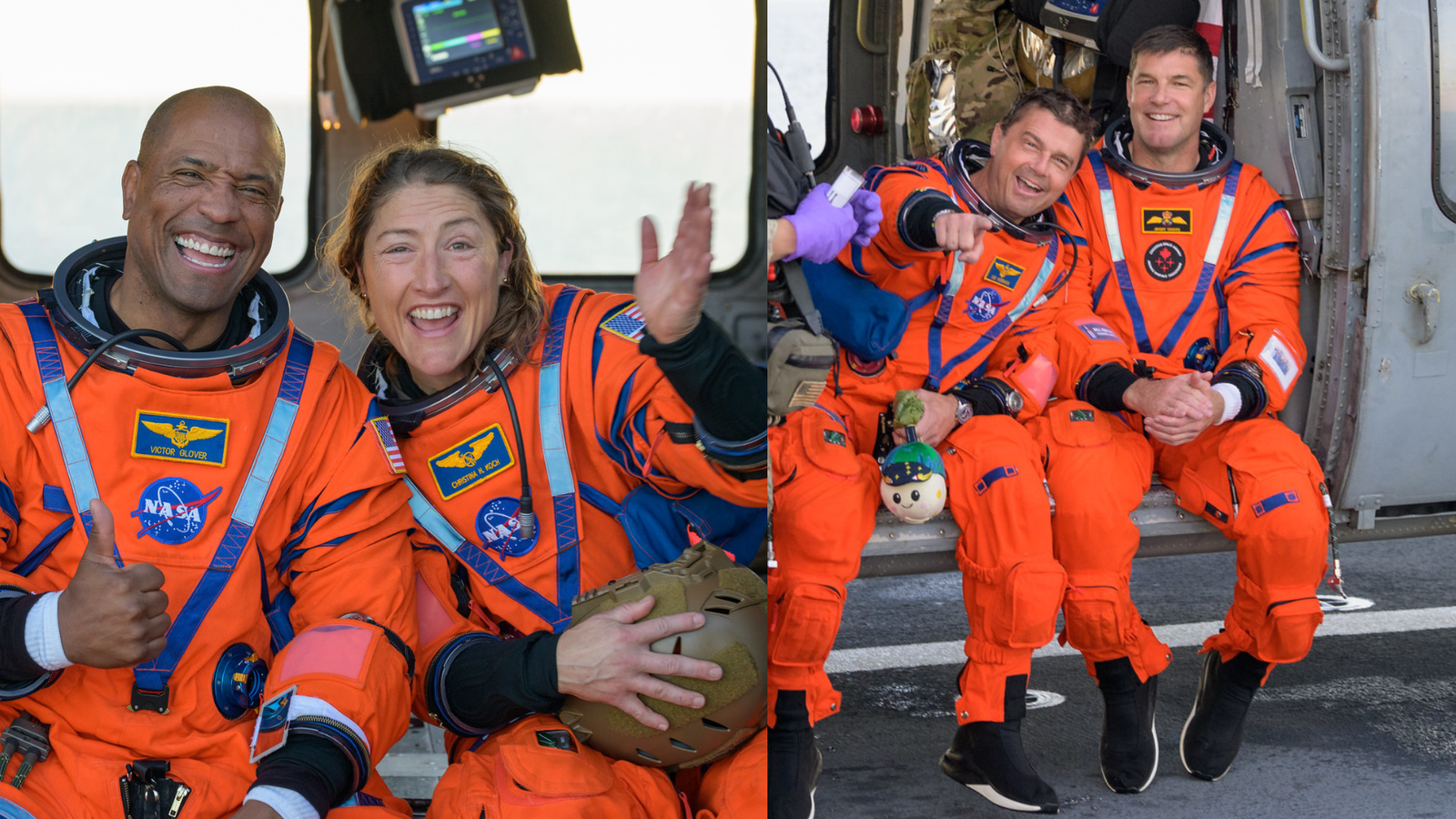
Astronauts returning from Artemis II will not be heading straight into rest after splashdown. Instead, they will be put through a demanding series of recovery tests, including a simulated “space suit obstacle course”, designed to assess how the human body readjusts to gravity after spaceflight.
The four-member crew namely Reid Wiseman, Christina Koch, Victor Glover and Jeremy Hansen, will begin these evaluations within hours of their return to Earth.
Also Read | ‘I love you to the Moon’: Artemis II crew’s emotional tribute leaves NASA viewers in tears
Rapid tests after splashdown
Following their descent and landing in the Pacific Ocean, the astronauts will be moved from recovery operations directly into medical and operational testing. Within one to four hours, they will undertake a capsule escape drill, simulating emergency exit procedures.
The exercise includes sitting upright, deploying a ladder, climbing out of a mock capsule, carrying equipment, and walking short distances, tasks that mirror real lunar landing contingencies.
The next phase involves a more complex simulation. Wearing full-pressure spacesuits and cooling garments, the crew will navigate a structured obstacle course that replicates conditions on the Moon’s surface.
Simulating lunar gravity on Earth
The tests will take place at NASA’s Johnson Space Center in Houston. Engineers will use the Active Response Gravity Offload System (ARGOS), a robotic crane setup that partially offsets body weight to mimic lunar gravity.
Using this test method, the astronauts would be required to engage in such activities as walking on irregular surfaces, climbing down ladders, collecting geological samples, and using various implements in low visibility conditions.
Scientists will be observing such physiological processes as the heart rate, energy expenditure, coordination, and task proficiency to determine the speed at which the astronauts recover their physical abilities following the period of microgravity exposure.
Also Read | No space junk in Artemis II photos? Here’s why you can’t see it
Preparing for future space exploration missions
It is well known that long periods spent in outer space lead to muscle atrophy, impaired balance, and diminished cardiovascular function. This test would be used to determine the rate at which the astronauts could recover and work efficiently in challenging conditions.
This data would be instrumental in the planning of future missions, including the continued exploration of the Moon through the Artemis program as well as crewed missions to the planet Mars.