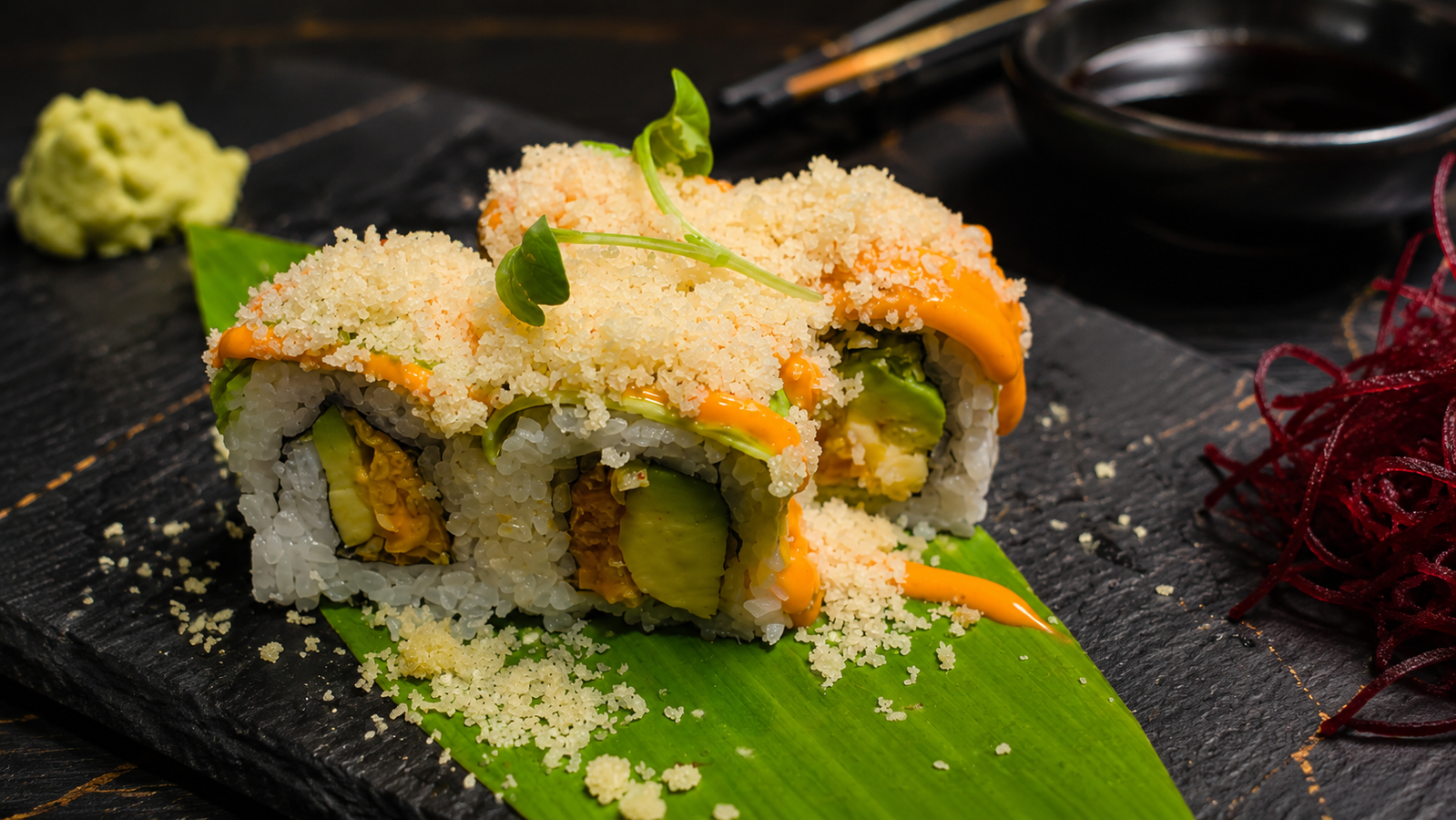
Today, sushi is available almost everywhere; from high-end restaurants and airport food courts to supermarket shelves and conveyor-belt chains. But long before it became a global favourite, sushi began as a practical method of preserving fish.
Its journey from a centuries-old preservation technique to an international fast-food phenomenon spans more than a thousand years and several major transformations.
It began as a preservation technique
According to historians cited by the Smithsonian and several food history researchers, sushi in its most primitive form is thought to originate in Southeast Asia. The addition of salt and fermented rice to preserve freshwater fish enabled people to store raw fish for long periods of time because they had no means of refrigeration.
Also Read | From dating apps to engagements, the June Theory has people convinced
This initial iteration of sushi known as 'narezushi' was never meant to be eaten immediately. Often, the rice was discarded after being used to preserve and ferment the fish, and the fish would be consumed, according to experts in Food History and Kikkoman Institute for International Food Culture (Japan).
After it became popular, preservation methods likely made their way to Japan as wet rice agriculture developed in Southeast Asia, according to The Encyclopedia, Britannica and Japanese food historians.
How sushi became a meal
Various sources, including Britannica and different Japanese cuisine studies, indicate that sushi's evolution was notable especially during Japan's Muromachi Period (1336-1573) when people, rather quickly, began to eat both the fermented rice with their sushi (not simply discard it after finishing).
There was another significant change of direction. When the Edo Period began, much of Japanese cooking transitioned and cooks started using rice vinegar to recreate the sour flavour of fermentation. This reduced the fermenting process from months to less than an hour by simply adding an acidic flavoring agent and sushi changed from a way of preserving food, enabling it to become an everyday food source.
Also Read | From red flags to beige flags: Dating's latest buzzword decoded
The birth of sushi as fast food
Food historians widely credit Hanaya Yohei with developing modern nigiri sushi in early 19th-century Edo, present-day Tokyo. According to accounts documented by Britannica and Japanese culinary archives, Yohei began serving hand-pressed rice topped with fresh fish that could be prepared and eaten quickly.
Unlike earlier versions that required lengthy fermentation, nigiri was convenient and portable. According to historical studies of Edo-era food culture, it became especially popular among merchants and workers looking for a quick meal.
In many ways, it functioned much like modern fast food, with street vendors selling sushi directly to customers in the bustling city.
How sushi went global
According to the Japan National Tourism Organisation and food industry research, sushi's international expansion accelerated during the 20th Century as refrigeration, transportation and food safety systems improved.
Following World War II, Japanese cuisine gained growing popularity overseas. As noted by culinary historians and restaurant industry studies, sushi restaurants began opening across North America, Europe and other parts of Asia.
Another milestone came in 1958 when conveyor-belt sushi was introduced in Japan. According to Japanese restaurant industry records, this innovation made sushi more affordable, accessible and suitable for mass consumption.
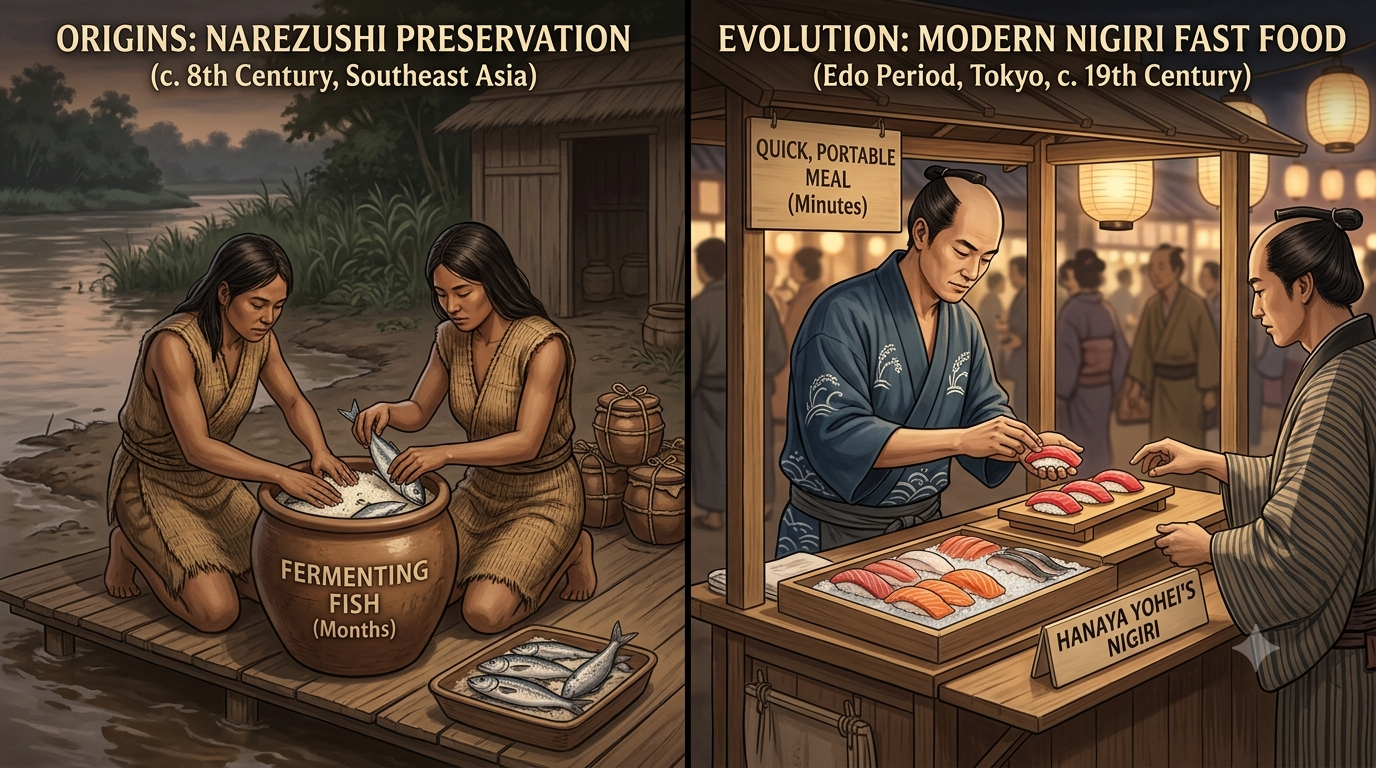 Food historians widely credit Hanaya Yohei with developing modern nigiri sushi in early 19th-century Edo. AI generated
 An ancient idea behind a modern favourite
Today, sushi exists in countless forms, from traditional nigiri and maki rolls to region-specific adaptations found around the world.
Yet, according to historians and Japanese food culture experts, the foundation remains the same. What started centuries ago as a practical way to preserve fish eventually evolved into a global food phenomenon.
Also Read | Can conscious breathing improve your well-being? Here's how it may help calm the mind and emotions
Its journey reflects how a simple preservation technique developed in ancient Asia became one of the most popular and widely available foods in the modern world.
FAQs:
Did sushi originate in Japan?
Not entirely. The earliest form of sushi is believed to have originated in Southeast Asia before evolving further in Japan.
Why is sushi considered one of the earliest fast foods?
Nigiri sushi, popularised in Edo (Tokyo) during the 19th Century, could be prepared quickly and sold as a convenient meal for busy customers.