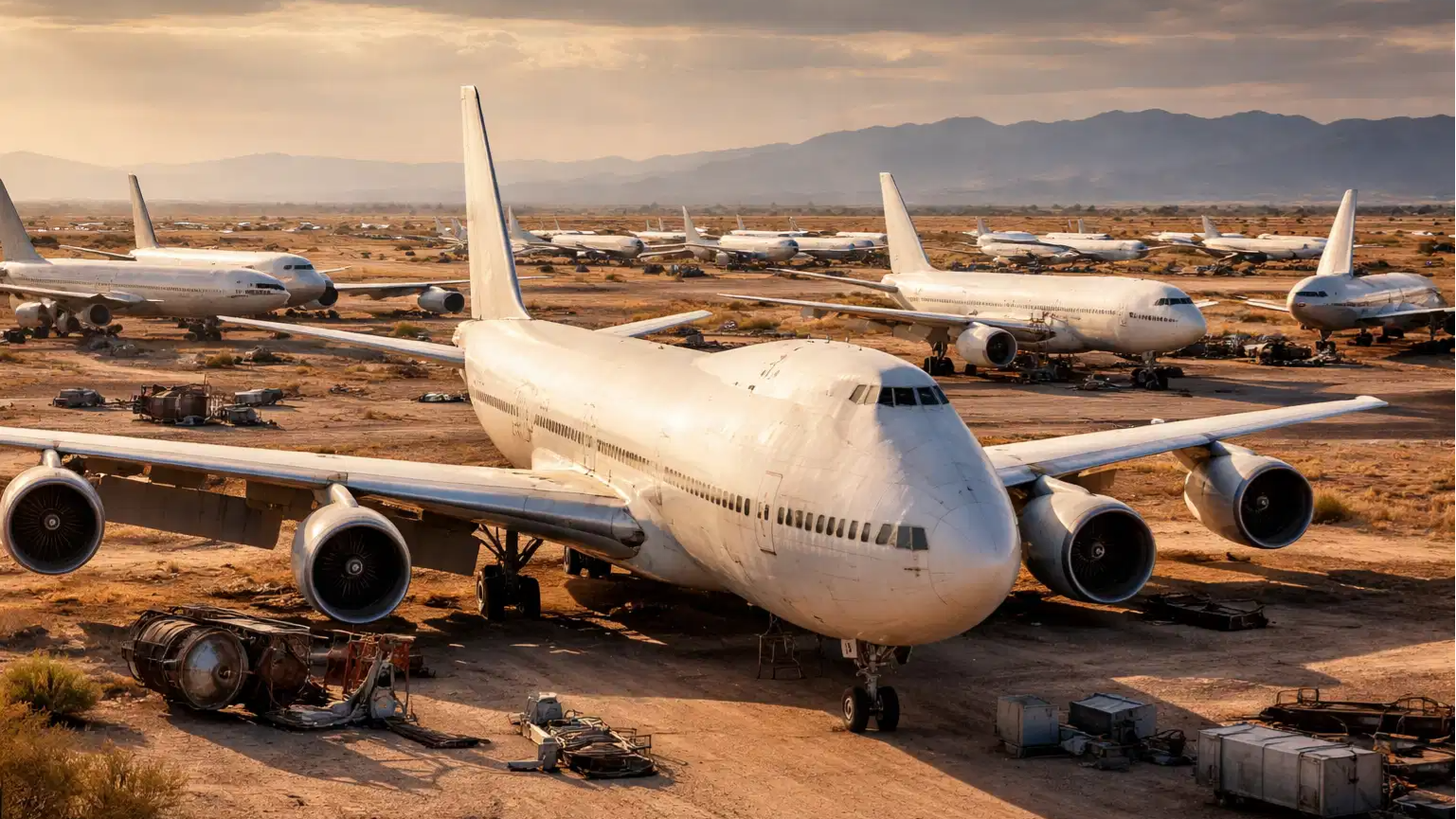
Every aircraft in the sky has a story, not just of where it flies, but also of what happens when its flying days are over. In 2024, over a thousand new aircraft were delivered by manufacturers like Airbus and Boeing, according to Simple Flying, reported NDTV. Yet, only about half actually joined airline fleets, with the rest replacing older aircraft that had reached the end of their service. So, why do planes retire, and what comes next?
Also Read | India in full bloom: 6 flower destinations you shouldn’t miss this April
Why aircraft retire
It's not just age that grounds an airplane. Most passenger aircraft fly for about 25-30 years, while cargo planes can operate for 30-40 years. Airlines, however, ask a bigger question: is the aircraft still worth flying? If the answer is no, retirement follows.
Running a plane is expensive. Fuel, crew, maintenance, and airport fees all add up, and if operating costs exceed earnings, the aircraft is retired. Aging planes also need more frequent and deeper inspections. The metal body endures stress from repeated take-offs, landings, and cabin pressurisation, and fixing these issues can cost more than the aircraft itself.
Modern planes like the Boeing 787 Dreamliner or Airbus A350 burn less fuel and cost less to operate, making them attractive replacements. Passenger expectations also play a role, as travellers look for quieter cabins, better seating, more legroom and advanced entertainment. Even if an older aircraft functions well, airlines often replace it with a newer, more efficient model.
What happens after retirement
Retirement doesn't always mean the end of a plane's story. Most aircraft take one final flight to storage facilities, often called "boneyards". Here, high-value components like engines, landing gear, and avionics are removed for reuse. Many retired passenger planes find a second life carrying cargo or are sold or leased to smaller airlines. If an aircraft can no longer fly, it is dismantled, with over 90 per cent of materials like aluminium and titanium being recycled.
Also Read | Inside ‘hushpitality’: Why billionaires are choosing silence over luxury in 2026
Iconic second lives of aircraft
Some retired planes take on unforgettable roles. Jumbo Stay, a Boeing 747 converted into a hotel, was a prime example, though it closed in 2025. Around the world and in India, retired planes have become themed restaurants and cafes. Aviation enthusiasts in India can explore the TU-142M Aircraft Museum, walking through a real military aircraft. Others appear in films, documentaries, and airshows.
An aircraft doesn't just retire but evolves. While it may stop carrying passengers across cities and continents, it continues to serve in cargo, entertainment, hospitality, and more, proving that the journey doesn't truly end when the flight does.