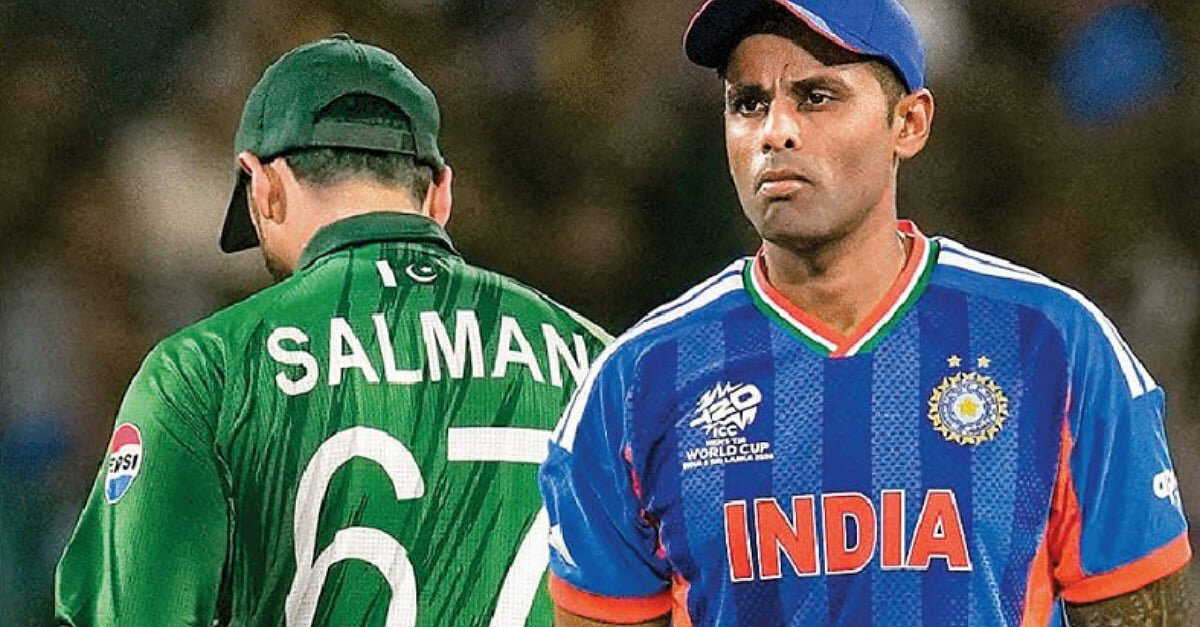
For a few seconds in Colombo, everything felt still. Salman Agha stood in green, Suryakumar Yadav in blue. The coin went up, came down, and the two captains crossed paths without a handshake. That small moment quickly became symbolic. For many, it wasn’t just about cricket; it felt like a statement. Yet the match went ahead, prompting the larger question: is an India–Pakistan fixture simply too big, too commercially valuable, to be called off?
Also Read । Who is Ben Manenti? Leader in the disguise of a cricketer, make Italy’s World Cup journey memorable
When politics meets profit
There had been murmurs before the game. Pakistan reportedly had reservations, and the ICC ensured the fixture stayed on track. Salman spoke about “the spirit of sportsmanship” on the eve of the match, but at toss time, both captains seemed aware that no handshake would happen. Former England captain Mike Atherton later described the rivalry, saying, "All eyes on Colombo on Sunday, then. Money in modern cricket does not so much talk as scream, so it was always likely that a way would be found for the India v Pakistan game to take place. This is the fixture that has become too big to fail — the contest that allows for the functioning of the international cricket system as it stands — even though it has become an unattractive game in its present guise, as a proxy for political point-scoring.”
The cricket amid the noise
On the field, conditions were tricky. The pitch was slow, rain threatened, and losing the toss could have mattered if Duckworth-Lewis came into play. Salman struck immediately, dismissing Abhishek Sharma in the first over to leave India at 1 for 1. Ishan Kishan responded with a bold 70 off 40 balls, counterattacking on a surface that wasn’t easy. While there had been pre-match discussion around Usman Tariq, it was Saim Ayub (3-25) who made the key breakthroughs. With contributions from Suryakumar and Shivam Dube, India posted 175 for 7 — competitive on that wicket.
A decisive finish
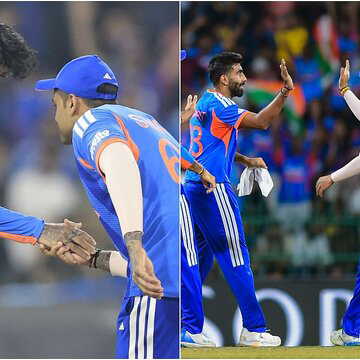
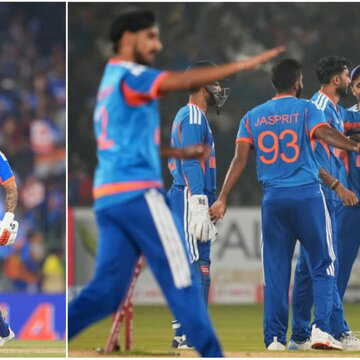
Pakistan’s chase never settled. At 13 for 3 inside two overs, the momentum had already shifted. Hardik Pandya, Jasprit Bumrah and Varun Chakravarthy shared the wickets as Pakistan were bowled out for 114. The 61-run win was emphatic. On the scoreboard, India were dominant.
Beyond the handshake
Yet the most discussed moment remained the one at the toss. In the stands, however, fans from both countries sat side by side, smiling and enjoying the contest together. The ICC even shared similar images. Only weeks earlier, India’s External Affairs Minister S. Jaishankar had publicly shaken hands with Pakistan’s National Assembly Speaker Sardar Ayaz Sadiq at an official event. If political leaders can exchange courtesies, many wondered why cricketers could not.
Also Read । Sudip Kumar Gharami’s 146 powers Bengal ahead against Jammu & Kashmir in Ranji Trophy semi-final
Since the Asia Cup last year, the focus in these contests has increasingly drifted toward whether captains shake hands. In that fixation, quieter moments, like Rinku Singh and Faheem Ashraf sharing a brief, friendly chat before play, often go unnoticed. Perhaps that contrast says the most: the spectacle grows louder, politics sharper, but the human side of cricket still quietly survives.