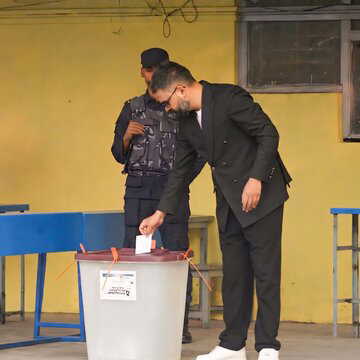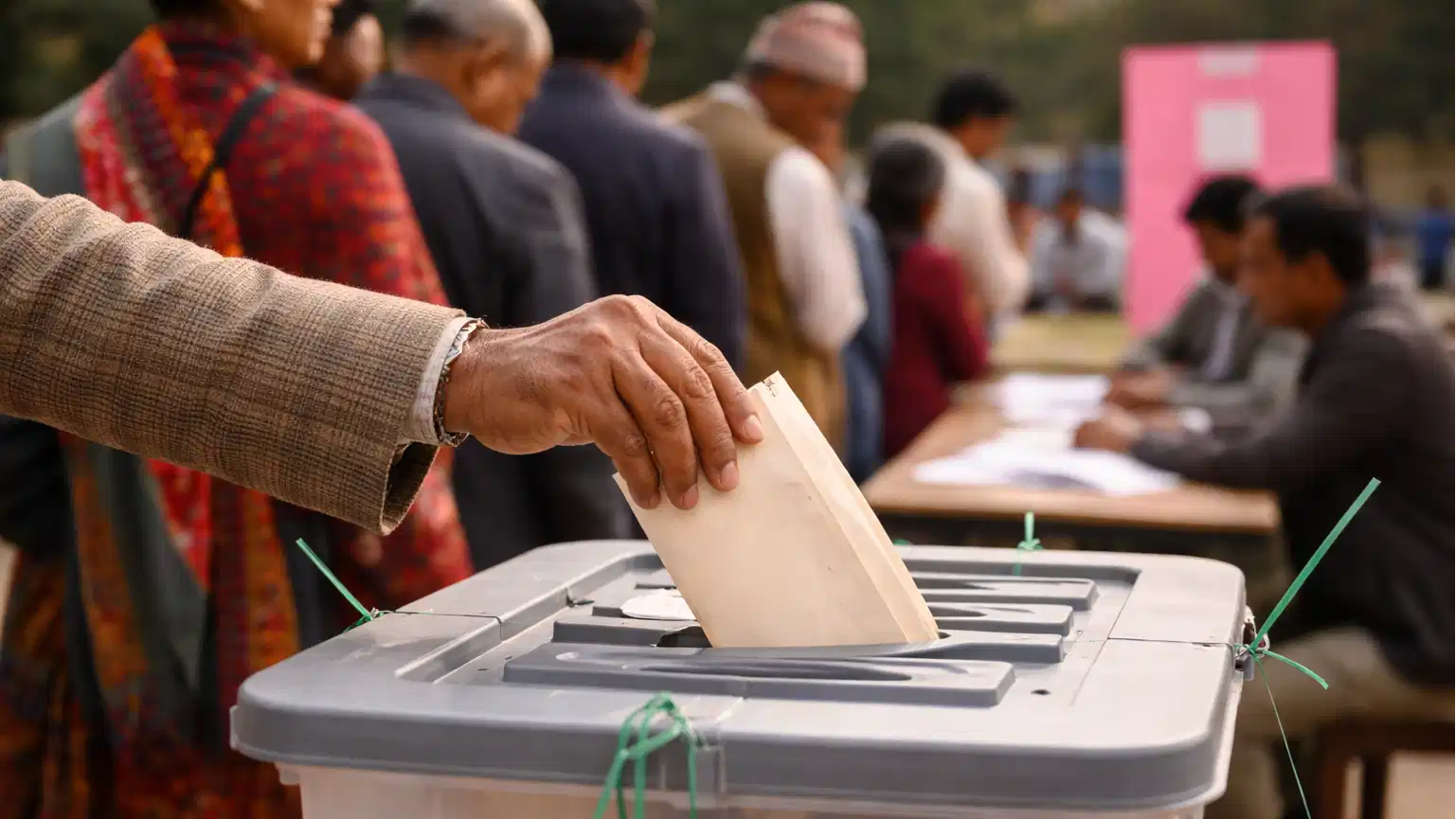
Nepal has conducted its first general election since the uprising led by Gen Z in 2025, during which the then-Nepalese Prime Minister KP Sharma Oli was forced to resign, leading to the emergence of Sushila Karki as the new interim prime minister of the country. The results of the election will not only determine the future of Nepal but also its relations with India, its neighbour.
The total number of candidates contesting the election is 3,406, with 165 seats being contested through the direct voting system, while the remaining 3,135 candidates will contest the election through the proportional voting system for the remaining 110 seats.
The candidates include the former Nepalese Prime Minister KP Sharma Oli, the mayor of Kathmandu and rapper-turned-politician Balen Shah, and the newly-elected Nepali Congress party leader.
Also Read | Who is Balen Shah? The rapper-turned-politician reshaping Nepal's political landscape
Political unrest before the election
Elections in Nepal have been conducted after months of domestic disturbance. In September 2025, massive protests led by Gen Z activists across the country began. Protesting activists raised several concerns, including corruption, unemployment, and the government's restrictions on social media.
The protests prompted Oli to step down after violence between protesters and security forces, resulting in the death of dozens of protesters. An interim government, headed by former Chief Justice Sushila Karki, took over, paving the way for the current elections.
The political situation in Nepal, which led to the elections, prompted the country's neighbour, India, to hold back major initiatives with Nepal until the country's political situation improves.
Strategic stakes for India
Experts say the outcome of Nepal’s elections carries wider geopolitical implications.
Prof. Imankalyan Lahiri, political expert and senior faculty at Jadavpur University's Department of International Relations, said, "India should keep a close watch on Nepal’s elections because the outcome will directly shape the strategic balance in the Himalayas. Nepal sits at the crossroads of India and China, and political shifts in Kathmandu often influence how strongly Beijing or New Delhi can engage with the country. In recent years, China has increased its economic and infrastructure footprint in Nepal, making electoral outcomes crucial for India’s regional security and diplomatic influence.
At the same time, Nepal’s political leadership determines how the country navigates ties with global powers, including the United States. Debates around initiatives like the US-backed Millennium Challenge Corporation compact have already exposed divisions within Nepal's political class over foreign alignment.
With global tensions rising and the US managing multiple crises worldwide, Washington is also keen to maintain stability in South Asia, making Nepal’s political direction geopolitically significant."
Stressing on the deep cultural ties and security cooperation between the two countries, Prof. Lahiri added, "For India, the stakes are even higher because of the open border, deep cultural ties, and security cooperation between the two countries. Any shift in Kathmandu's foreign policy posture, whether toward China, the US, or a more balanced approach, will inevitably affect India’s strategic environment. That is why New Delhi will be watching Nepal's elections closely, not just as a neighbour but as a key player in the evolving geopolitics of the region."
Long-standing tensions in India-Nepal ties
The relationship between India and Nepal has traditionally been influenced by geographical, cultural, and economic ties between the two countries. Nevertheless, the relationship has also had its share of tensions.
Also Read | Nepal election results: Balen Shah leads on 47 seats, KP Oli’s party in single digits
One of the issues in the relationship is the border dispute between the two countries over the Kalapani, Lipulekh, and Limpiyadhura regions. In 2020, Nepal introduced a new political map showing the disputed regions as part of Nepal, despite the fact that the regions are administered by India as part of the state of Uttarakhand.
Recently, in November 2025, Nepal issued a banknote of NPR 100 featuring the disputed regions. India's Ministry of External Affairs described the move as a "unilateral act" that "does not change the ground reality".
The two countries have also disagreed over trade and infrastructure issues, including cross-border activities near the Lipulekh pass.
'Big brother' perception and political narratives
Political rhetoric inside Nepal has also affected bilateral ties. Leaders from various parties have, at times, accused India of interfering in Nepal’s internal affairs and displaying a "big-brother" approach.
After Nepal adopted its new constitution in 2015, Kathmandu accused India of supporting a blockade at the border. India denied the allegation, stating in Parliament, "There is no blockade by India, which we have repeatedly clarified, of supplies going to Nepal. Obstructions are by the Nepalese population on the Nepalese side, in which GoI cannot interfere. There were incidents of violence resulting in death and injury in regions of Nepal bordering India following the promulgation of this Constitution. Our freight companies and transporters also voiced complaints about difficulties of movement and security within Nepal."