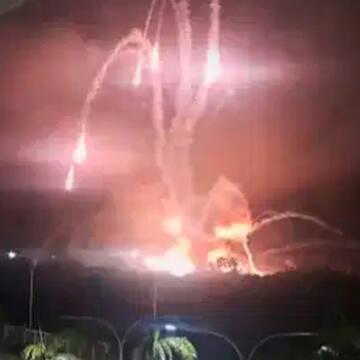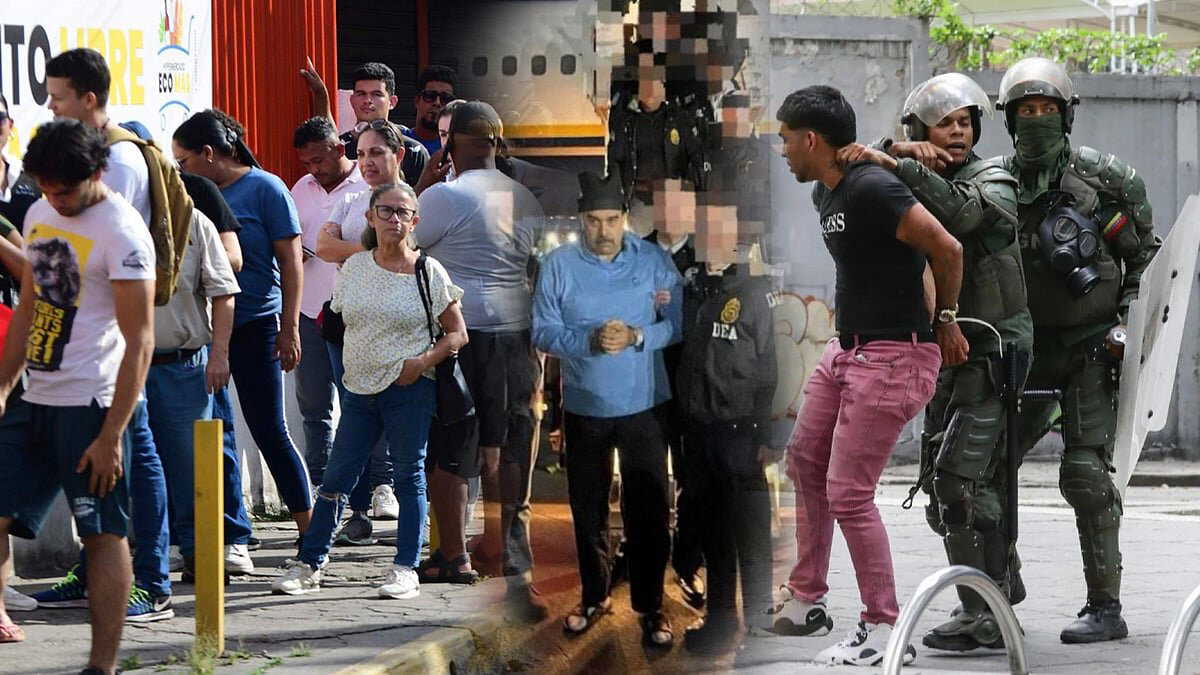
Venezuela's capital, Caracas, has been greatly damaged by American airstrikes. President Nicolas Maduro and his wife have been taken to New York, leaving the country without clear leadership. US bombing has destroyed large parts of the city's power supply, communication networks, and key infrastructure. With electricity and basic services down, daily life has become extremely difficult. Indians living in Venezuela say they are living in constant fear.
Sunil Malhotra, an Indian national living in Caracas, shared his experience with an Indian news outlet. His account describes a city in ruins, where people struggle to find food and even to charge their mobile phones.
Caracas left in ruins
According to Malhotra, major sites such as Caracas airport and the country's largest airbase were hit in the attacks. The worst damage was reported in the Fuerte Tiuna area, where the city's main power station was located. The facility has been destroyed.
Since the strikes, supermarkets and shops have remained shut. Public transport has stopped, and streets are mostly empty. Malhotra said only small neighbourhood grocery stores are open, with long queues stretching across entire blocks. Shopkeepers are allowing just one or two customers inside at a time.
Also Read | Which other world leaders might be on Donald Trump's radar after Nicolas Maduro?
Struggle for food and communication
Bread shops have the longest lines, while pharmacies are crowded because people can buy canned food there. However, the lack of electricity has made communication an even bigger problem than food shortages.
Malhotra said that people are travelling long distances just to charge their phones. In one area, a streetlight still had power, and vendors were illegally drawing electricity from it. People gathered there in large numbers to charge their phones. Sunil Malhotra said he left home at 4 PM and returned only at 11 PM after waiting hours for his turn.
Also Read | Is Donald Trump eyeing Venezuela's oil? US to send companies to restore fuel system
Fear on the streets and embassy support
There is no clear information on when electricity will be restored. Local police have advised residents to stay indoors as much as possible. Despite the president's arrest, there are no protests on the streets. Malhotra explained that people are too afraid to protest due to the violent crackdowns in the past, during which many were killed, imprisoned, or forced to flee the country.
The Indian community in Caracas is small. The Indian Embassy has set up a WhatsApp group to stay in touch with Indian nationals and share regular updates and safety instructions.
While Venezuela has called the US action a violation of international law, the US has charged Nicolas Maduro with narco-terrorism. Ordinary citizens continue to suffer. For many people in Venezuela, survival itself has become the biggest challenge.