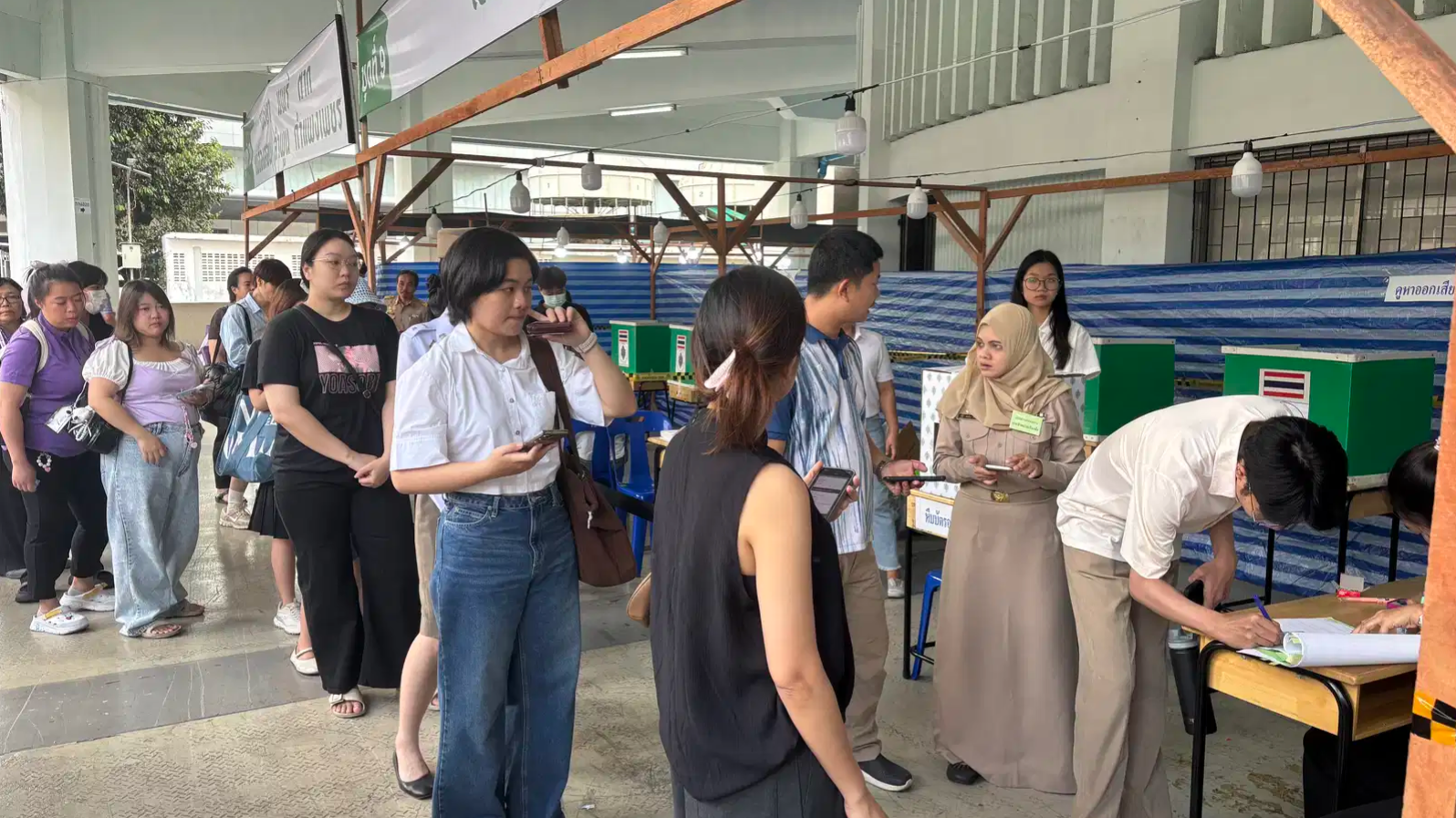
Thailand voted in an early general election on Sunday, February 8, after repeated political instability left the country with three prime ministers in just three years. The snap polls were called after multiple coalition governments collapsed, deepening uncertainty in the country's politics.
As in the 2023 election, the contest has largely come down to a familiar divide. On one side is the reformist People's Party, pushing for sweeping change. On the other hand are conservative forces led by Prime Minister Anutin Charnavirakul, according to BBC.
Main contenders
The People's Party, led by Nattaphong Ruengpanyawut, has been leading opinion polls. It is campaigning on promises to curb the power of large corporations and the military, cut bureaucracy, and reform education.
Two previous versions of the People's Party were dissolved by court orders, and their leaders were banned from politics, BBC reported. Unelected institutions, including the constitutional court and the military-appointed senate, have repeatedly intervened against parties seeking to challenge the status quo.
Also Read | Will Lewis steps down as Washington Post CEO and publisher after mass employee layoffs
Prime Minister Anutin is mounting a strong defence. He has transformed his once small, provincial Bhumjaithai - 'Thai Pride' - party into the main conservative force. During the campaign, he leaned heavily on nationalist sentiment following two brief border clashes with Cambodia last year. He has also pledged to protect traditional institutions such as the monarchy and the military.
The third major player is the Shinawatra family's Pheu Thai - 'For Thais' - party. Once dominant, the party is now struggling. It has promised eye-catching populist measures, including creating nine new millionaires in Thai baht every day through a national prize draw. Like its rivals, it has also offered subsidies and cash handouts.
What is at stake
Pheu Thai is expected to lose ground after its last coalition government was accused of mishandling the Cambodia conflict. Its influential figure, former Prime Minister Thaksin Shinawatra, was also sent to jail, hurting the party's standing.
Also Read | Japan votes in snap elections as PM Sanae Takaichi seeks strong mandate for economic and defence push
No party is expected to secure an outright majority, as per BBC. Results are due around 10 PM local time on February 8. If the People's Party improves on the 151 seats it won in 2023, it could become harder to block it from forming a government, despite strong resistance from conservative and royalist groups.
Still, further court or institutional intervention is widely anticipated if reformists gain too much ground. If Anutin's Bhumjaithai matches or exceeds the reformists' seat count, he is widely expected to remain PM with backing from the conservative establishment.