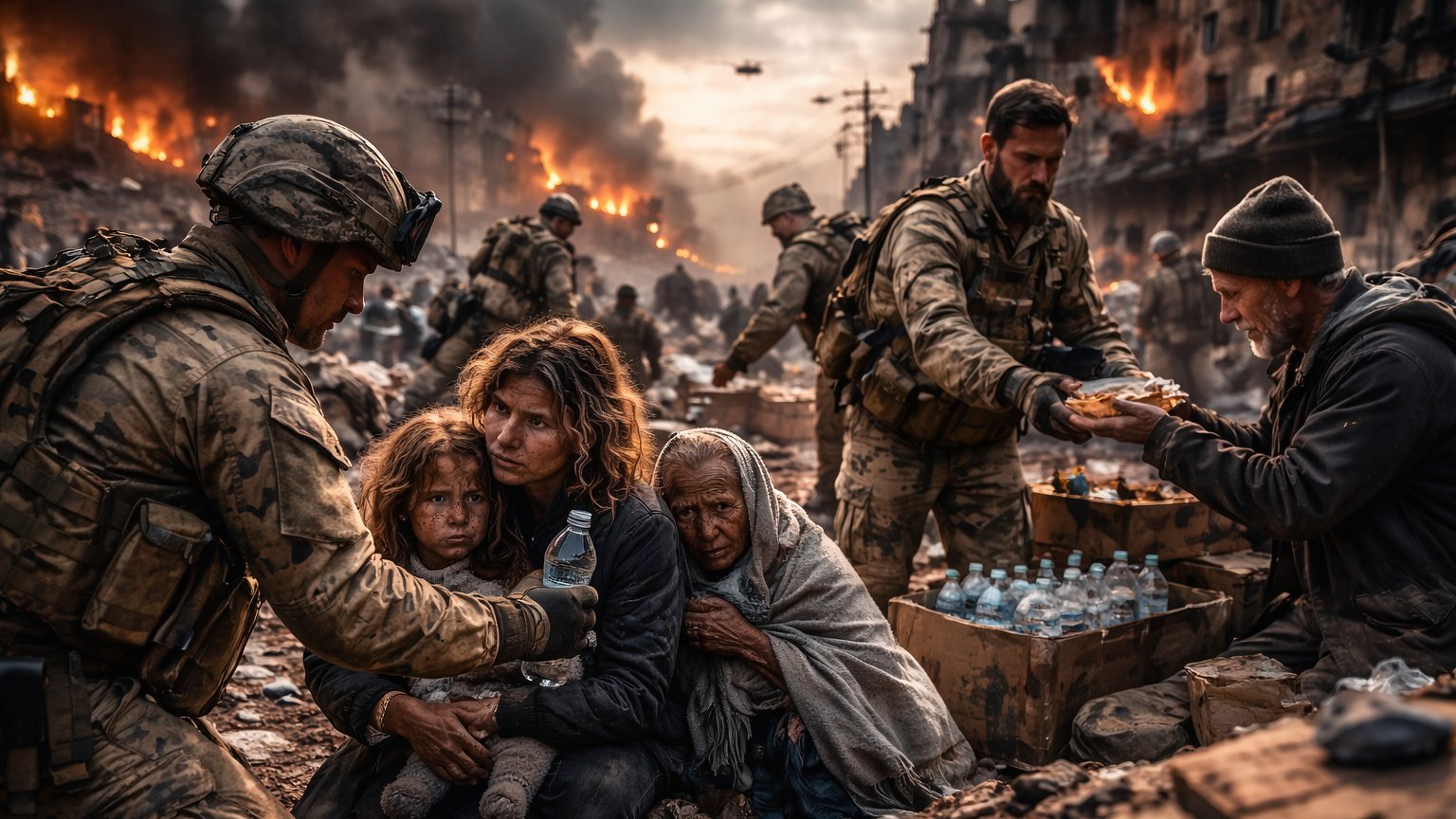
As global tensions continue to dominate headlines, the possibility of armed conflict affecting civilian areas cannot be entirely ruled out. While panic helps no one, preparation can save lives. Drawing from standard disaster-management advisories, here is a structured, practical guide on how civilians should prepare for and respond to a war-like emergency in their locality.
Prepare a household emergency plan before a crisis strikes
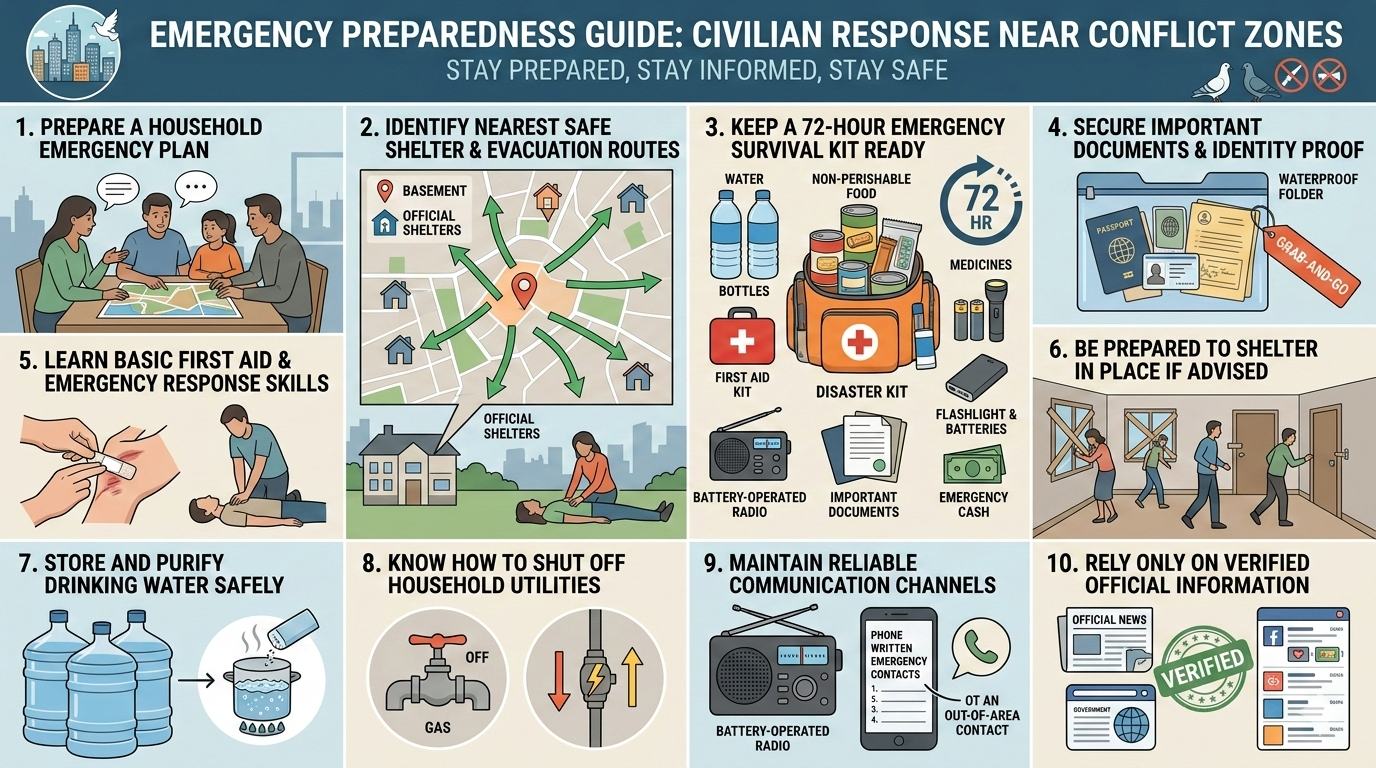
Every family must have a clearly discussed emergency plan. Identify safe zones inside the house, decide evacuation triggers, assign responsibilities, and ensure every member understands the protocol. Planning reduces confusion and reaction time during sudden escalation.
Identify the nearest safe shelter and evacuation routes
Locate underground shelters, basements, reinforced buildings, or officially designated relief centres in advance. Keep multiple evacuation routes mapped out in case primary roads are blocked. Conduct periodic drills so that family members, including children and elderly persons, are familiar with the plan.
Keep a 72-hour emergency survival kit ready
Prepare a disaster kit with essentials that can sustain your household for at least three days. Include drinking water, non-perishable food, basic medicines, first-aid supplies, a flashlight, batteries, power banks, a battery-operated radio, important documents in waterproof covers, and some emergency cash.
Also Read । US issues security alert for nationals amid Israel-Iran conflict - key updates here
Secure important documents and identity proof
In conflict situations, displacement is common. Store Aadhaar cards, passports, land records, insurance papers, medical prescriptions and emergency contact lists in a sealed, waterproof folder that can be grabbed quickly during evacuation.
Learn basic first aid and emergency response skills
Basic knowledge of wound care, bleeding control, CPR and fracture support can be lifesaving when medical access is disrupted. At least one member in every household should be trained in essential first aid practices.
 War safety protocols News Ei Samay
Be prepared to shelter in place if advised
If authorities warn against stepping outside due to shelling or aerial threats, remain indoors. Move to the most secure part of the building, ideally away from windows, and seal doors and ventilation gaps if required. Avoid rooftops and open balconies during active threats.
Store and purify drinking water safely
Water supply lines may get damaged during conflict. Store clean water in advance and learn purification methods such as boiling or using chlorine tablets. Avoid consuming untreated water from unknown sources.
Know how to shut off household utilities
Gas leaks, electrical sparks and broken pipelines can lead to secondary disasters like fires or explosions. All adult members should know how to turn off gas valves, electricity mains and water supply lines safely.
Also Read । Israel vs Iran War - Key points laid forward by Donald Trump amid rising conflict
Maintain reliable communication channels
Mobile networks may become congested or disrupted. Keep emergency numbers written down physically. Decide on an out-of-area contact person who can coordinate communication if local lines fail. Battery-operated radios remain crucial for official updates.
Rely only on verified official information
During war-like situations, misinformation spreads rapidly. Follow updates only from government agencies, authorised news outlets and verified emergency services. Avoid circulating unconfirmed social media posts that may create panic.
Preparedness does not mean fear; it means resilience. A calm informed and organised response can significantly reduce risks to life and property if conflict ever reaches civilian areas.