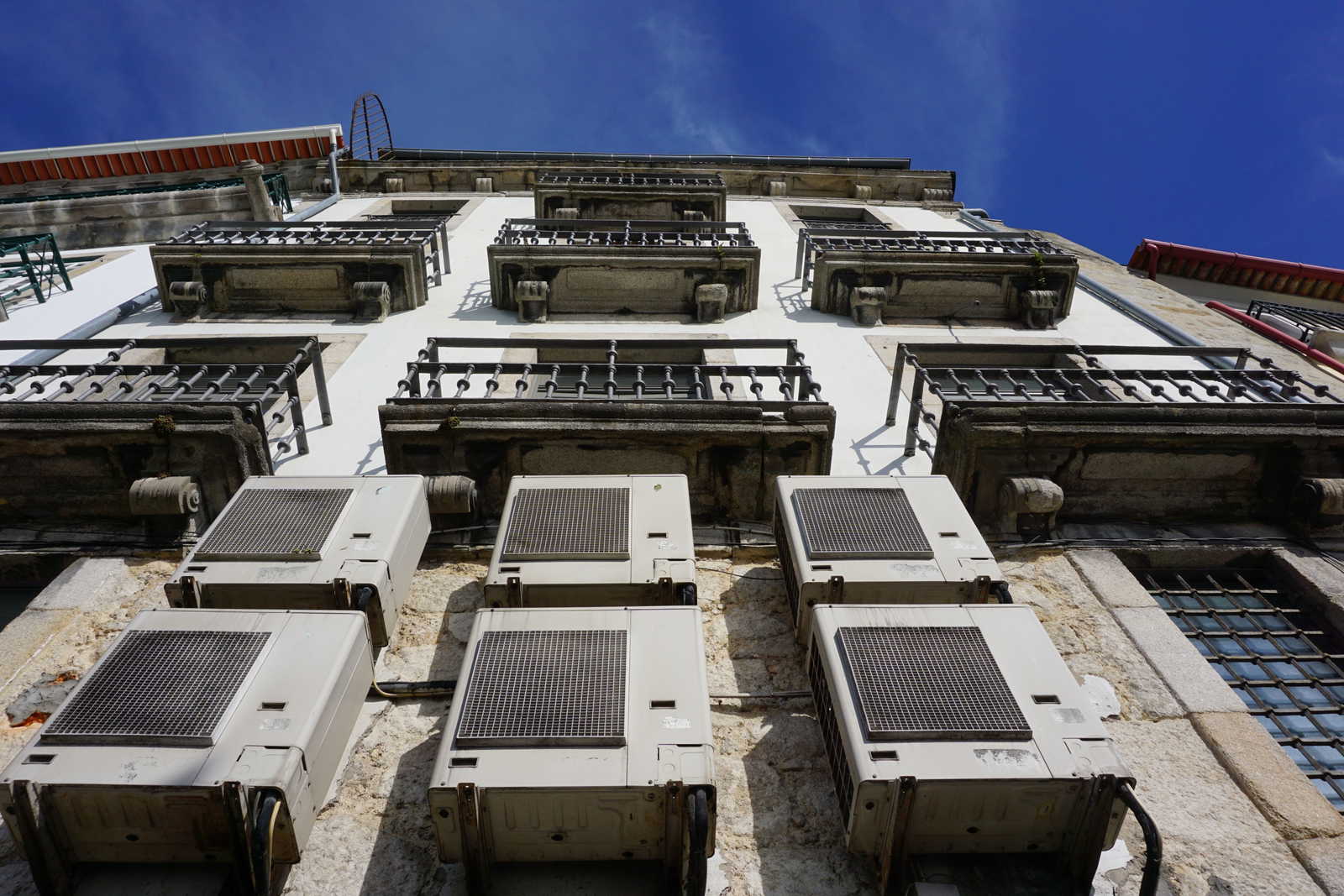
With a massive heatwave scorching through Europe leading to school and train cancellations, as well as an overwhelming health service, the region’s decades-long opposition to air conditioning technology is facing renewed criticism.
According to estimates from the International Energy Agency (IEA), less than one fifth of all European households have access to air conditioning despite the record-breaking heat levels in parts of France, Spain, Italy and Germany which have touched 40 degrees celsius.
This comparison to countries like America, which boasts over 90% of homes with air conditioning, has raised questions on whether it will be possible for Europe to continue using conventional methods for heat management amid rising climate change impacts.
Previous heat waves have caused serious disruptions to normal activities throughout Europe. The schools have had to close in France, Belgium and the UK, trains cancelled due to heat damage to infrastructure while hospitals have turned their air conditioned waiting rooms into makeshift wards to treat patients unable to survive hot weather conditions at home.
Also Read | Why Israel is now moving to recognise the Armenian genocide. Here's all we know
Architecture, regulations and cost remain major barriers
Experts say Europe's historically cooler climate shaped its buildings and infrastructure in ways that now make adaptation difficult. Older homes were designed to retain heat during long winters, while modern glass-heavy buildings often trap heat during increasingly intense summers.
Installing air conditioning units in Europe also presents practical and financial challenges. In many cities, strict heritage preservation rules limit modifications to building facades, making the installation of external cooling units difficult or impossible. Cities such as Paris have some of the continent's most restrictive regulations regarding air conditioning installations.
 Pexels
 Cost is another significant barrier. According to industry estimates cited in international reports, installing a standard air conditioning unit in Europe can cost more than 1,000, while energy-efficient heat pump systems can cost between £4,000 and £10,000, even after government subsidies. Combined with Europe's relatively high electricity prices, many households have historically opted to endure short periods of summer discomfort rather than invest in cooling systems.
Politics and culture have shaped Europe's cooling debate
Unlike many parts of the world, air conditioning has also become a political and cultural issue in Europe. Politicians across the ideological spectrum remain divided on whether expanding access to cooling systems represents an essential public health measure or a step that could worsen climate change.
Environmental concerns remain central to the debate. According to the International Energy Agency, cooling currently accounts for around seven per cent of global electricity demand. Surveys in countries such as France have also found widespread public concern over the environmental impact of air conditioning.
Beyond politics, researchers and commentators have pointed to a broader cultural difference in attitudes toward comfort and discomfort. While Americans have traditionally viewed climate control as a necessity, many Europeans have historically seen physical discomfort as something to adapt to rather than eliminate.
However, experts say that attitude is changing rapidly as Europe experiences increasingly frequent and intense heatwaves. The continent, according to assessments by the World Meteorological Organization and the Copernicus Climate Change Service, is warming nearly twice as fast as the global average.
Also Read | 'Systemic measures...': Russia considers diesel export restrictions amid growing fuel concerns
Sales figures show that attitudes have started to change in this regard already. There have been noted significant jumps in sales of air conditioners throughout France, Spain, Germany, and the UK due to the current heat wave, as well as investments in cooling infrastructure by governments for schools and other public buildings.
At the same time, researchers note that air conditioning alone is not enough to deal with Europe’s emerging heat problem; it is also necessary to change urban design, create more green areas, insulate buildings better, and use approaches to urban planning that would minimize heat exposure but not cause climate change.
FAQs
Q1. Why do most European houses lack air conditioning?
Because of traditionally cooler weather, stringent building codes, expensive installation, and environmental concerns, air conditioners have been rare in European households.
Q2. Is there a shift in attitude towards air conditioners in Europe?
Indeed, with warming climate and more frequent heat waves, Europeans are buying more air conditioners and investing in cooling infrastructure.