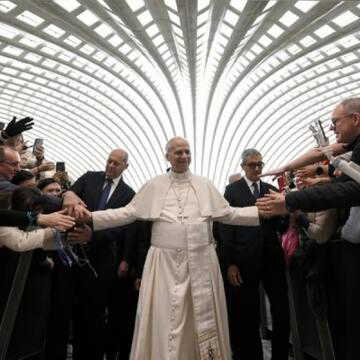
Pope Leo XIV on Monday issued his first major teaching document, an encyclical titled “Magnifica Humanitas,” urging governments to slow the pace of artificial intelligence development and impose stricter regulation on the technology.
The pope warned AI systems can spread misinformation, intensify conflict and push the world “down a path of unending war.” Vatican News said the text frames the rise of AI as a test of whether humanity will protect the human person or allow technology to dominate it.
The encyclical was released at the Vatican on May 25 after being signed by the Pope on May 15.
Humanity, created by God in all its grandeur, is today facing a pivotal choice: either to construct a new Tower of Babel or to build the city in which God and humanity dwell together. In Jesus Christ, this humanity in its grandeur becomes the Way, the Truth and the Life, opening…
— Pope Leo XIV (@Pontifex) May 25, 2026
What is an encyclical and why does a 135-year-old text matter now?
An encyclical is a formal papal letter, written by the Pope and addressed to the entire Roman Catholic Church, to teach on faith, morals and social questions.
Leo XIII’s Rerum novarum (Latin for "Of New Things"), published in 1891, was the Church’s first major social encyclical. It defended workers’ dignity, just pay and the right to private property, while rejecting both ruthless capitalism and socialism.
Its modern force lies in how it still shapes debates on labor, inequality and technology. The Vatican marked its 135th anniversary as Pope Leo XIV prepared an AI-focused encyclical.
BREAKING: POPE JUST ANNOUNCED THE CHURCH WILL NOW WORK WITH ANTHROPIC TO FIND THE WAY FOR HUMANITY IN THIS TIME OF AI. pic.twitter.com/D6809uvgYA
— Vivek Sen (@Vivek4real_) May 25, 2026
A long reach
The Bishop of Rome called for “more active political involvement” to slow things down “when everything is accelerating,” and urged “robust legal frameworks, independent oversight, informed users and a political system that does not abdicate its responsibility.”
He also warned that ownership of AI data should not be left solely in private hands, and said policymakers must protect workers and children as companies compete to build more powerful systems.
The encyclical argues that technology is “never neutral” because it reflects the choices of those who design, fund, regulate and use it.
In his first encyclical, Pope Leo XIV quotes J.R.R. Tolkien's "Lord of the Rings: The Return of the King.”
— Courtney Mares (@catholicourtney) May 25, 2026
“It is not our part to master all the tides of the world, but to do what is in us for the succour of those years wherein we are set, uprooting the evil in the fields that… pic.twitter.com/qPOPwqd1Dk
War, labour and the human cost
The Vatican text also extends beyond AI policy to wider social concerns. The Pope criticised what he called the “just war” theory as “outdated,” and warned that the use of force and weapons reflects “a relational poverty” with disastrous consequences for civilians.
He also condemned the use of AI in warfare, saying it is “not permissible” to entrust lethal decisions to AI systems. The encyclical links digital systems to new forms of slavery and colonialism, including the exploitation of people who mine rare earth materials for technology.
In one of its most striking passages, the pope said he “sincerely asks forgiveness” for the Church’s delayed condemnation of slavery.
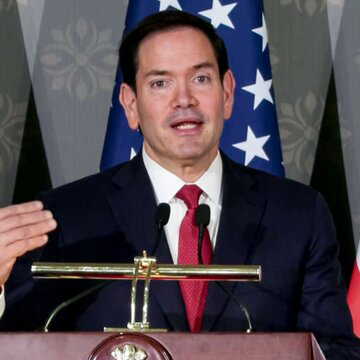
Also Read | Is the Iran deal finally near? Trump, Rubio project momentum as Iran deal remains unsigned
Rerum novarum casts a long shadow
The launch drew attention from Catholic leaders and AI industry figures alike.
Anthropic co-founder Chris Olah attended the Vatican event, while OSV News quoted Archbishop Paul S. Coakley of Oklahoma City saying the encyclical is “a powerful reminder that no technology can replace a child of God” and that all technology should serve human flourishing.
The document, which marks the 135th anniversary of Pope Leo XIII’s “Rerum novarum,” is meant to defend truth, dignity of work, social justice and peace at a moment of rapid technological change.