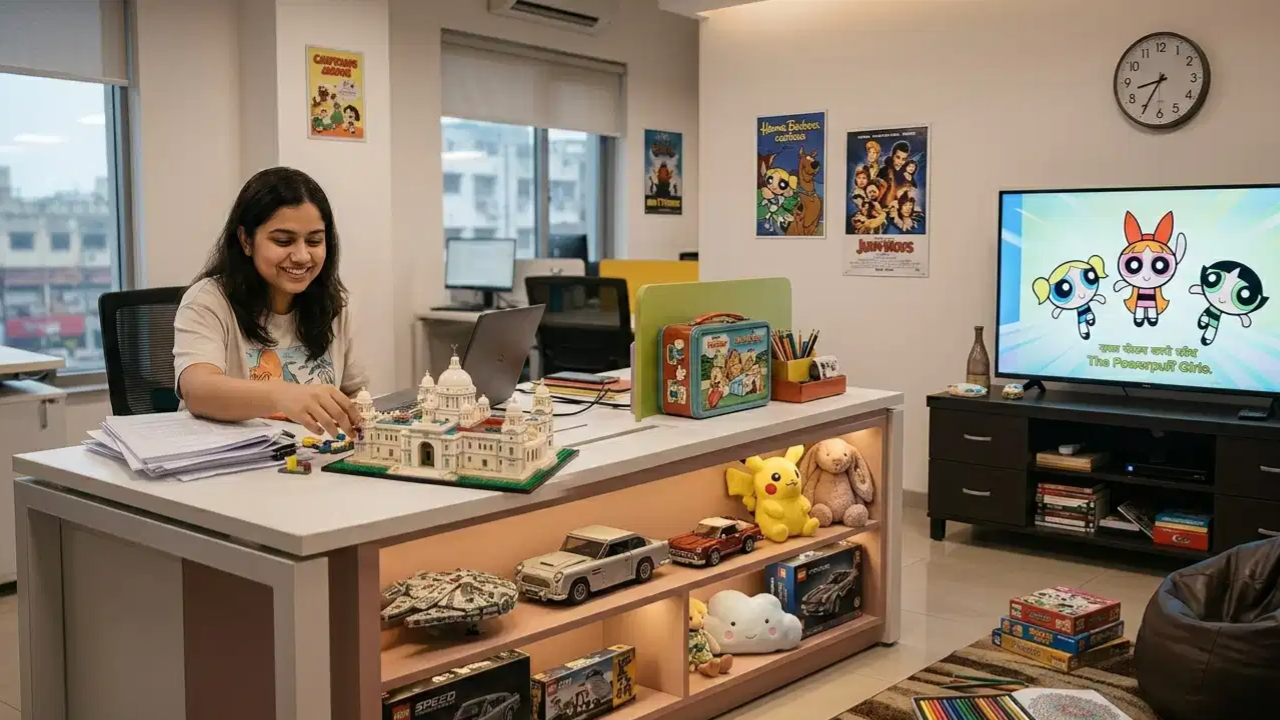
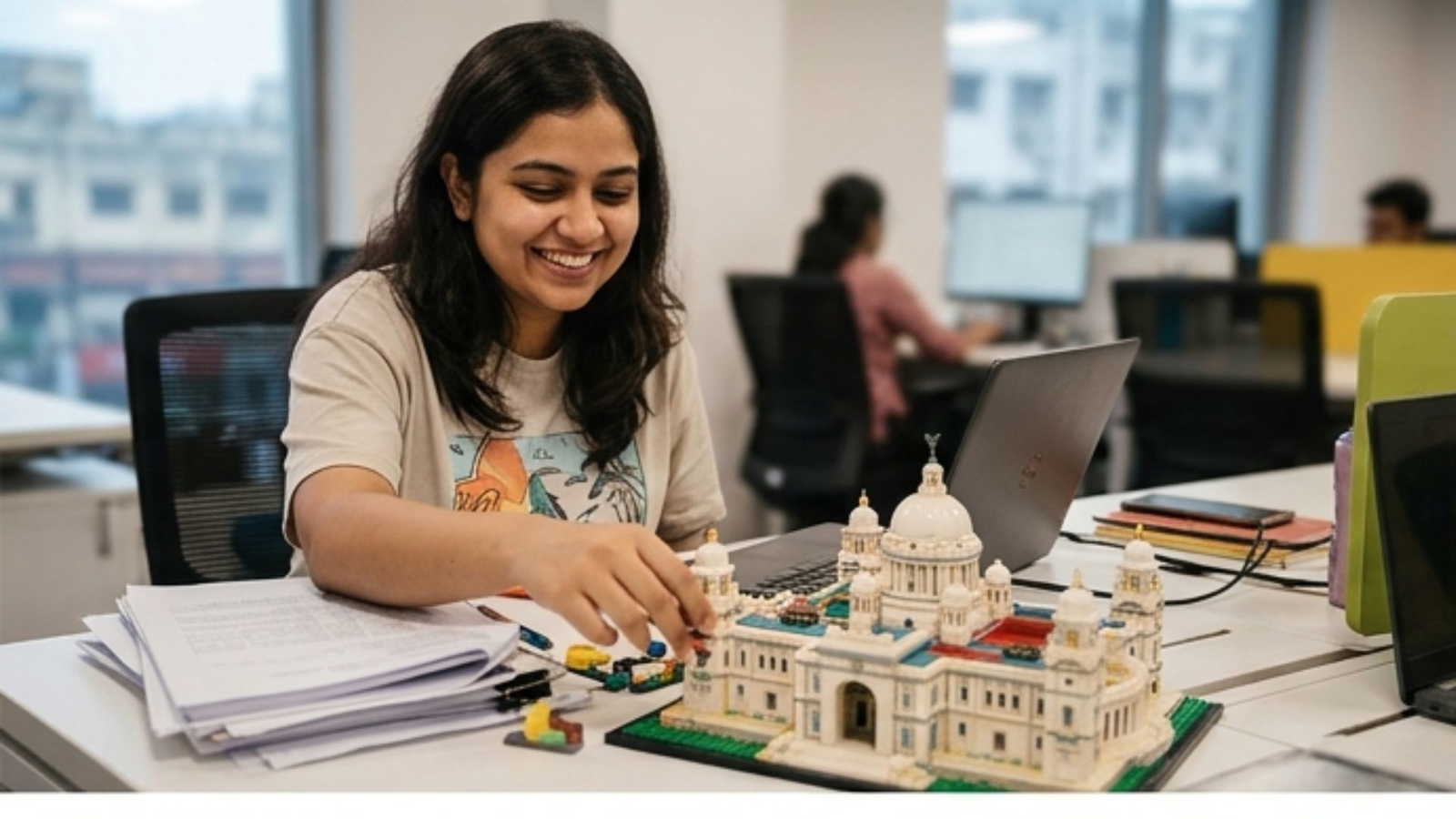
Toys on adult desk jobs. Grown-ups buying LEGO sets. Twenties reliving their childhoods by watching cartoon shows after hours at the office. Once seemingly innocent reminiscing on the Internet has transformed into a broader cultural movement among young adults.
This phenomenon is known as “kidulting,” a phrase referring to a trend where adults engage in practices usually reserved for children, from coloring and playing pretend to collecting toys and watching cartoons.
 AI Generated
Though it might seem lighthearted, experts say this cultural movement is rooted in stress, emotional fatigue, and the hostile environment of the Internet era.
Also Read | Taking protein powder? These 4 common mistakes could harm your health
Generation Z is coming of age during one of the most emotionally exhausting periods on the Internet. Political divisions reign on our social media timelines. Social media thrives on outrage. Ideological tribes and endless conflict are the new social media landscape.
What exactly is ‘kidulting’?
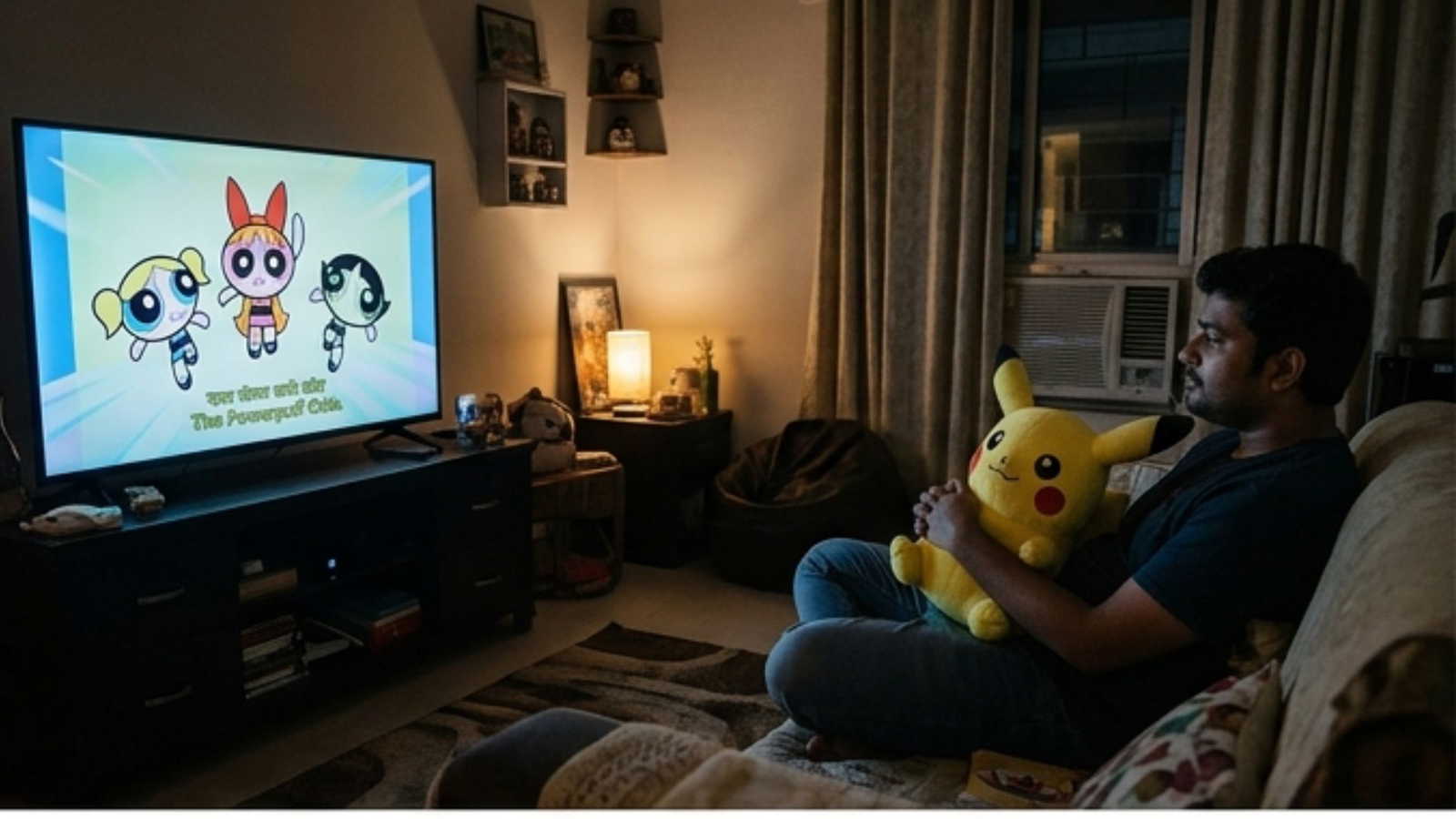
Kidulting is the practice of adults engaging in activities that made them feel happy and joyful during their childhood years. The phenomenon experienced a huge boost especially during and after the Coronavirus pandemic because the isolation caused by lockdowns led people towards activities inspired by nostalgia.
 AI Generated
According to psychologists, the phenomenon is strongly related to the psychology of nostalgia and “inner-child work”, as reliving certain comforting experiences of childhood is a powerful way to relieve stress and improve one’s mood.
Some examples of kidulting practices mentioned in the article include:
Collecting stuffed toys
Rerunning cartoons and animated movies
Playing with LEGO and other puzzles
DIY painting and coloring
Going to interactive playrooms
Escape rooms and playing pretend
Nostalgia is becoming a coping mechanism
Kidulting experts explain that kidulting is not always an act of rebellion against adulthood. It might rather be seen as an attempt of a generation to feel safe amidst a period of insecurity, characterised by economic instability, social loneliness, and constant digital stimulation.
Also Read | Thailand revises visa rules: Indians now eligible only for Visa on Arrival
The essay, which can be viewed above, tells us that plushies, imaginary worlds, and 'comfort content' turned into emotional refuge for many millennials post-pandemic.
 AI Generated
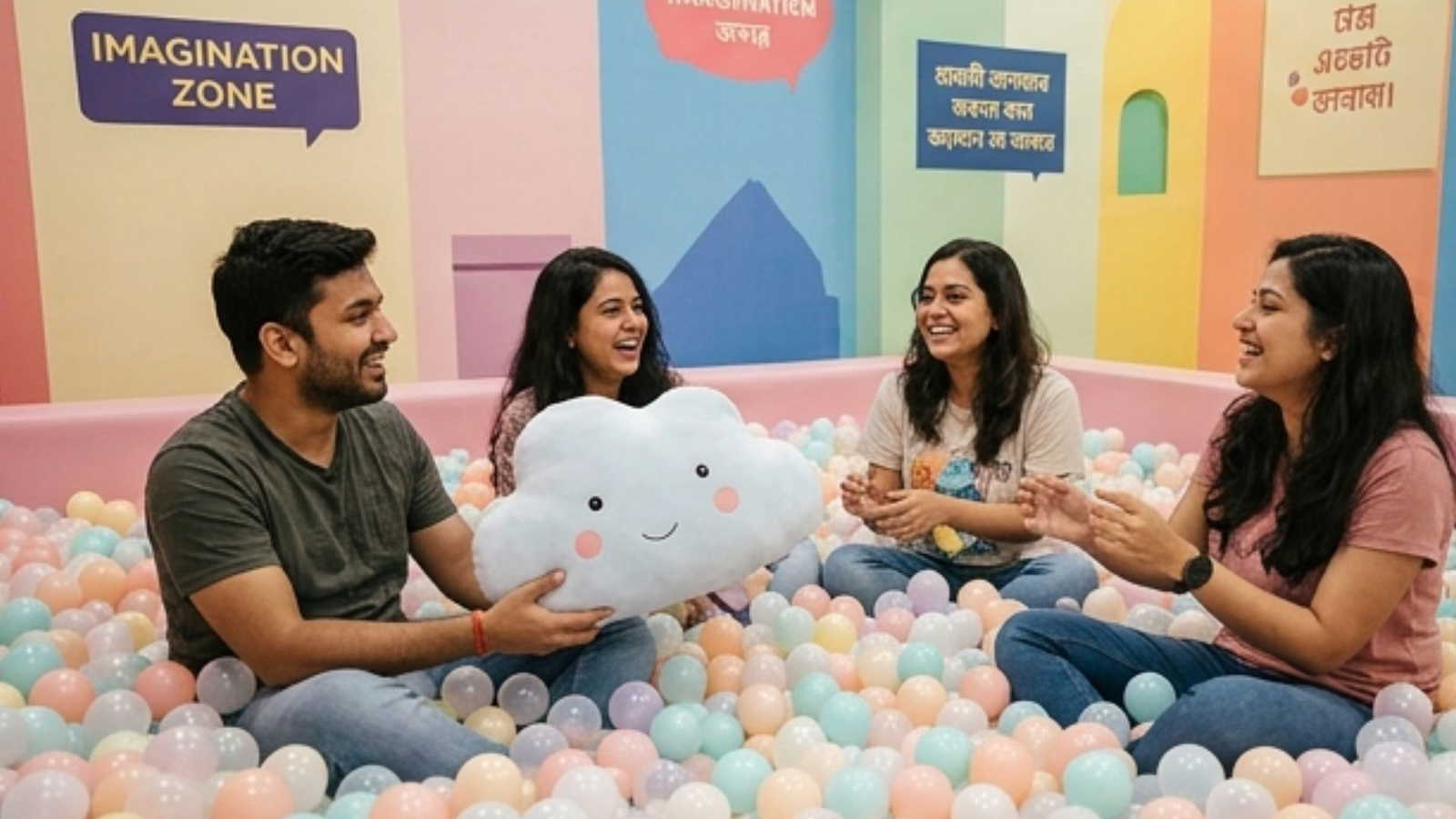
Today, social media such as TikTok and Instagram is riddled with 'comfort-core' aesthetics like pastel colors, childhood elements, comfortable video game settings, and nostalgia-driven entertainment. Companies are aware of the change too.
Big brands like Lego, Jellycat, and even McDonald's have realized the trend and began targeting adult consumers with nostalgic or childhood-themed products. Dopamine Land in London and Wondr in Amsterdam offer immersive play experiences to adults, previously exclusive to children.
But the trend also reflects something deeper
Increased popularity of kidulting also reflects an emotional side to the current generation of internet users. In the context of political conflict and online outrage, many Gen Z users seem to be creating more vulnerable emotional places where vulnerability is allowed. According to the uploaded essay, pretense and nostalgia can even serve to temporarily erase social boundaries and biases.
Also Read | Horoscope Today, May 25: Financial gains, legal caution & relationship tensions ahead
However, researchers argue that nostalgia is not universally accessible and depends on personal class background, level of trauma experienced and privilege enjoyed by the person.
Even so, the rise of kidulting highlights a larger truth about internet culture today: many young adults are not simply chasing trends. They are searching for comfort, softness and emotional breathing room in a digital world that increasingly feels exhausting.