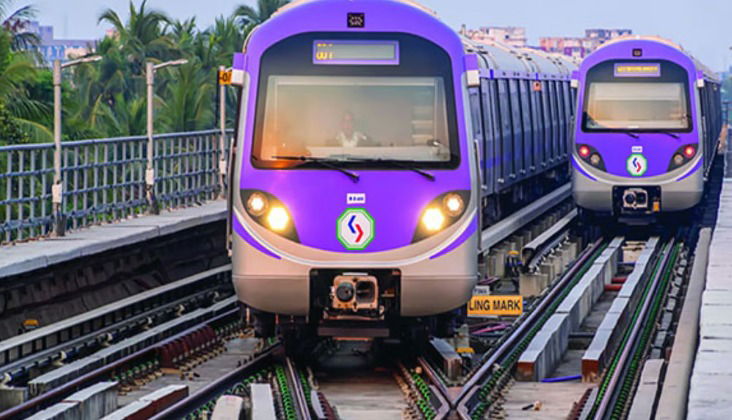
Kolkata Metro’s Blue Line is set to offer train services at intervals of just two-and-a-half minutes (150 seconds) in the near future. As part of this plan, the city’s oldest and busiest metro corridor has undergone a major technological upgrade, with decades-old steel third rails in its underground section being replaced by modern aluminium third rails.
Metro Railway officials have described the upgrade as a significant step toward reducing train headways and increasing service frequency. The new system is expected to enable faster train operations and shorter intervals between services. Authorities also claim that the project will help reduce nearly 50,000 tonnes of carbon emissions in the long run.
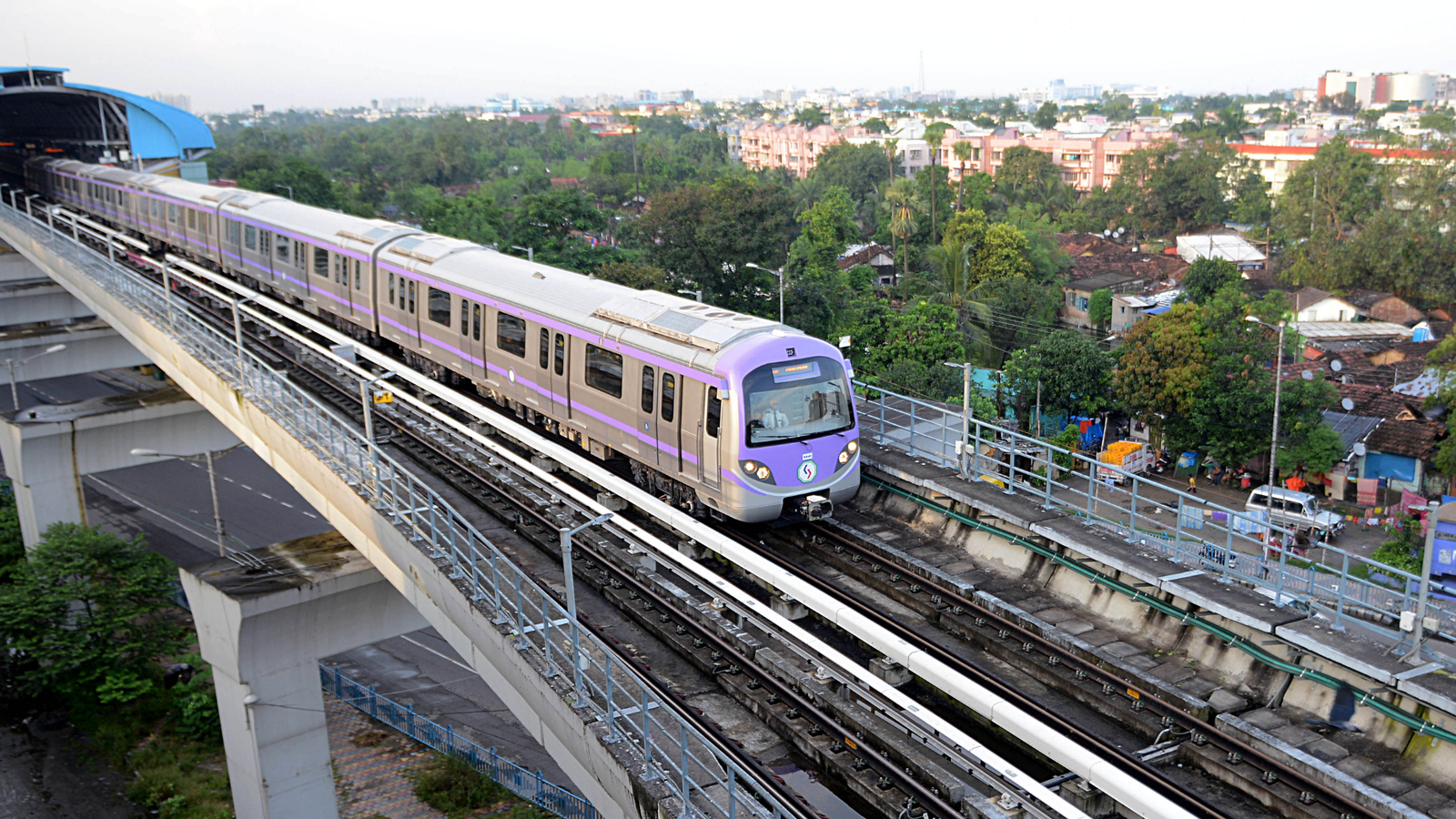 New-age infrastructure set to transform travel on Kolkata Metro's Blue Line. /ANI
 Currently, the Blue Line is one of Kolkata Metro’s busiest corridors, carrying lakhs of passengers every day. Since the corridor began operations in 1984, trains have drawn power through steel third rails. However, with advancements in technology, the older system has become comparatively less efficient and more energy-intensive. This prompted the decision to gradually replace it with modern aluminium third rails.
Also Read | Flights, metro and train services disrupted as powerful storm sweeps through Kolkata
What the upgrade means for Kolkata Metro commuters
According to Metro officials, aluminium has significantly higher electrical conductivity than steel. While steel has an electrical conductivity of around 6 million Siemens per metre, aluminium offers approximately 38 million Siemens per metre. This will substantially reduce voltage drops and energy losses, allowing trains to accelerate more efficiently.
The upgrade is expected to support Kolkata Metro’s plan to reduce train headways to just 150 seconds (two-and-a-half minutes), making higher-frequency operations feasible in the future.
Which parts of the Blue Line have been upgraded?
The new aluminium third rail has been installed primarily along the underground stretches of the Blue Line, covering the sections from Noapara to Dum Dum and from Belgachia to Mahanayak Uttam Kumar stations.
Metro authorities have also announced plans to introduce the same technology on the southern elevated section of the corridor, from Mahanayak Uttam Kumar to Kavi Subhash, in the coming years.
A greener and more energy-efficient Metro system
Officials say the new system will not only improve service efficiency but also benefit the environment. Due to aluminium’s lower electrical resistance, less heat will be generated, reducing the load on tunnel air-conditioning systems.
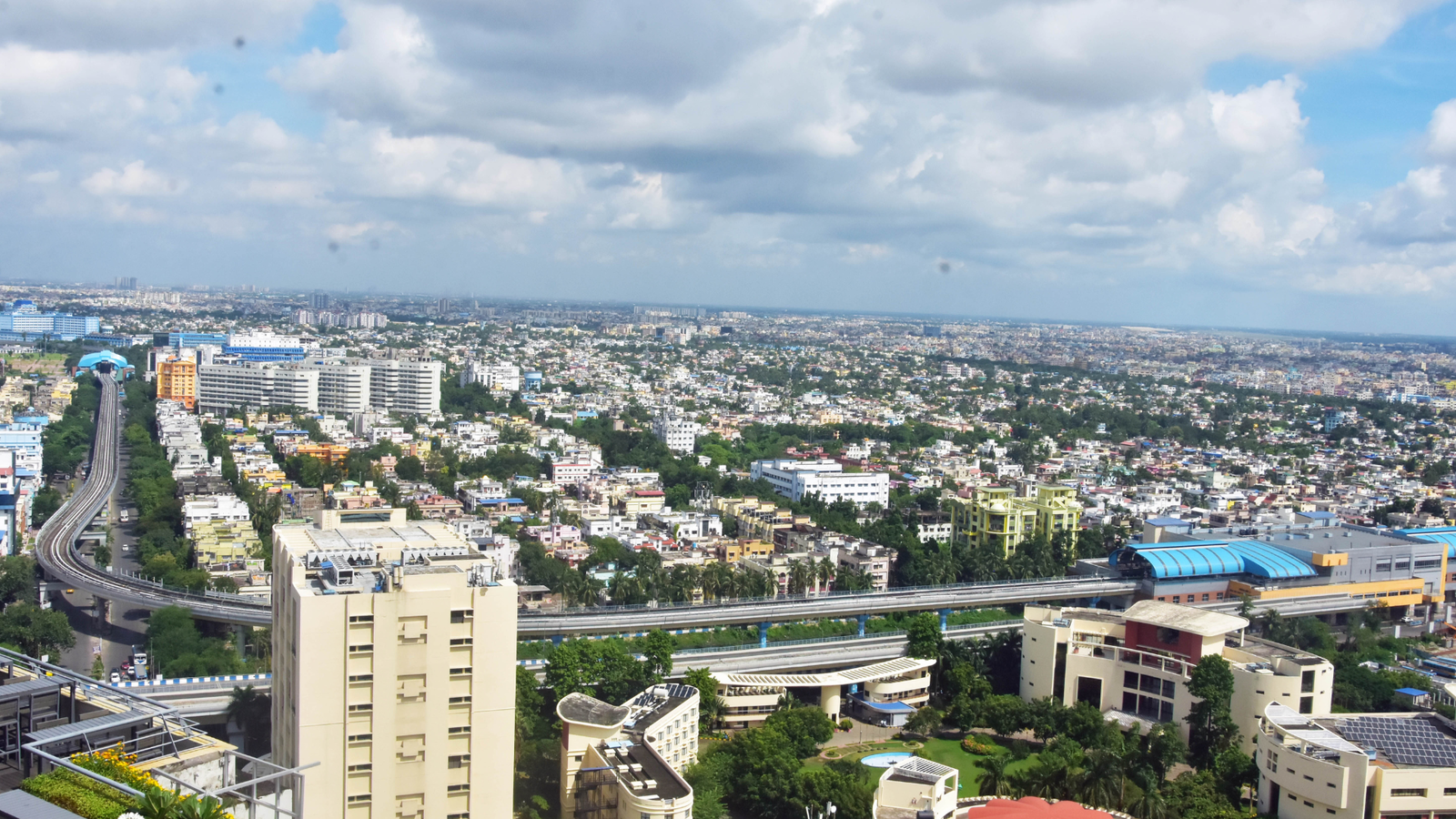 Kolkata Metro's latest upgrade aims to deliver greener operations with improved power efficiency. /ANI
 The Metro estimates that the upgrade could eventually cut carbon emissions by nearly 50,000 tonnes while also saving substantial amounts of electricity annually. Lower energy consumption is expected to reduce operational costs as well.
Also Read | Second Hooghly Bridge to stay closed for 8 hours on Sunday: Check diversion routes here
Bigger plan for Kolkata Metro's future
The project forms part of a broader modernisation plan for the Blue Line, Kolkata Metro’s historic north-south corridor and India’s first metro railway line. The corridor is being upgraded with energy-efficient and advanced technologies to meet growing passenger demand.
Increasing train frequency has become crucial, especially during peak office hours, when overcrowding remains a major challenge. To achieve this, the gap between successive trains must be reduced. The Central Government has already allocated approximately ₹671.7 crore for the initiative.
The modernisation programme also includes the introduction of advanced Communication-Based Train Control (CBTC) signalling, construction of additional traction substations, and measures to increase maximum train speeds. In the long term, Kolkata Metro aims to operate trains at intervals of just 90 seconds, similar to world-class systems such as the London Underground and the Moscow Metro.