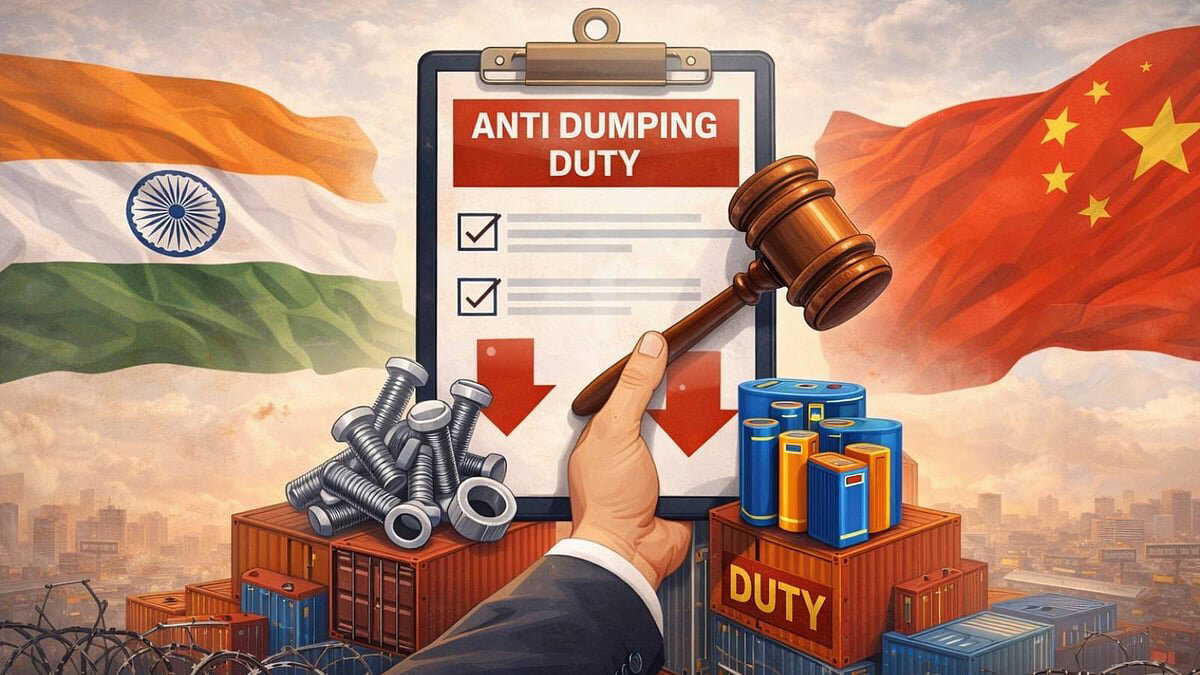
India took strict measures to protect the domestic industry from the impact of cheap imports. This month, anti-dumping duties have been imposed on two products originating from China. These products are a refrigerant gas and a special type of steel.
According to a Finance Ministry notification, this duty has been imposed on cold-rolled non-oriented electrical steel and 1,1,1,2-tetrafluoroethane or R-134a gas imported from China. It is alleged that these products were being sent from China to India at much lower prices than normal rates.
In the case of steel products, a duty of $223.82 per ton has been imposed on some Chinese companies. Again, for several companies, this duty amount is $415 per ton. This anti-dumping duty will remain effective for the next five years. For R-134a gas used in refrigerators, an anti-dumping duty of up to $5,251 per ton has been imposed. This duty will also remain effective for the next five years.
ALSO READ | What is Algo Trading and how safe is it? Explained
Besides this, India has imposed an anti-dumping duty on 'calcium carbonate filler masterbatch' imported from Vietnam. This product is widely used in the plastics industry.
The Directorate General of Trade Remedies (DGTR) under the Commerce Ministry recommended imposing this duty after conducting separate investigations. The investigation revealed that domestic producers were facing losses due to cheap imports. According to experts, due to America's high tariff policy, many countries are sending their products to markets like India. As a result, the risk of dumping is increasing. In this situation, India is taking such measures to protect the domestic industry.
ALSO READ | FY25 a defining year for FMCG as Joy Personal Care closes near ₹700 crore, targets ₹900 crore in FY26
It should be noted that India, China and Vietnam- all three countries are members of the World Trade Organisation or WTO. This anti-dumping duty has been imposed in compliance with WTO rules.
What is Anti-Dumping Duty?
Anti-dumping duty is a tariff imposed on products coming from abroad at low prices. When a country sees that its domestic industry is being harmed due to low-priced imports, this duty is imposed. Its purpose is to ensure fairness in trade and create opportunities for equal competition for domestic producers.