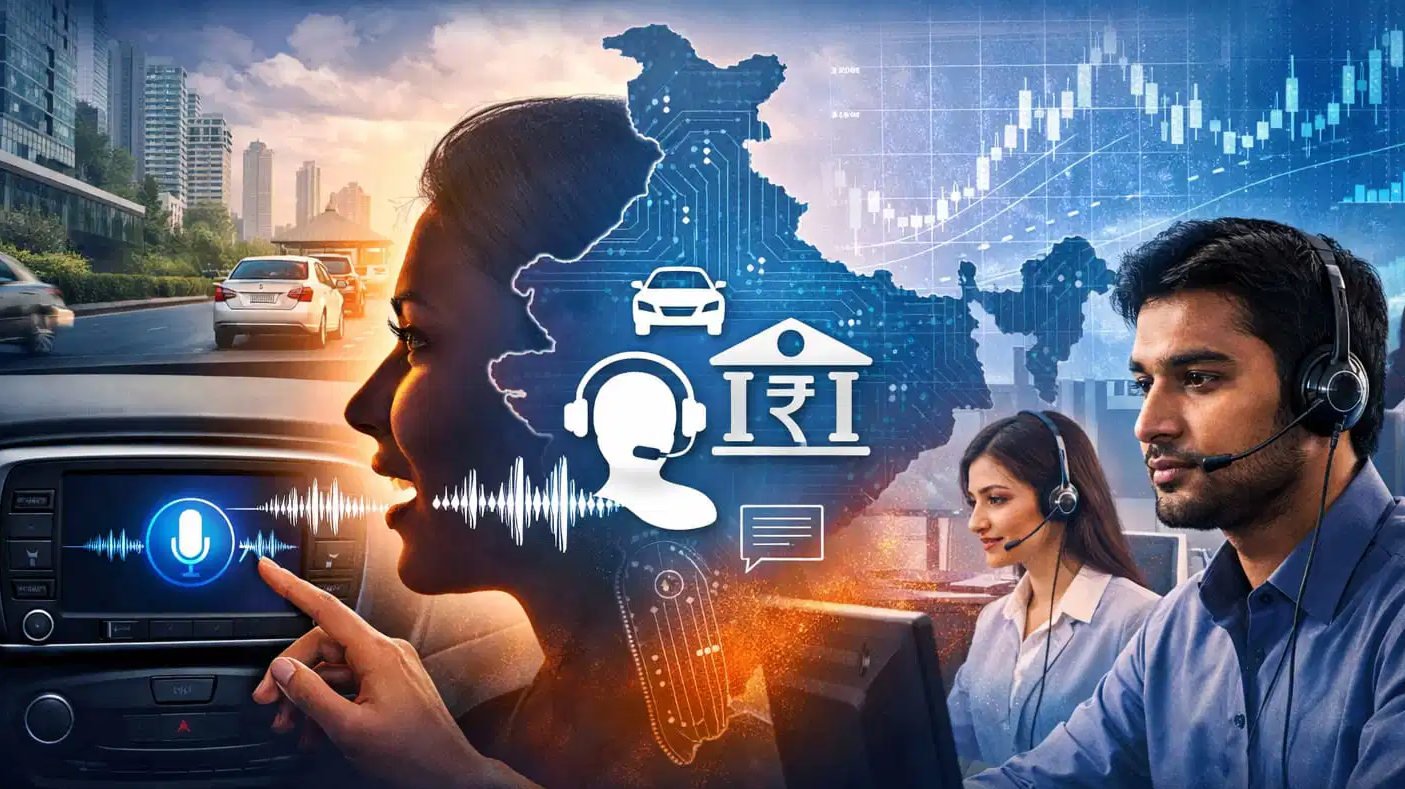
Long before voice assistants became a fixture of everyday technology, a Kolkata-based startup was quietly working on a problem global platforms had largely ignored: how Indians actually speak. In Kolkata, Bengali is the primary language spoken, with a major section of the population in the city well versed in Hindi and English. However, accent differences across the languages have emerged as a barrier for voice assistants over time.
At a time when most digital interfaces were English-led and text-heavy, a company focused on speech as a more natural entry point for India’s diverse user base. For its first three years, Kolkata-based startup Mihup concentrated almost entirely on building its core technology stack, well before voice AI and generative AI entered the mainstream enterprise conversation. That early bet is now shaping its position across two sectors where voice data is both abundant and underutilised: automotive and contact centres.
“Voice is the most intuitive interface for a market as diverse as India,” said Priyanka Kamdar, head of growth at Mihup.
“Our focus has been on solving real-world enterprise problems, while staying rooted in Indian languages and use cases,” Kamdar continued. As per its portfolio, the company says it complies with global standards such as ISO, GDPR and SOC 2, an increasingly critical factor as AI adoption deepens in regulated sectors like banking and insurance.
Also Read | India's consumer durables industry shows resilience in FY25, says Godrej Enterprises' Kamal Nandi
Kolkata’s gradual emergence as a hub for applied AI, beyond the more visible startup centres appears to be the road ahead. While battling the daily emerging startups, especially in the field of AI-driven innovations. However, does this come at a price?
'Advancement also demands responsibility'
However, history suggests advancement and innovation arrive with an asterisk. Keeping such advanced interfaces away from the wrong user base will always remain the key for companies leading the innovation drive.
"Voice is emerging as one of the most powerful interfaces in AI-led innovation, particularly for a linguistically rich city like Kolkata. From voice assistants and automated customer services to new consumption and public communication, AI-driven voice technologies make information more accessible across languages and accents. Today, global platforms are increasingly accommodating regional accents, including Bengali and other Indian speech patters, which is a significant step towards digital inclusion," says Joydeep Dasgupta, AI expert and founder of Media Skills Lab.
"However, this advancement also demands responsibility, as the same voice technologies can be misused through AI-generated deepfake audio, impersonation, misinformation, which can mislead people and erode public trust. Therefore, alongside innovation, strong awareness, ethical safeguards, and media and AI literacy are essential to ensure voice-based AI serves society without causing harm," Dasgupta continued.
Also Read | Why 2026 could be a strong year for India’s real estate market? Here's what an expert suggests
It appears that the city's AI dream is simple: innovation tailored to local realities can find relevance well beyond them. Yet, supervision around innovations remain a key, so that advancements do not fall into wrong hands.