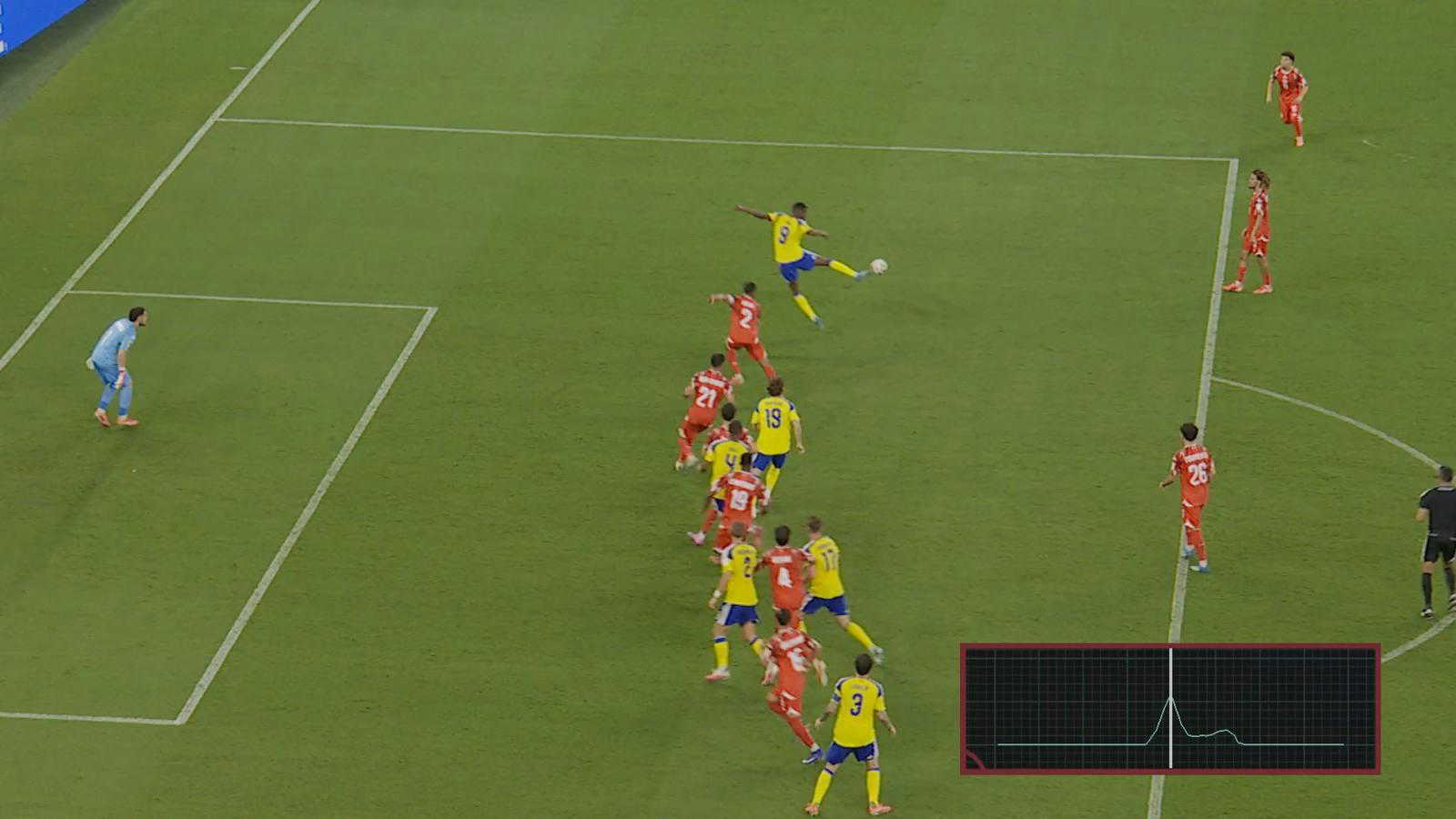
The FIFA World Cup 2026 witnessed a significant technological milestone as Snicko, a system widely associated with cricket, was used for the first time in football during Sweden’s Group F match against Tunisia.
The technology came into focus during Sweden’s convincing 5-1 victory, when match officials reviewed a key attacking sequence through VAR. Snicko, which uses audio signals to detect contact, helped determine whether a Swedish player had touched the ball before the move resulted in a goal.
Cricket technology enters football
For years, Snicko has been a familiar feature in cricket broadcasts, assisting umpires in identifying faint edges between bat and ball. FIFA has now incorporated the technology into its officiating setup as part of its efforts to improve decision-making accuracy at the World Cup.
Also Read | England's World Cup training gear recovered a day after theft, two charged
During the review, officials used the system to confirm a touch by Swedish forward Alexander Isak before the ball reached teammate Mattias Svanberg, who went on to score. The evidence helped validate the goal after a brief check.
🚨💣BREAKING: Cricket just invaded the World Cup! Snicko makes its football debut 🏏⚽️
— Michelle (@Chefdoo95) June 15, 2026
In Sweden vs Tunisia match, VAR pulled out the ultimate crossover weapon: cricket’s Snicko technology complete with audio spikes and ball sensors to check if Alexander Isak got the faintest… pic.twitter.com/ZdrIYFKSXb
The introduction of Snicko adds another layer to football’s growing list of technological aids, alongside VAR, semi-automated offside technology and sensor-equipped match balls.
Sweden begins campaign in style
While the debut of Snicko grabbed headlines, Sweden’s dominant performance ensured a memorable start to their World Cup campaign. Yasin Ayari scored twice, while Alexander Isak, Viktor Gyokeres and Mattias Svanberg also found the net.
Also Read | FIFA to compensate Somali referee despite missing World Cup after US entry refusal
Tunisia managed a consolation goal through Omar Rekik but struggled to contain Sweden’s attacking threat throughout the contest.
The victory gives Sweden an early advantage in Group F and strengthens their hopes of progressing to the knockout rounds. At the same time, the match will be remembered as the occasion when football embraced one of cricket’s most recognizable technologies, opening a new chapter in the sport’s use of technology.