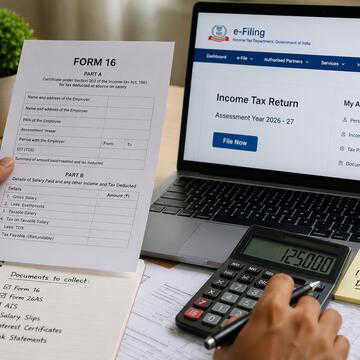
Taxpayers preparing to file their Income Tax Returns (ITR) for Assessment Year (AY) 2026-27 should note that July 31 is not the deadline for everyone. The Income Tax Department has set different due dates based on the type of income earned, whether the taxpayer has business income, and if audit requirements apply.
Failing to submit the return within the prescribed timeline may result in penalties and interest. Here's a breakdown of the important deadlines and the ITR forms applicable to different categories of taxpayers.
Key ITR filing deadlines for AY 2026-27
The due date for salaried individuals and certain other taxpayers filing ITR-1 or ITR-2 is July 31, 2026. For taxpayers with business or professional income who do not require an audit and file ITR-3 or ITR-4, the deadline is August 31, 2026. Those whose accounts are subject to audit and file ITR-3 or ITR-4 must submit their returns by October 31, 2026.
Also Read | ITR filing guide: Can you file income tax returns without Form 16?
Businesses that are required to furnish transfer pricing reports for international or specified domestic transactions have until November 30, 2026, to file their returns.
Meanwhile, belated returns can be filed up to December 31, 2026, while revised returns can be submitted until March 31, 2027. Taxpayers opting for an Updated Return (ITR-U) can do so till March 31, 2031.
Which ITR form should you choose?
ITR-1 (Sahaj) is meant for resident individuals with annual income up to ₹50 lakh from salary, one house property, interest income and agricultural income up to ₹5,000. It also allows reporting of long-term capital gains up to ₹1.25 lakh in a financial year.
ITR-4 (Sugam) can be used by individuals, Hindu Undivided Families (HUFs) and eligible firms with income up to ₹50 lakh from business or profession under the presumptive taxation scheme. However, several categories, including company directors, individuals with foreign assets, certain capital gains and higher-income taxpayers, cannot use this form.
ITR-2 applies to individuals and HUFs who do not earn business income but have income from salary, multiple house properties, capital gains, dividends or interest.
ITR-3 is designed for individuals and HUFs earning income from proprietary businesses or professions and maintaining regular books of accounts.
Also Read | Jio's market debut nears? Listing 'fairly imminent', says executive; IPO papers may be filed within days
What has changed this year?
A notable change this year is the phased rollout of filing utilities. Instead of releasing all ITR forms simultaneously, the Income Tax Department is enabling online filing and Excel utilities form-wise.
At present, Excel utilities for ITR-1, ITR-2 and ITR-4 are available in the download section of the income tax e-filing portal, allowing eligible taxpayers to begin filing their returns.
FAQs:
What is the last date to file ITR for AY 2026-27?
The deadline depends on the taxpayer category, ranging from July 31 to November 30, 2026.
Which ITR form should salaried individuals file in 2026?
Most salaried taxpayers with income up to ₹50 lakh can file ITR-1, subject to eligibility conditions.