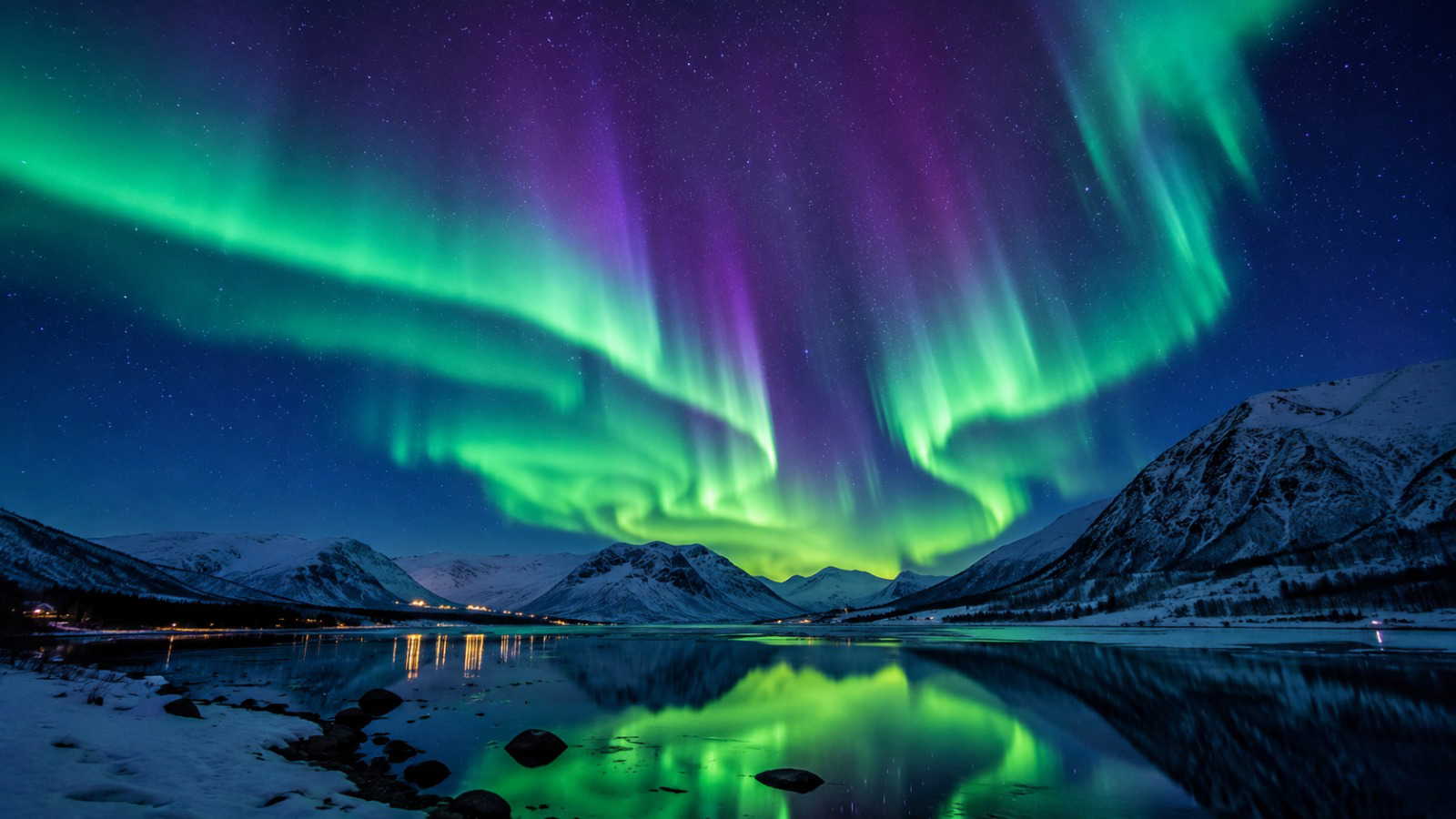
A powerful solar storm heading towards Earth has generated excitement among skywatchers worldwide, with many wondering whether the phenomenon could make the elusive aurora visible from unusually low latitudes, including parts of India.
What is Aurora?
Solar storms occur when the Sun releases bursts of charged particles that interact with Earth's magnetic field. These interactions often produce colourful atmospheric light displays known as auroras, typically seen near the Arctic and Antarctic regions. During particularly intense geomagnetic storms, however, the auroral zone can expand, allowing sightings much farther from the poles than usual.
Also Read | Teen 'kills father and sister' in Karnataka; online gaming addiction under probe
Despite growing interest, experts say India is unlikely to become a major aurora-viewing destination during the current solar activity. Scientists note that the country lies well outside the normal auroral visibility zone, making any potential sightings highly uncertain.
Will Aurora be visible from India this time?
According to an article by MoneyControl News, observers have said that the northernmost regions of India would offer the best chance of witnessing the phenomenon if the solar storm becomes significantly stronger than current forecasts suggest. Among these locations, Ladakh, especially around the Leh and Hanle region, is considered the most favourable due to its high altitude, dark skies and northern geographical position.
However, researchers caution that even in Ladakh, auroral visibility would require exceptionally intense geomagnetic conditions. Experts stress that for auroras to reach as far south as India, the storm would need to attain levels far beyond those associated with typical or moderately strong solar events.
Even under such rare circumstances, any auroral display visible from India would likely appear faint, remain low on the horizon and be difficult to observe with the naked eye.
While countries across higher latitudes in Europe, North America and parts of Asia may experience vivid and colourful auroral displays, scientists say the likelihood of a clear aurora sighting from India remains low. Any successful observation within the country would be considered a rare and remarkable event.