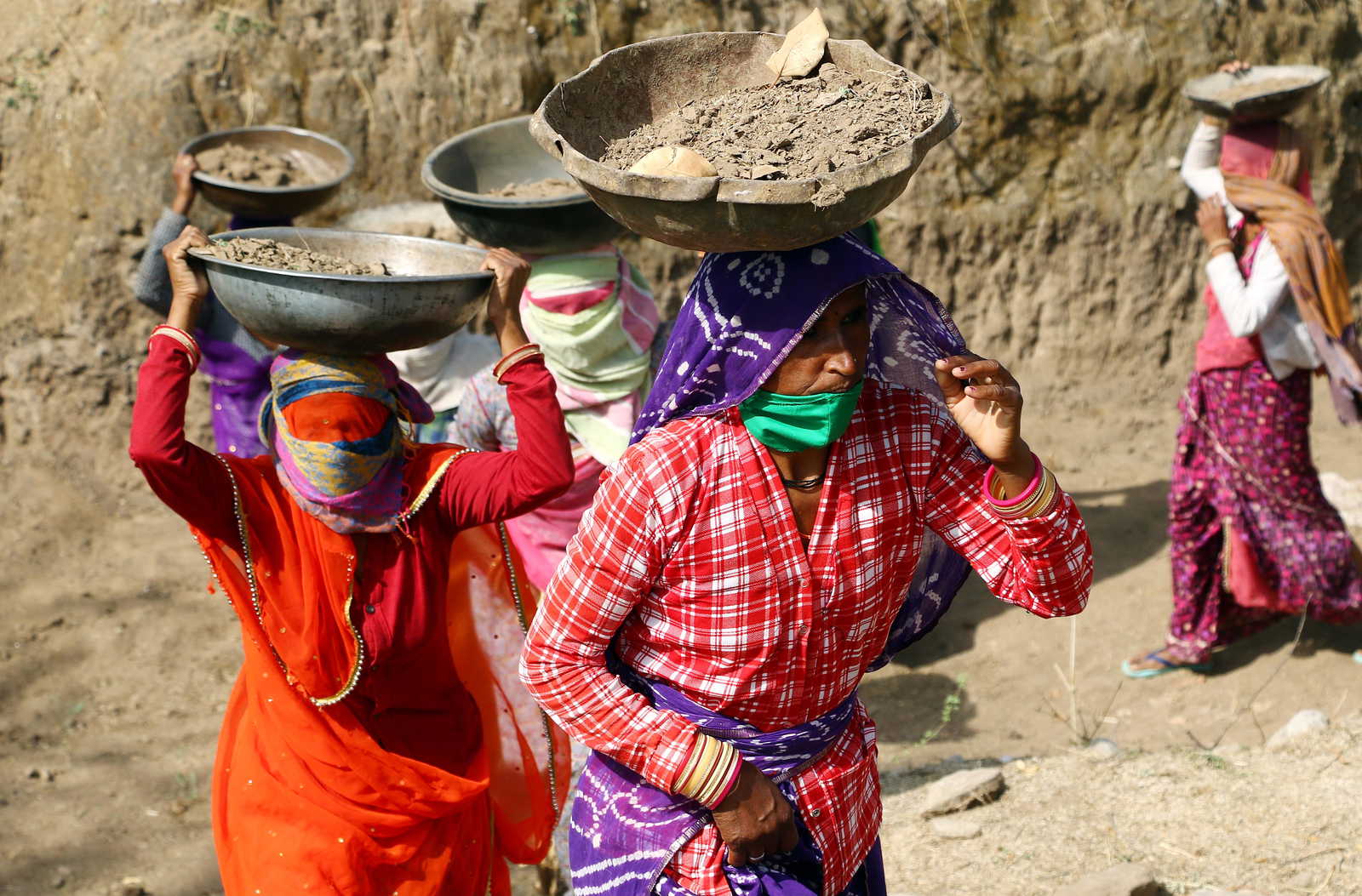
The political battle over rural employment schemes sharpened in Punjab on Monday, with the Bharatiya Janata Party accusing the Aam Aadmi Party government of using official machinery to manufacture opposition to a new central law aimed at expanding guaranteed rural employment.
Punjab BJP working president Ashwani Sharma alleged that the state government was misleading MGNREGS workers into signing protest letters against the Viksit Bharat–Guarantee for Rozgar Aajeevika Mission (Grameen), or VB-G RAM G Act. According to him, village-level officials were being used to collect signatures, creating what he described as “false opposition” to the legislation, as per a PTI report.
ALSO READ | Who is V V Rajesh? First BJP leader elected as Thiruvananthapuram Mayor
At the heart of the dispute lies a proposed shift in the rural employment framework. Sharma said the new law increases guaranteed employment from 100 days to 125 days and introduces an unemployment allowance if work is not provided on time, provisions he argued directly benefit rural workers. “If the law strengthens income security, why is the state government opposing it?” he asked.
The BJP leader sought to frame the controversy as a question of governance rather than ideology. He alleged that despite being in power for three years, the AAP government has failed to provide even the existing 100 days of work to MGNREGS workers and has not paid unemployment allowances during this period. He further claimed that mandatory social audits were being bypassed to conceal irregularities.
Citing official figures, Sharma said social audits were not conducted in 6,095 gram panchayats in 2024–25 and in 7,389 panchayats in 2025–26. He also alleged that action-taken reports were pending in 3,986 corruption cases identified under MGNREGS, while recovery orders worth ₹2.35 crore issued by the Lokpal or ombudsperson remain unimplemented.
ALSO READ | Ajit and Sharad Pawar reunite for Pune civic polls for first time after bitter NCP split
The BJP’s criticism extended beyond the ruling party. Sharma accused the Congress of having presided over corruption in MGNREGS during its tenure, arguing that the current government is continuing a culture of impunity by shielding officials rather than enforcing accountability.
The charges add to a growing contest between states and the Centre over welfare design, implementation and political ownership. As rural employment schemes increasingly rely on data, audits and administrative compliance, the dispute also underscores how governance capacity, and its perceived misuse, can shape public trust in flagship welfare programmes.