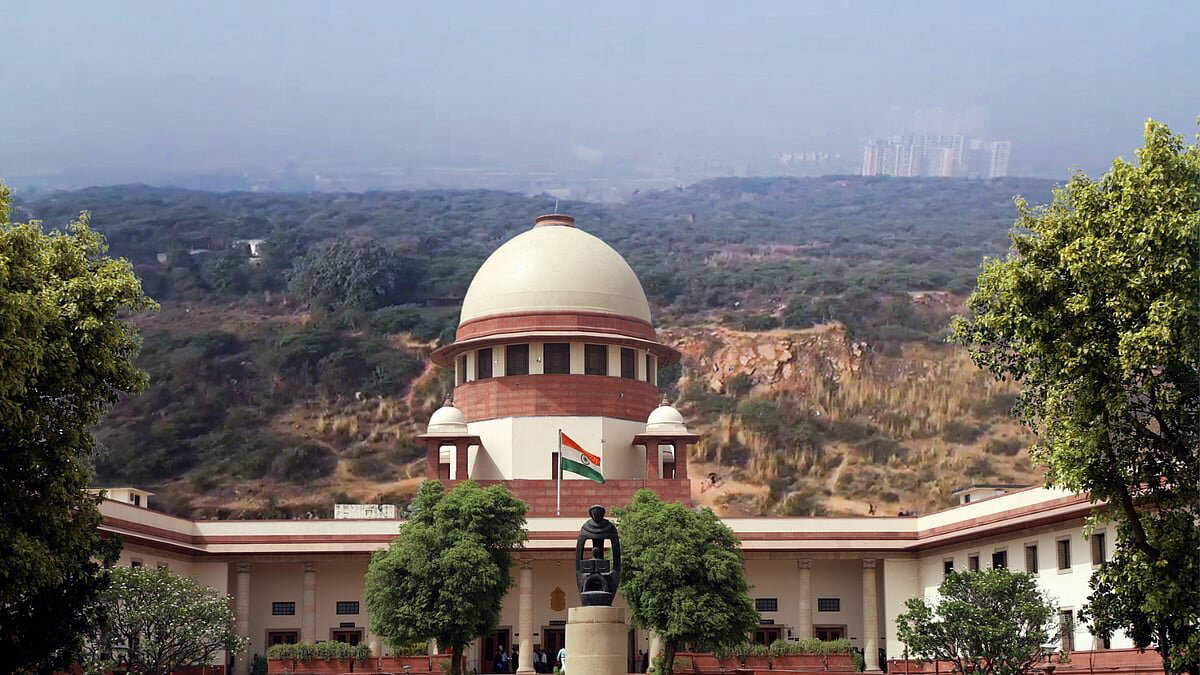
The Supreme Court stayed its earlier judgment in the case concerning the redefinition of the Aravalli mountain range. It has been announced that the November 20 directive will not be effective for now. The Supreme Court stated that the next hearing of this case will be on January 21. The bench led by Chief Justice Surya Kant has directed the Centre to resolve all existing complexities. The other two members of the bench are Justice JK Maheshwari and Justice AG Masih.
The Supreme Court has sent notices to the Centre and the governments of Rajasthan, Gujarat, Delhi and Haryana (these four states have the Aravalli range). The court has sought their position in this suo moto case.
What has the Supreme Court directed?
The Chief Justice stated that before starting work based on existing reports or judgments, a transparent and impartial process is needed. Through this, clear directives will be given on several issues. The Supreme Court said that regarding the report submitted by the earlier panel on the Aravalli, a committee of experts must be formed to assess what environmental impacts could occur if it is implemented. Most members of the previous committee were bureaucrats.
The Aravalli region is rich in minerals. Mining can certainly be done in that area. But the Supreme Court stated that such plans must be prepared by experts, and work on those plans cannot begin until the court's approval is obtained. Not only that, the court said that before reaching a final decision, the perspectives and opinions of stakeholders (those who may be directly affected by any work in that area) must also be taken.
If a hill is not more than 100 meters high above the surface, then it cannot be considered part of the Aravalli mountain range. The Supreme Court had earlier approved this definition of the Aravalli given by the Union Ministry of Environment, Forest and Climate Change. After that, environmentalists across the country became vocal in strong protest. It was claimed that if this definition is implemented, it will have a massive impact on the overall environment of that area, and changes will also come to the environment of the entire North India.
Also Read | Is the 'migrant' tiger now Gujarat's 'son of the soil'? Survey will tell
The protesters claimed that if that report is implemented, most of the Aravalli will no longer be considered mountains. Uncontrolled mining will increase, and as a result, the overall ecosystem of that area will be damaged. Not only that, it was claimed that uncontrolled mining would further increase pollution in Delhi and adjacent areas. However, the government did not want to accept that claim, with the Forest Minister himself claiming that there would be no uncontrolled mining whatsoever. According to the new definition, no damage would be done to the Aravalli either. Amid this tug-of-war, the Supreme Court intervened suo moto in this matter. There was a hearing in the country's apex court on Monday. There itself, the Supreme Court stayed its earlier judgment.