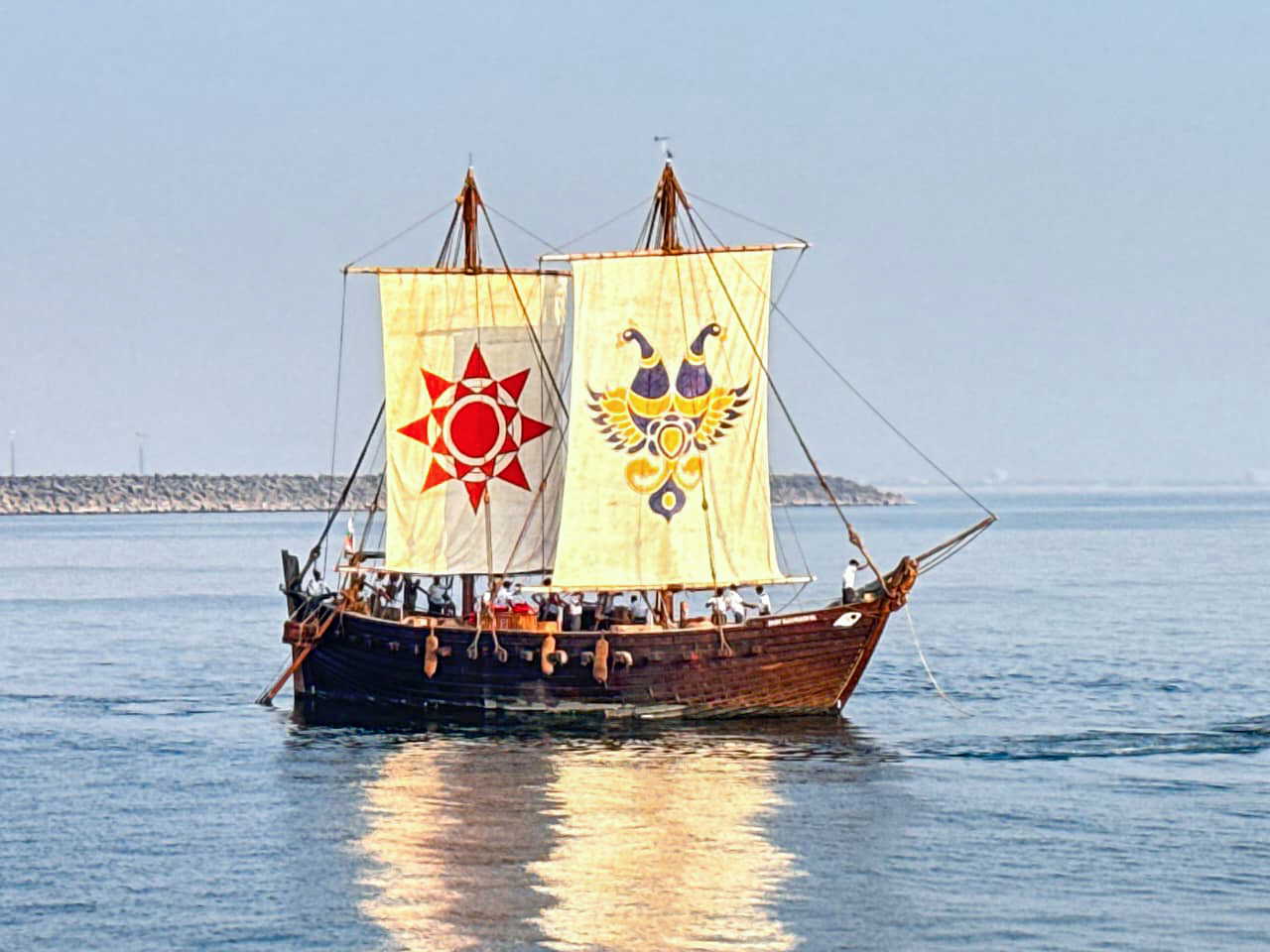
The Indian Navy’s INSV Kaundinya is set to sail from Porbandar in Gujarat to Muscat in Oman, retracing ancient maritime routes once used by Indian traders and sailors.
Unlike modern vessels, the ship has no engine, no metal nails, and no mechanical propulsion. It relies entirely on wind and sails, following shipbuilding methods believed to date back to the 5th century CE.
ALSO READ | New Year deliveries at risk as Swiggy, Zomato workers plan nationwide strike on Dec 31
Though operated by the Indian Navy, INSV Kaundinya is not a combat ship. Instead, it stands as a floating symbol of India’s rich maritime history and traditional craftsmanship.
What is INSV Kaundinya?
INSV Kaundinya is a stitched sail ship inspired by depictions in the Ajanta cave paintings, ancient texts, and accounts of foreign travellers. Its wooden planks are sewn together using coir ropes made from coconut fibre, rather than iron nails. Natural resins, cotton, and oils are used to seal the hull.
ALSO READ | Is the 'migrant' tiger now Gujarat's 'son of the soil'? The survey will tell
The ship follows the Tankai method of construction, where the hull is stitched first, and ribs are added later. This makes the vessel flexible, allowing it to absorb strong waves more effectively. It measures about 19.6 metres in length, 6.5 metres in width, and carries a crew of around 15 sailors.
Why is this voyage important?
The ship is named after Kaundinya, a 1st-century Indian mariner believed to have sailed to Southeast Asia and helped establish the Kingdom of Funan. The current voyage highlights ancient trade links between India, Oman, and Southeast Asia, once vital routes for the exchange of goods, culture, and ideas.