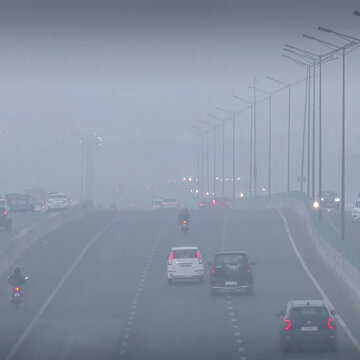
This year, IGI is deploying the Delhi International Airport Limited (DIAL)-run Airport Predictive Operations Centre (APOC), which would link the real-time weather data, predictive fog models, and on-ground operational inputs into a single command hub.
Smart Systems: Fog prediction meets AI operations
According to HT, the officials have mentioned that this smart system helps with quicker decisions, smarter gate and runway scheduling, and better aircraft sequencing during rapidly changing visibility. The airport is also recording data from the Winter Fog Experiment (WiFEX), which is a joint effort involving the Indian Institute of Tropical Meteorology (IITM), India Meteorological Department (IMD) and DIAL to forecast fog buildup 1–36 hours in advance.
Also Read| IndiGo Chairman apologises for week-long crisis, denies causing 'deliberate chaos'
Runways rebuilt: Landing safely when all you see is white
One of the biggest changes has been infrastructure, where three of the airport’s main runways, 10/28, 11L/29R and 11R/29L, are now fully CAT-III compliant at both ends. This upgrade will allow aircraft to safely land even when visibility is extremely low, which is a common feature of Delhi’s winter mornings.
The airport claims it can handle up to 30 landings per hour, even under low visibility. It is a huge growth when compared with earlier winters, which were covered with thick fog, which often forced long delays, diversions, or cancellations. The revamped runways, blending with better scheduling via APOC, are expected to cut down fog-related disturbances by several hours.
Also Read| Four police officers killed in truck collision in Madhya Pradesh
The IGI Airport appears to be fighting back against the annual winter fog challenge. The weather will always remain unpredictable, but the combination of CAT-III runways and data-driven operations gives travellers hope for smoother journeys this season.