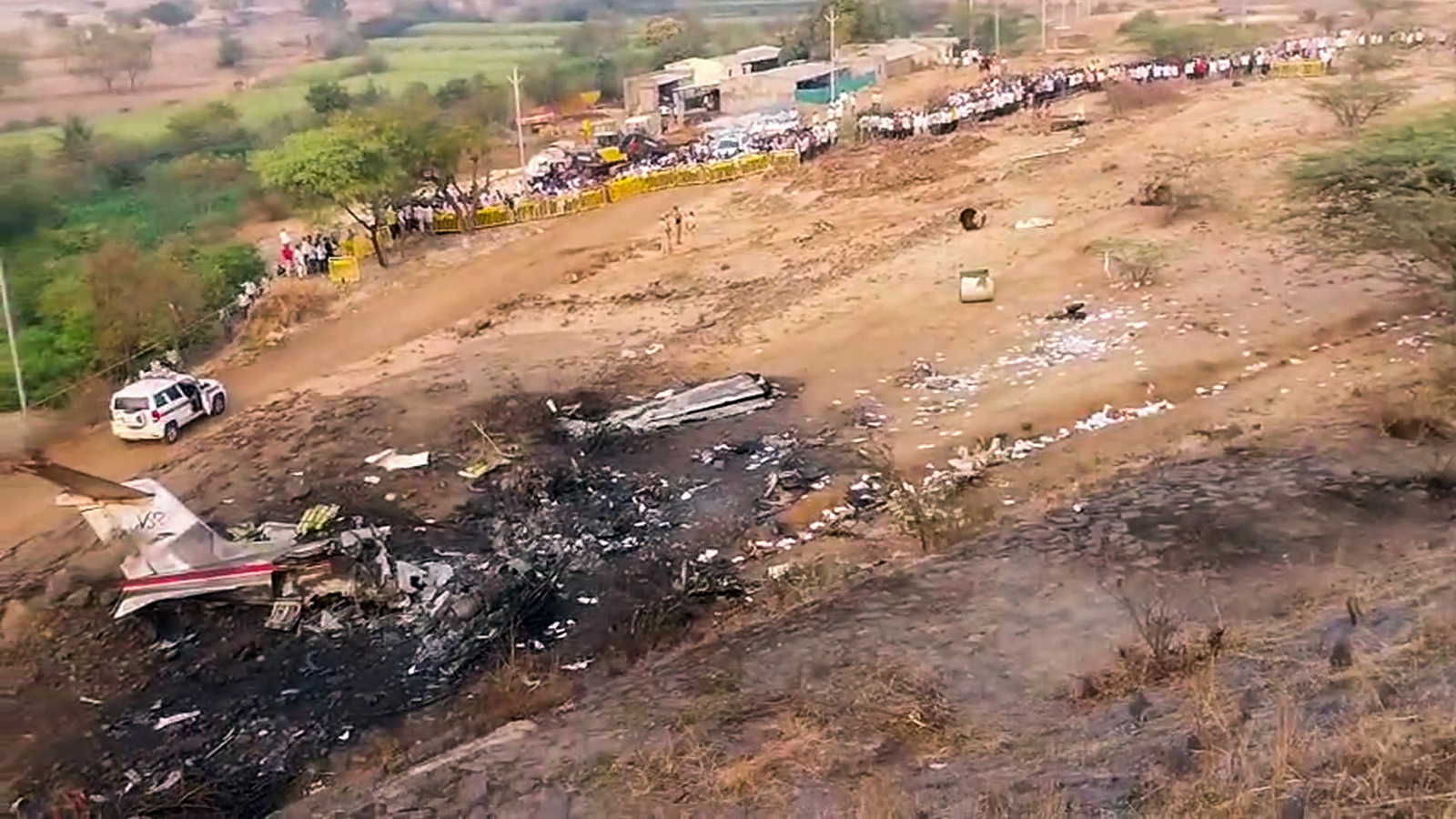
A key procedural error has come to light in the investigation of the crash of the chartered Learjet 45, which was carrying Maharashtra Deputy Chief Minister Ajit Pawar. The Civil Aviation Ministry has stated that the pilot “did not give readback of landing clearance” just before the plane crashed near the Baramati airport on Wednesday morning, killing all five people on board.
The chartered plane had taken off from Mumbai at 8.10 am and was expected to land in Baramati in 45 minutes. However, at 8.46 am, the plane was seen crashing on CCTV cameras installed in the vicinity of the airport, about 100 feet short of the runway. It is also significant that the plane had stopped transmitting ADS-B signals, which give real-time information about the speed and location of the aircraft, 12 minutes before the crash.
What does ‘readback’ mean?
In aviation terms, “readback” refers to a pilot repeating instructions received from Air Traffic Control (ATC) to confirm that they have been heard and correctly understood. According to SKYbrary, “an electronic repository of safety knowledge related to flight operations, air traffic management, and aviation safety”, readback can be full or partial but is considered essential for safe coordination between pilots and controllers.
Also Read | Maharashtra observes 3-day mourning for 'Ajit Dada': Here's a complete list of what's open and closed
This protocol becomes particularly critical during landing, when clarity is needed on runway allocation, weather conditions, visibility, and surrounding traffic.
Why is readback crucial?
Readback helps ensure that both the pilot and ATC are aligned, reducing the risk of miscommunication. Aviation safety guidelines require pilots to read back instructions related to route clearances, runway entry or exit, landing or take-off clearance, and changes in speed, altitude, or heading. ATCs are, in turn, required to listen for accuracy and immediately correct any discrepancies.
Failure to follow this step can result in serious safety risks, especially during high-workload phases such as the final approach.
Sequence of events before the crash
According to the government’s preliminary statement, the aircraft established contact with Baramati airport at 8.18 am. The pilot, Captain Shambhavi Pathak, was briefed on weather conditions and advised to land at discretion. Visibility was reported to be around 3,000 metres, which experts say is adequate for attempting a landing.
Also Read | Indian Air Force takes charge at Baramati airport as Ajit Pawar crash raises safety questions
The pilot initially reported the runway was not in sight and was instructed to perform a go-around, a standard safety procedure. Shortly after, she confirmed the runway was visible and was cleared to land at 8.34 am. However, investigators noted that there was no readback of this landing clearance.
The Aircraft Accident Investigation Bureau (AAIB) has taken charge of the investigation. Officials are examining communication records and flight data to determine how the absence of readback may have contributed to the fatal crash.