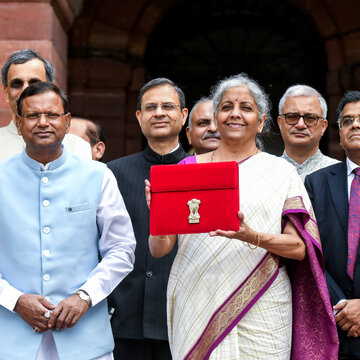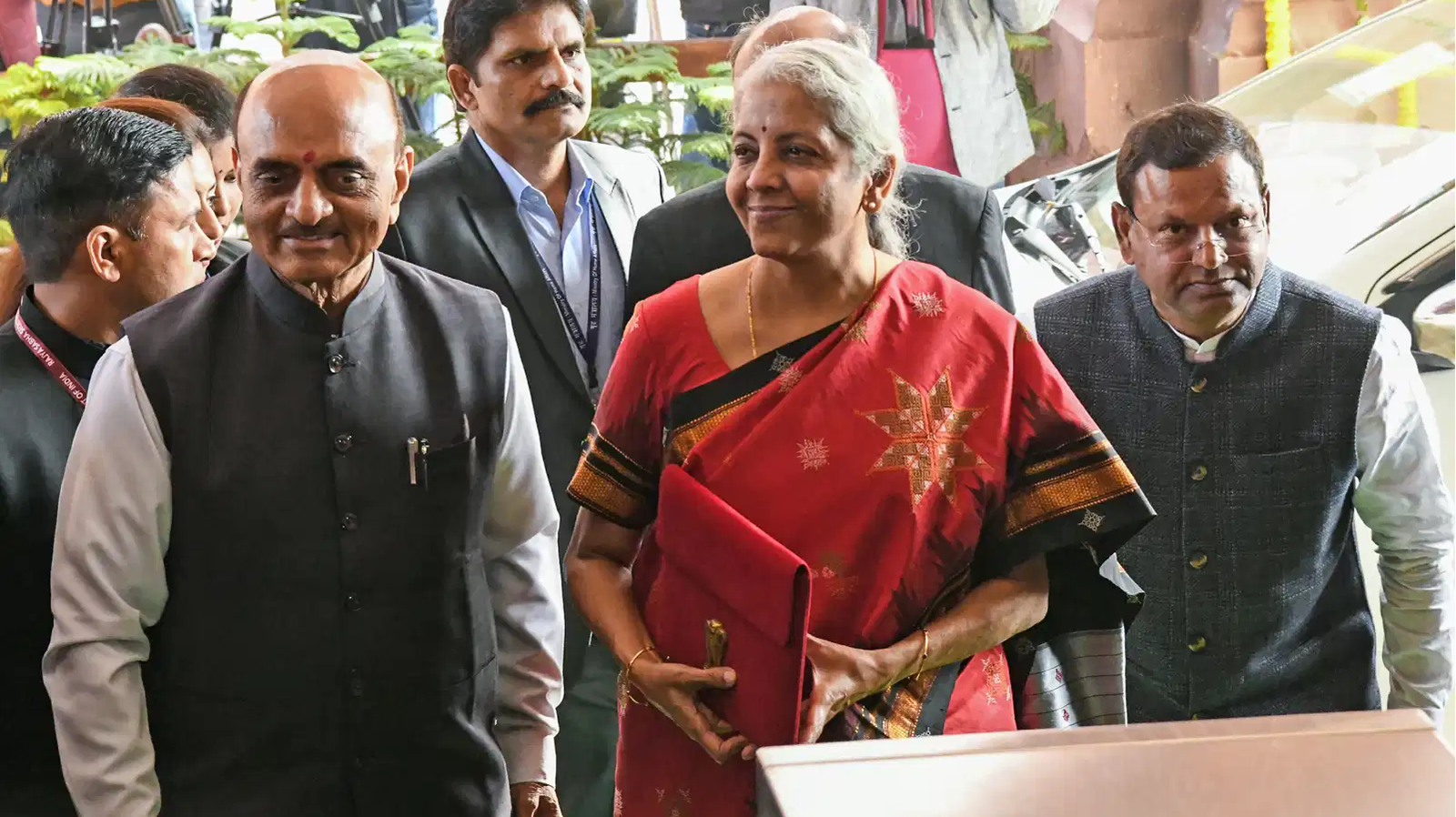
Union Finance Minister Nirmala Sitharaman on Sunday said that global uncertainty is exerting pressure on the Indian rupee, even as domestic economic fundamentals remain stable. Speaking after presenting the Union Budget 2026 in Parliament, Sitharaman said the government had taken all necessary steps to strengthen the economy at home, but external factors were influencing the currency’s movement against the US dollar.
She said that the government has "done everything within the country to make sure your fundamentals are fine," she further said that “the uncertainty globally is affecting the rupee,” responding to questions on the currency’s recent slide.
Also Read | How long was Budget 2026? A look at Nirmala Sitharaman’s shortest and longest speeches
Her remarks come at a time when the rupee has witnessed sharp volatility, touching an all-time low of 92 against the US dollar last week. The decline has coincided with changing interest rate expectations in the United States and rising geopolitical risks across major economies.
What the Economic Survey says on the rupee
The Economic Survey 2025–26, authored by Chief Economic Advisor V Anantha Nageswaran, said that the rupee’s weakness does not reflect a deterioration in India’s underlying economic strength. The Survey noted that a softer currency is currently cushioning Indian exporters from the impact of higher US tariffs.
“The rupee is punching below its weight,” the Survey said, adding that an undervalued currency helps offset, to some extent, the impact of higher American tariffs on Indian goods. It also stated that there is no immediate inflationary threat arising from higher crude oil import costs.
However, the Survey cautioned that prolonged weakness in the currency could affect investor sentiment. “Investor reluctance to commit to India warrants examination,” it said.
Also Read | Tough times ahead for smokers? Budget 2026 raises tobacco taxes from Feb 1
The document also highlighted structural factors behind the rupee’s underperformance. Despite GDP growth of 8.2% in the September quarter, the rupee has remained under pressure due to India’s merchandise trade deficit. While services exports and remittances generate a surplus, they are not sufficient to fully offset the trade gap.
Market participants said foreign portfolio outflows and increased demand for dollar hedging by corporates have outweighed the impact of India’s strong domestic growth outlook. The Reserve Bank of India was seen intervening in the foreign exchange market to slow the rupee’s fall as it neared the 92-per-dollar mark.
The RBI has repeatedly stated that it does not target any specific exchange rate level and intervenes only to curb excessive volatility.