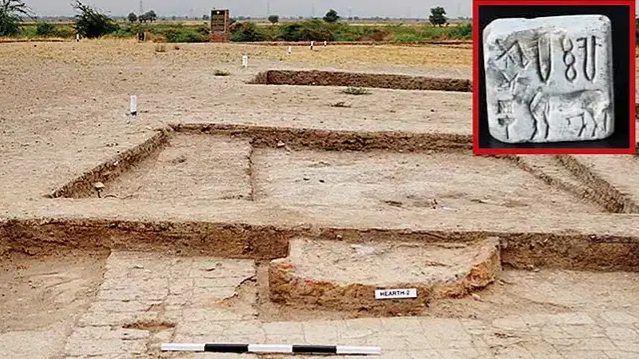
Carefully brushing away the soil, archaeologists uncovered a small terracotta seal. At the centre of the seal was a carved image of a one-horned animal. It was easy to recognise. It was a unicorn. Soon after, two more seals were found. These did not have animals, but strange symbols carved on them. More than a thousand such seals have been discovered earlier at Harappa and Mohenjo-daro. Each seal is about two centimetres long and wide. The latest discovery, however, did not come from the Indus river region but from Lothal in Gujarat. A team led by Bengali archaeologist Shubha Majumder found these ancient artefacts, including the unicorn seal, during an exploration that began in November.
Lothal proves its importance again
Abandoned but still full of promise, Lothal has once again shown its value, 70 years after it was first discovered. Nearly 1,500 sites linked to the Indus Valley Civilisation, dating back 4,000 to 4,500 years, have been found across the region. While Harappa and Mohenjo-daro are well known, sites like Rakhigarhi in Haryana and Lothal in Gujarat are also extremely important. According to the Archaeological Survey of India (ASI), Lothal was first discovered in 1955 under archaeologist S.R. Rao. Since then, 213 seals have been found there, the highest outside Harappa and Mohenjo-daro.
Also Read | Congress leader Sonia Gandhi admitted to Sir Ganga Ram Hospital, discharge likely in a day or two
New discoveries under fresh exploration
ASI restarted excavations at Lothal in early 2025 and again in November, under the leadership of Shubha Majumder. He recently led work that helped 12 forts of Shivaji receive UNESCO World Heritage status. This time, his team explored three zones at Lothal. All three newly found seals came from the main city area. One unicorn seal is made of soft stone, while the other two are terracotta and carry Indus script symbols.
Also Read | Riteish Deshmukh hits back after Maharashtra BJP chief comments on erasing Vilasrao Deshmukh's legacy
The team also found furnaces, stone beads, gold beads, toy carts, and dolls. Some finds suggest the area was once a bead-making centre. These discoveries are important because gold objects are rare in Lothal.
Over a century ago, Bengali archaeologist Rakhaldas Bandyopadhyay discovered Mohenjo-daro, changing India's history forever. Now, many wonder if Shubha Majumder's work will once again reshape what we know about the Indus Valley. 2026 could be a crucial year for the ASI.