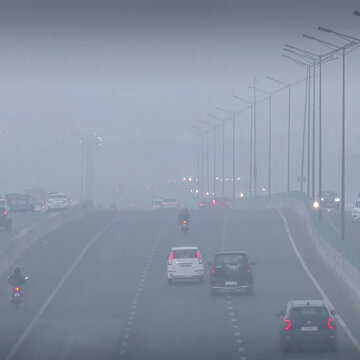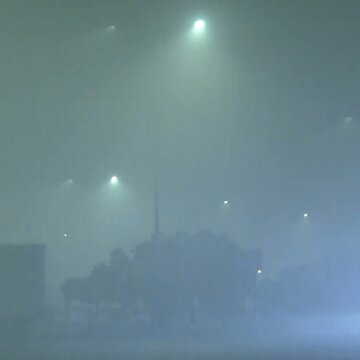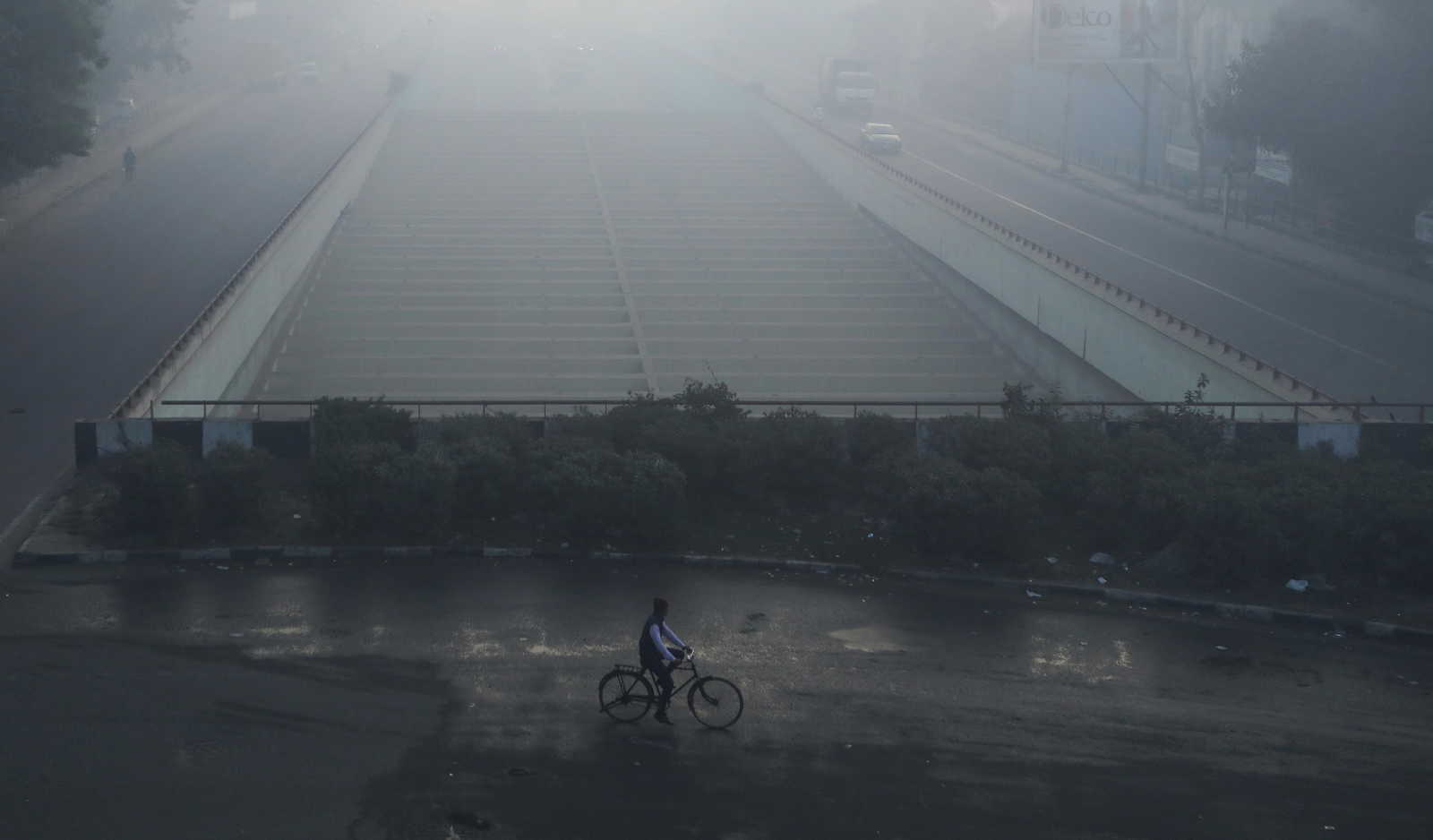
On Saturday, Delhi continued to grapple with toxic air as a thick layer of smog enveloped the city. The AQI remained in the ‘very poor’ category at an average of 333 notches worse than a day earlier. This was coupled with a dip in temperatures, with Friday becoming the coldest December morning of this year so far as the mercury touched 5.6°C, per the India Meteorological Department (IMD).
Also Read | IndiGo sets new record with 1000 cancelled flight, CEO issues public apology after day-long passenger ordeal
Most monitoring stations in the red zone
According to the CPCB data at 7 am, Mundka recorded the worst AQI at 381. Out of 39 monitoring stations in the city, 35 recorded ‘very poor’ air, while four registered ‘poor’ levels.
Stations with very poor readings included RK Puram (364), Punjabi Bagh (348), Chandni Chowk (348), Rohini (374), Vivek Vihar (309), Bawana (375), Siri Fort (343), Wazirpur (359), Anand Vihar (366), Ashok Vihar (348) and Sonia Vihar (352). NSIT Dwarka (260), Mandir Marg (256), IGI Airport (263) and Aya Nagar (289) fell under the ‘poor’ category.
According to the CPCB, AQI in the range of 301–400 is considered ‘very poor’, while 401–500 falls under the ‘severe’ category.
Major pollution sources identified
Delhi's Decision Support System (DSS) reported vehicular emissions as the highest local contributor at 15.3 per cent, followed by industrial activity at 7.6 per cent, residential sources at 3.7 per cent, construction dust at 2.1 per cent and waste burning at 1.3 per cent. Neighbouring districts such as Jhajjar (14.3 per cent), Rohtak (5 per cent) and Sonipat (3.8 per cent) also contributed to the pollution load.
Pollution levels have seen-sawed wildly through the week, from an AQI of 279 on Sunday to a high of 372 on Tuesday.
Experts call for strict GRAP enforcement
As per a report by India Today, commenting on the trend, Mohammad Rafiuddin, Programme Lead at the Council on Energy, Environment and Water (CEEW), said Delhi remained “in the ‘very poor’ category on most days last week.” He commented that, with stubble burning decreasing, “vehicular, residential and construction-related emissions emerged as the primary sources of PM2.5.”
Also Read | What did Putin eat in India? Inside the lavish vegetarian feast at Rashtrapati Bhavan
He, therefore, reiterated that Stage II restrictions must be implemented strictly under the revised GRAP, adding that “ensuring firm compliance with GRAP Stages I and II is essential to prevent further deterioration in air quality.” He also called for rigorous dust control at construction sites and urged citizens to use public transport and wear masks “to minimise exposure.”
Temperature dips as fog returns
The IMD has forecast shallow fog on Saturday. The maximum and minimum temperatures are likely to oscillate between 8°C and 23°C. Delhi recorded a maximum of 23.5°C and a minimum of 5.6°C - the lowest this season - on Friday. The relative humidity was 68 per cent at 5:30 pm after touching 100 per cent earlier in the day.