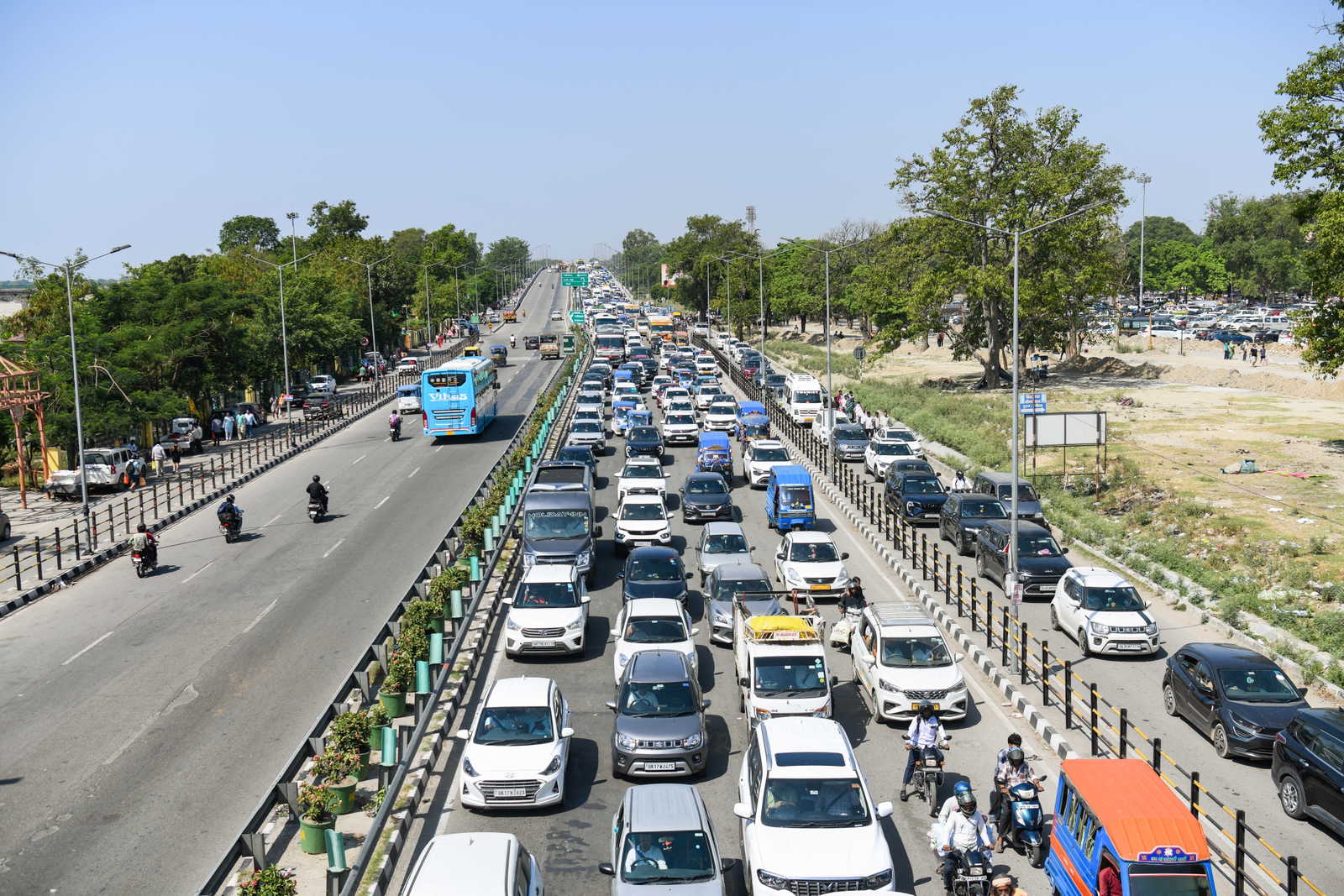
Clarification from the National Highways Authority of India (NHAI) regarding a widely held belief regarding highway infrastructure has stated that it is not mandatory for national highways to be lit along their entire lengths.
This comes in response to repeated questions from the public regarding why large portions of highways are dark despite being key transport links.
It is not a requirement under any infrastructure guidelines followed by NHAI to illuminate national highways. Illumination is done where deemed necessary following safety recommendations made by the IRC.
Also Read | Which items might get costlier for Indians if Strait of Hormuz crisis continues? Here's the list
Where highway lighting is actually required
Under IRC guidelines, lighting is installed at locations where enhanced visibility is essential for safe traffic movement and road-user safety.
These locations typically include toll plazas, interchanges, major junctions, flyovers, underpasses, bus bays, truck lay-bys, built-up areas and accident-prone stretches.
🚧 Know Your National Highways | #MythvsFact
— NHAI (@NHAI_Official) June 11, 2026
Today’s myth addresses a common misconception that vehicles are entitled to free passage if queues at toll plazas extend beyond the 100-metre mark.
In reality, there is no such provision under the National Highways Fee Rules, 2008.… pic.twitter.com/lTMthsIBMO
NHAI said the targeted approach allows authorities to focus resources on areas where vehicle interaction, pedestrian movement or complex road layouts create higher safety risks.
The agency noted that these critical zones require greater visibility compared to long, uninterrupted highway sections.
Balancing safety and efficiency
As per NHAI, providing light on the entire network of national highways will entail significant amounts of energy usage, expenses on maintenance, and investment in infrastructure.
However, contemporary highway construction makes use of various technologies like road markings that are reflective in nature, retro-reflective signboards, and lane indicators in order to help drivers when they are traveling during nighttime.
The organisation stated that such an approach helps maintain safety on highways while being environmentally friendly and cost-effective.
The clarification was provided by NHAI on its official platforms to enhance awareness among the citizens about how highway infrastructure is planned and managed. Despite popular belief that the entire network of national highways must be illuminated, the organisation stressed that illumination is necessary only in certain places which are risky.
FAQs
Q1. Are national highways required to have lights along their entire length?
No. NHAI says continuous lighting across entire highways is not mandatory and lighting is provided only in critical locations based on safety guidelines.
Q2. Where are lights usually installed on national highways?
Lighting is typically provided at toll plazas, junctions, interchanges, flyovers, underpasses, built-up areas and accident-prone sections.