
The planet is heating up at an unprecedented pace and scientists say human activity is overwhelmingly responsible. A major international climate assessment released this year has found that human-induced global warming has reached its fastest recorded rate in modern history.
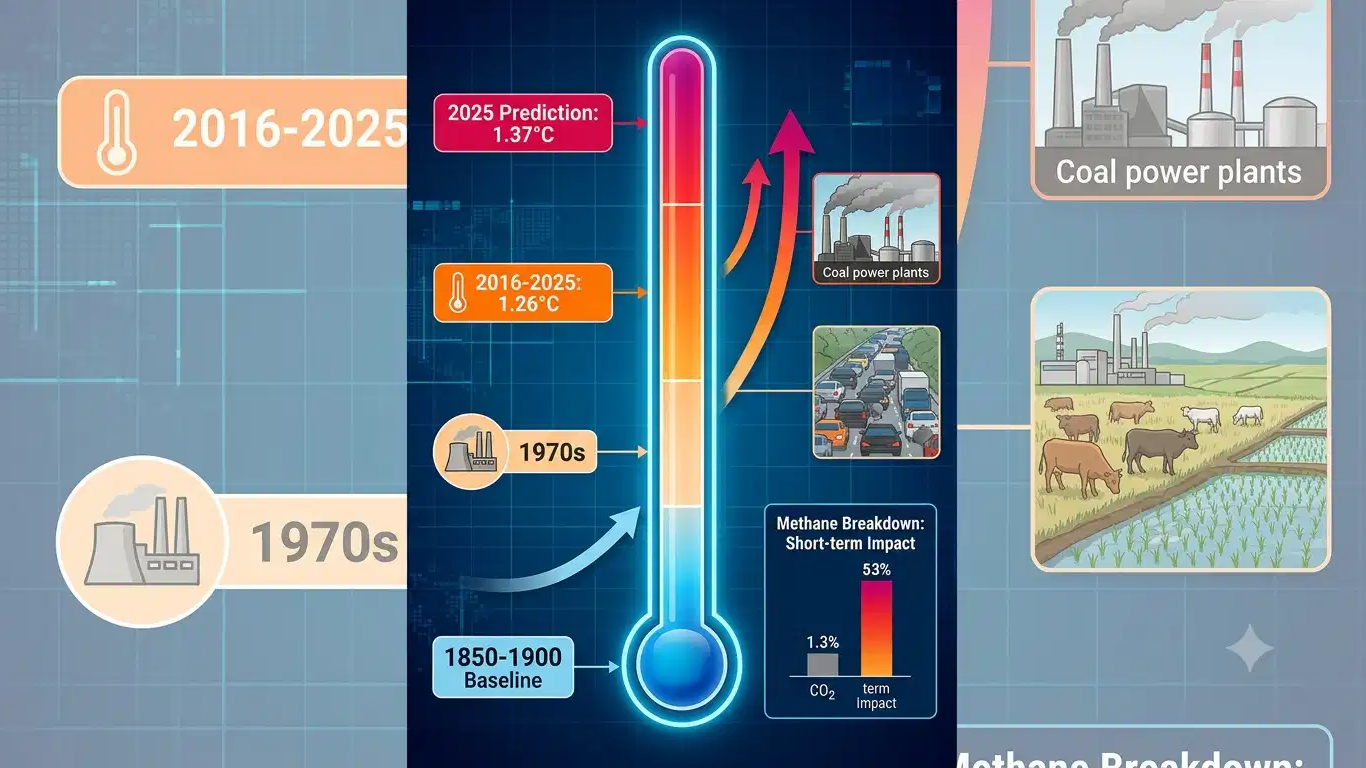
According to the latest Indicators of Global Climate Change report quoted by News18, human-caused warming reached 1.37 degree Celsius above pre-industrial levels in 2025. The report estimates that temperatures are now rising at around 0.27 degree Celsius per decade, which scientists describe as an “all-time high" rate of warming.
Also Read | Is Starlink's India entry stalled? Elon Musk's company responds
Humans behind nearly all recent warming
The study, compiled by more than 70 scientists and aligned with methodologies used by the Intergovernmental Panel on Climate Change (IPCC), found that average global warming between 2016 and 2025 reached 1.26 degree Celsius above the 1850-1900 baseline.
Of that total, 1.24 degree Celsius was directly linked to human activities. Researchers say this means nearly all observed warming can be traced to greenhouse gases and other human influences rather than natural climate variations.
Emissions remain the biggest factor
One of the main reasons temperatures continue to rise is the continued release of greenhouse gases. The report estimates that global emissions averaged about 54.6 billion tonnes of carbon dioxide equivalent annually between 2015 and 2024, the highest sustained level on record.
Carbon dioxide from coal, oil and natural gas remains the largest contributor. Scientists note that while renewable energy capacity has expanded significantly, fossil fuels still dominate global energy consumption.
Methane is also playing a major role. Emitted from oil and gas operations, livestock farming, rice cultivation and waste sites, methane traps far more heat than carbon dioxide over shorter periods and has become a significant driver of recent warming.
Also Read | 'Shrinkflation': From biscuits to shampoo, consumers are downsizing as prices bite
Cleaner air and rising heat storage
The report also points to declining aerosol pollution as a contributing factor. For decades, sulphur-containing particles reflected sunlight and produced a temporary cooling effect. As countries introduced cleaner fuels and stricter pollution controls, that masking effect weakened.
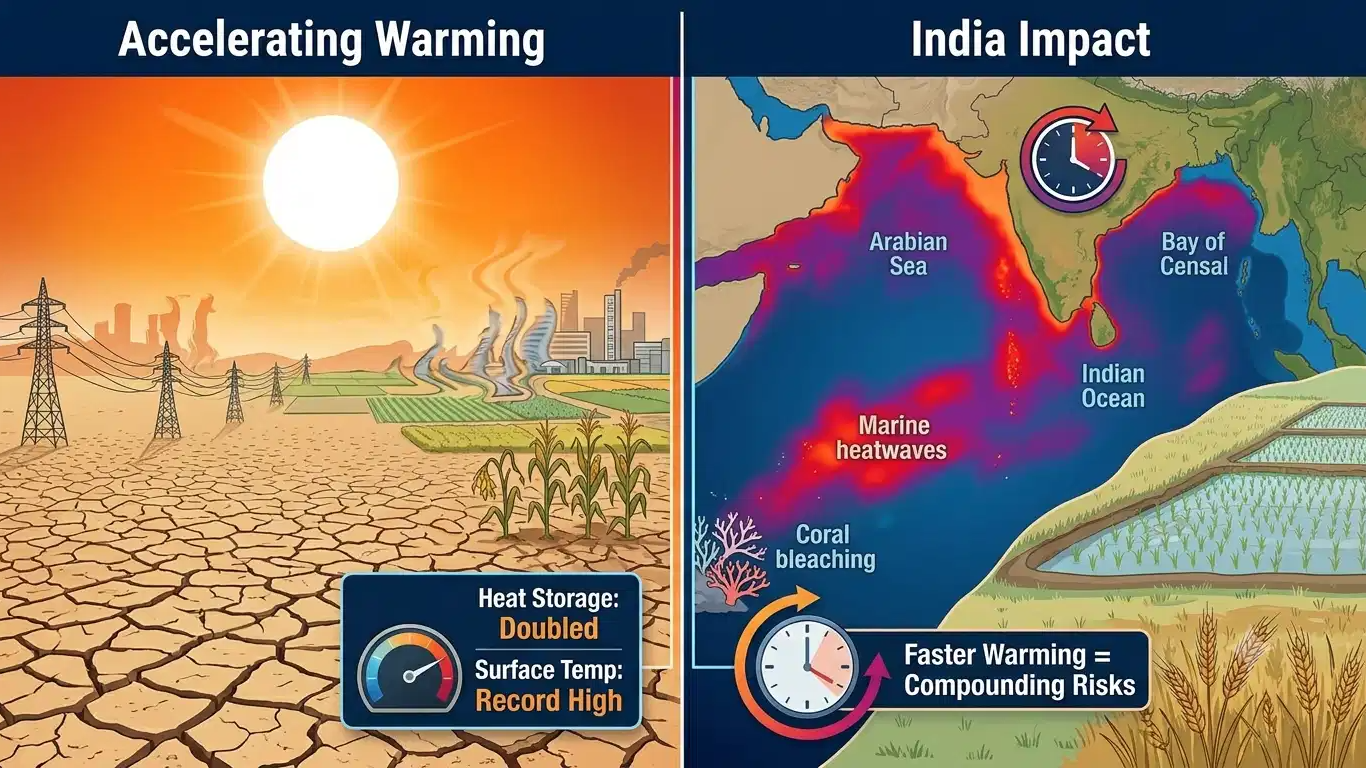
Researchers additionally found that Earth’s Energy Imbalance has more than doubled compared with levels recorded between 1976 and 1995, meaning the climate system is storing heat faster than before. Much of this excess heat is being absorbed by the oceans, contributing to record sea-surface temperatures and more frequent marine heatwaves.
Why it matters for India
Scientists stress that recent temperature records cannot be explained by El Nino alone. Although the climate pattern contributed to the heat seen in 2023 and 2024, its influence had weakened by 2025 while global temperatures remained exceptionally high.
Also Read | Made-in-India Airbus C295 takes first flight from Vadodara, marks new chapter for IAF programme
For India, faster warming could mean more intense heatwaves, increased stress on water resources, greater risks to agriculture and rising electricity demand during summer months. The report concludes that continued human activity remains the primary force behind the accelerating warming trend.