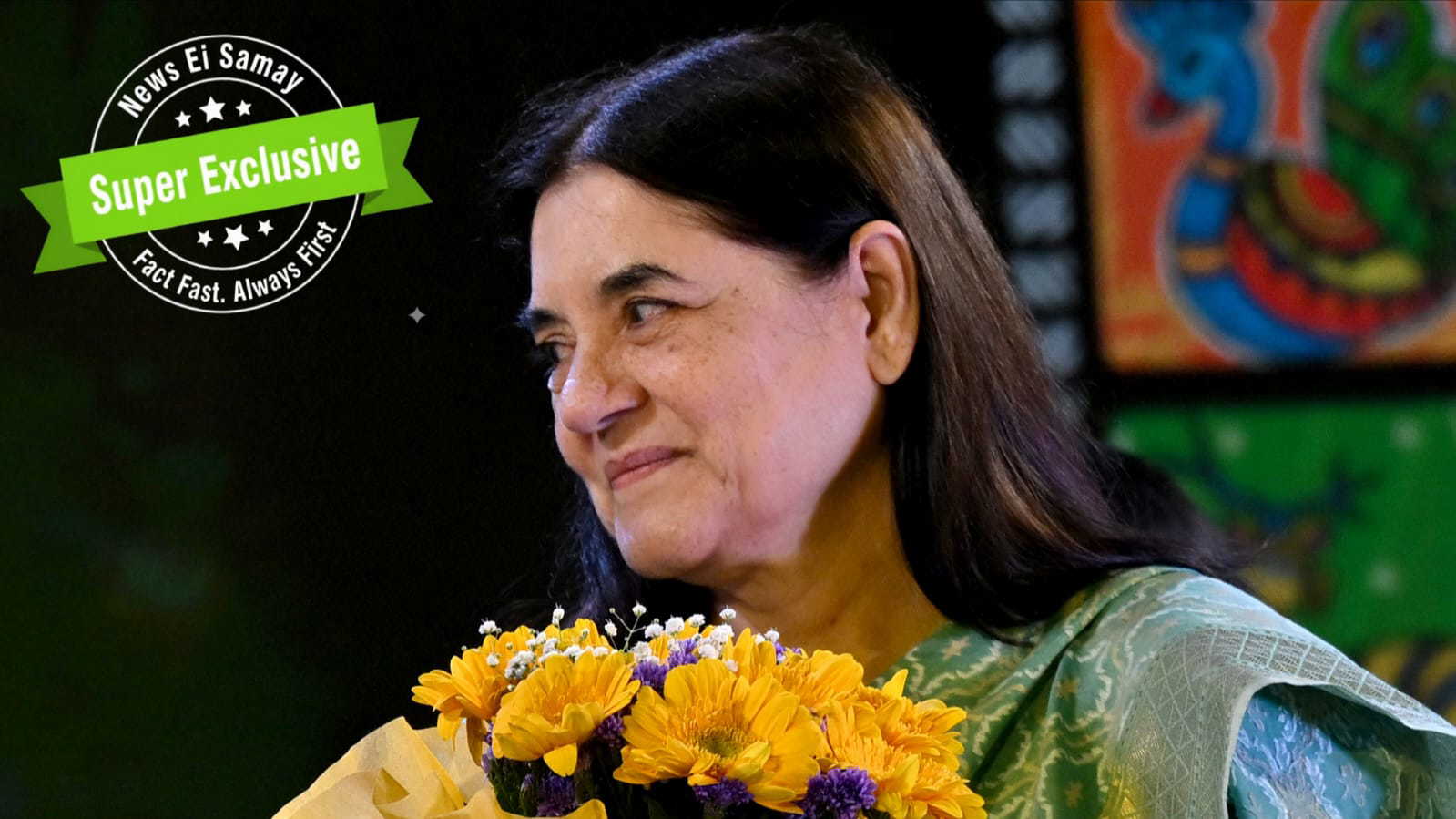
Maneka Gandhi has seen more ups and downs than the most turbulent seas. A senior former parliamentarian, a seasoned politician, a champion for the voiceless, a wife, a mother, a grandmother - Gandhi has donned many hats in her lifetime. But one thing never left her - her compassion and commitment to ethics.
In a conversation with Ei Samay, Maneka Gandhi talks about a wide range of subjects, from the conservation of animal rights, protecting the voiceless, to the changing political landscapes of India.
Q: Your work with People For Animals has spanned decades. Do you feel India’s development narrative still sidelines animal rights and environmental ethics?
Maneka Gandhi: On paper, India has strong constitutional and legal safeguards for animals and the environment, and for many years, there was a steady strengthening of this recognition. Awareness grew, laws evolved, and compassion increasingly found space in public policy. What is concerning today is that while this recognition and demand for it is increasing exponentially in the public, the government seems to have taken a back foot when in fact it should have been reacting much more strongly. Unfortunately, today's politicians believe only in winning elections, and they see everything in terms of vote - no matter how much damage they do to the country. The animal welfare movement is growing so strongly, that they will find out during the election. In England, the Labour Party understood the value and strength of the animal welfare vote. When the votes were counted after this election in 2024, over 36 seats were won for them by the animal welfare vote. This is happening all over the world, and it will happen in India as well.
India’s development narrative should not treat animals and the environment as expendable collateral damage. You cannot destroy forests, poison rivers, brutalise animals, and then expect a healthy, just society. When enforcement weakens and ethical considerations are sidelined for short-term gains, development becomes fragile and self-defeating. True progress must integrate compassion and ecological responsibility at its core, not push them to the margins.
Q: Many argue that in a developing nation like India, human rights and poverty alleviation should take precedence over animal welfare. How do you explain the economic and moral connection between the two?
Maneka Gandhi: This argument is deeply flawed because it assumes that compassion is a luxury rather than a foundation of a civilised society. Human rights and animal welfare are not competing priorities; they are ethically and practically intertwined. When cruelty towards animals is normalised, it lowers the threshold for violence and indifference across society. A culture that tolerates suffering in one form inevitably becomes desensitised to suffering in others.
From an economic standpoint, neglecting animal welfare leads to long-term costs, public health risks, environmental damage, and repeated crises that demand far greater resources than prevention ever would. Humane, sustainable systems in agriculture, urban planning, and animal management are not idealistic notions; they are efficient, forward-looking investments. Morally and economically, protecting animals strengthens society as a whole. It reflects maturity, foresight and an understanding that progress without compassion is neither stable nor just.
Without animals you will not have forests. Without forests you will not have the rain. Without the rain we will all die. For instance, the government has just made a law that the Aravalli mountains can be cut down. Without the Aravallis the desert will overtake Delhi within 3 years. There will be no rain in Rajasthan. There will be grazing grounds in the state which is now the single place for all animals grown for meat in North India. Now thousands of young people in Rajasthan and North India have risen against this law and there will be demonstrations everywhere.
Also Read | 'I don’t make films for the government,' says Anuparna Roy as she defines her idea of independent cinema
Q: In recent years, we have seen rising conflict between stray dogs and urban residents. How do we find a humane solution that ensures public safety without harming the animals?
Maneka Gandhi: I would first challenge the assumption that there has been a sudden rise in conflict. For years, dog–human coexistence was being addressed scientifically through Animal Birth Control and vaccination programmes, along with sustained community participation. Across many cities, volunteers and welfare organisations invested their own time, money and resources to sterilise and vaccinate dogs, manage territories and conduct awareness programmes. These efforts showed measurable success where they were allowed to function without disruption.
Unfortunately the fault again lies with the central and state government. Not one rupee has been put into the sterilisation programme. There are 780 districts. Each one should have a dog sterilisation centre. Each NGO should be trained. There are less than 40 sterilisation centres and less than 16 trained NGOs. The local district administrations instead of sterilising dogs and putting them back in their own areas which is a foolproof method, simply picks up dogs from rich colonies and throws them into poor colonies. Dislocated dogs get scared and hungry and they bite. This is the single and only reason for biting. Now Kolkata has no dog sterilisation programme. They have a terrible place called Dhapa where dogs are picked up and thrown to die. Many escape and go to colonies.
What has caused disruption is not dogs, but misinformation. Large sections of the media have indulged in false, sensational reporting, turning isolated incidents into fear-driven narratives. Instead of educating the public with facts, about vaccination, sterilisation and the law, some media outlets have actively fuelled anxiety and hostility. This kind of reporting creates hate, undermines proven solutions and makes communities less safe, not more.
Sensational media narratives have amplified isolated incidents, creating panic rather than promoting informed solutions. Public safety and animal welfare are not opposites. When science, law and community engagement are respected, humane solutions work. Undermining them only recreates the very problems we claim to want to solve.
The solution is scientific, legal and humane; 100% sterilisation, vaccination, garbage management and enforcement of animal protection laws. Killing dogs has never worked anywhere in the world. It only creates a vacuum. Compassion is not the opposite of public safety; it is the only way to achieve it.
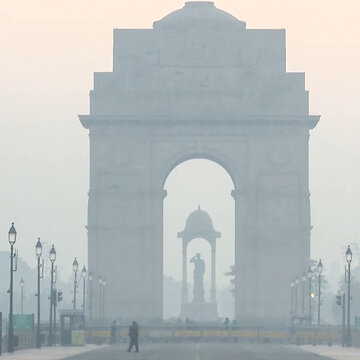
Q: Delhi and its neighbouring regions have been facing a severe AQI-related problem for many years. Most People mention, there has been no significant change in the scenario even after the local government change. In your view, why are things going wrong, and what can we do to improve the situation?
Maneka Gandhi: Delhi’s air crisis is not a sudden failure; it is the result of long-term environmental neglect and fragmented planning. Green cover has steadily declined, while tree plantation and ecological restoration have not kept pace with rapid urban expansion. Trees are natural air filters, and their loss has left the region increasingly vulnerable.
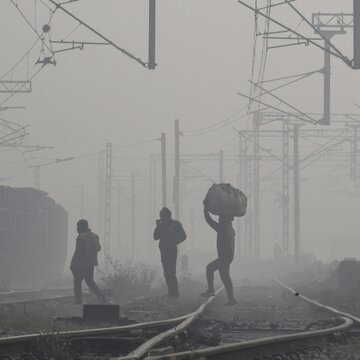
What makes this crisis urgent is that polluted air harms all forms of life, immediately and silently. It damages children’s lungs before they are fully developed, worsens heart and respiratory disease in adults, weakens immunity, and shortens lives. Animals, birds, and urban wildlife suffer just as severely, with increased illness, reproductive stress, and mortality. There is no safe level of exposure to polluted air.
The main reason for pollution in the winter months is ONLY firecrackers. Over 800 crores of firecrackers are burst in two weeks. Delhi is in a depression. The air will remain here. Till one day before Diwali, we have clean air. Then we have 6 months of terrible pollution because no one can survive the chemicals released by the crackers.
Another contributing factor is growing animals for meat. This drives deforestation and increases methane in the air. Forest cover would otherwise absorb pollutants and help stabilise the climate. Environmental experts have warned for decades that such practices affect not only animals but public health and ecological balance. When environmental degradation outpaces restoration, clean air becomes increasingly difficult to achieve.
What is often missing is consistent enforcement and long-term, year-round planning. Each winter brings emergency responses rather than sustained prevention. Clean air is not optional; it is a basic right. Sustainable land use, ecological restoration, and preventive action are essential if Delhi is to breathe again.
Also Read | Exclusive: Bengal cyclist Avishek Tunga breaks down his 3,700 km ride through Himalayas
Q: You are one of the longest-serving Members of Parliament. How has the culture of the Parliament changed from when you first entered in the late 80s compared to today? What, according to you, is the biggest moral challenge Indian politics is facing today?
Maneka Gandhi: Yes, Parliament has changed over the years. When I entered public life in the late 1980s, debates were often intense but rooted in preparation and mutual respect. Differences of opinion existed, yet there was space for listening and reasoned argument. Today, too often, noise has replaced reasoned discussion, and disruption has become a substitute for dialogue.
There is also increasing pressure in politics to prioritise what is immediately popular over what is ethically right. This is perhaps the greatest challenge we face. Politics works best when it is guided by conscience and responsibility. Without ethics, it risks becoming disconnected from its purpose. Rebuilding trust, dignity, and sincerity in public discourse is essential for the health of our democracy. Politics without ethics becomes dangerous very quickly. There are many committed parliamentarians who still work with preparation, conviction, and dedication to the public good, but they are becoming fewer and fewer because parties want to give tickets to more compliant people who will not speak for issues but for party policy.
The challenge of prioritising popularity over what is right is real, yet it also presents an opportunity: to inspire a new generation of leaders who value ethics, integrity, and long-term vision. Politics, at its best, is a chance to shape society positively, and I remain hopeful that India’s democratic institutions will continue to nurture conscience, courage, and principled leadership.
Q: As the former Minister for Women and Child Development, you championed the extension of maternity leave and stricter anti-trafficking laws. Looking back, is there one piece of legislation or policy you wish you could have pushed further?
Maneka Gandhi: I brought in legislation on child protection, maternity benefits, protection of women in workplaces, and anti-trafficking measures. I created Childline, which helped 4 crore children every year. I brought in 'Beti Bachao, Beti Padhao', which pushed people into stopping the killing of girl children and narrowed the gap between male and female children. But the effectiveness of any law ultimately depends on consistent enforcement, coordination between departments, and awareness among the public. Ensuring that policies translate into real-world impact requires trained personnel, monitoring systems, and survivor-centric processes. If we can just implement the laws we have, we can protect.
Q: You started as a model and journalist before entering the volatile world of politics after the passing of Sanjay Gandhi. If you could go back to your 20-year-old self, would you still choose a life in public service? And what would be the one piece of advice you would like to give your 20-year-old self?
Maneka Gandhi: Yes, I would still choose a life in public service. Looking back, I see that every step I took, from campaigning for animal welfare to shaping laws for the disabled, women, and children, was about using the opportunities I had to make a tangible difference. If I could speak to my 20-year-old self, I would simply say: Stay true to your convictions and keep working with consistency and courage. The focus is never on recognition, but on the impact of the work itself.
Q: When history evaluates your contribution to India, would you prefer to be remembered primarily as a parliamentarian or as an activist?
Maneka Gandhi: Parliamentarians and activists are not separate identities; they go hand in hand, because both are ways of working for the benefit of society. What matters is not the title, but whether you have used your position to reduce suffering, defend the voiceless, and speak truth to power. Titles are temporary; impact is lasting. I would like to be remembered as someone who took action when it mattered, who combined the tools of the law, policy, and advocacy to create meaningful change, and who never compromised on principles in the pursuit of justice.
This conversation shows that Maneka Gandhi's public life has always been guided by a strong sense of right and wrong. Whether she speaks about animals, the environment, women and children, or the way politics is changing, her message is clear: development cannot come at the cost of compassion. She believes that harming nature and animals ultimately harms people, too.
Even after decades in politics, she continues to speak openly about uncomfortable truths and long-term responsibilities. More than the positions she held, Maneka Gandhi would like to be remembered for standing up for the voiceless and for believing that justice for humans, animals, and the environment is deeply connected.