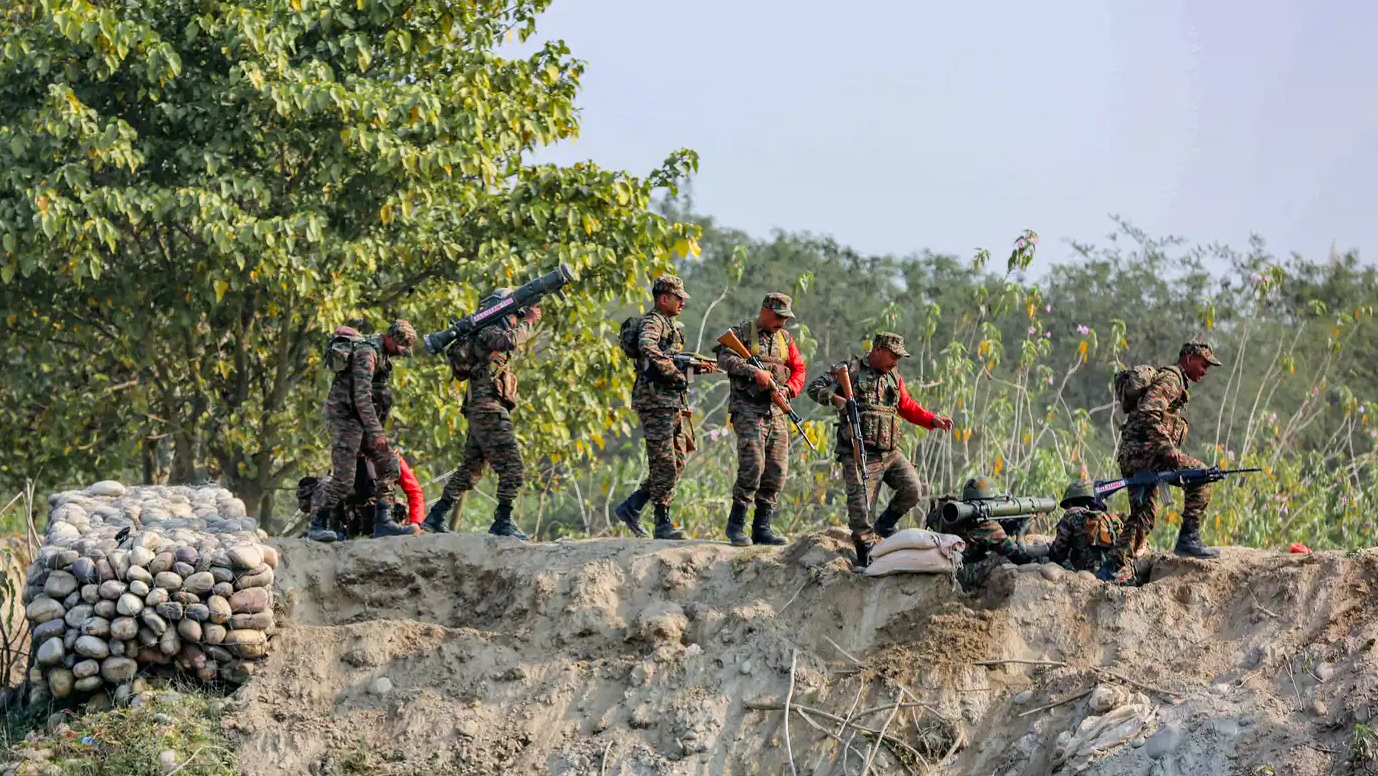
The Union government on Monday released India’s first national counter-terrorism policy and strategy, titled Prahaar, setting out a seven-point framework to prevent terror attacks, disrupt funding and logistics networks, and improve coordination among security agencies.
Issued by the Ministry of Home Affairs (MHA), the policy document is intended to guide central agencies as well as state and Union Territory governments in dealing with terrorism in a uniform manner, officials said.
Intelligence and coordinated response
The policy places emphasis on intelligence-led prevention as its first pillar, stressing early identification of threats and timely sharing of inputs with executive agencies. It highlights coordination through existing platforms such as the Multi-Agency Centre and joint task forces under the Intelligence Bureau.
Also Read | Jharkhand air ambulance crash: All 7 onboard dead after Ranchi-Delhi flight goes down in Chatra
The second pillar focuses on response, stating that handling a terror incident involves multiple stakeholders at the central, state and district levels. The document refers to standard operating procedures issued by the MHA for coordination during such situations.
Technology, training and human rights
Capacity building forms the third pillar of the policy. This includes acquisition of modern equipment, standardisation of procedures and training of personnel to deal with evolving threats. The document notes concerns over the misuse of drones, cyber tools and robotics by terrorist groups and criminal networks.
Human rights have been identified as the fourth pillar. The policy states that the Indian laws, including anti-terror legislation, operate within the framework of the Constitution and the rule of law and provide legal safeguards.
Radicalisation, global cooperation and resilience
The fifth pillar is on radicalisation and recruitment, especially among the youth. The policy includes engagement with community leaders, civil society, and de-radicalisation initiatives, as well as attempts to mitigate social and economic vulnerabilities.
International cooperation is the sixth pillar. The document states that bilateral and multilateral frameworks have assisted in intelligence sharing, the extradition of fugitives, and terror financing, including in multilateral settings.
The seventh pillar focuses on recovery and resilience. It encourages a whole-of-society response, including civil administration, health practitioners, community groups and the private sector, to return to normalcy following terror attacks.
Threat assessment
According to the policy paper, India has been under constant threats from cross-border terrorism and international extremist organisations, including plans to activate sleeper cells. There are also references to the use of crime syndicates for logistics and recruitment, as well as the role of handlers based in foreign territories.
Without specifying any particular country, the policy paper also states that terrorism has been used as an instrument of state policy in the region.
Also Read | Redbird Airways under scanner after Jharkhand air crash - a list of incidents that revolved around it
The MHA also said that the country’s internal legal framework for fighting terrorism would require periodic changes to meet new challenges and that there was a need for more uniformity in the functioning of counter-terrorism units in states and Union Territories.
The policy was first announced by Union Home Minister Amit Shah in November 2024.