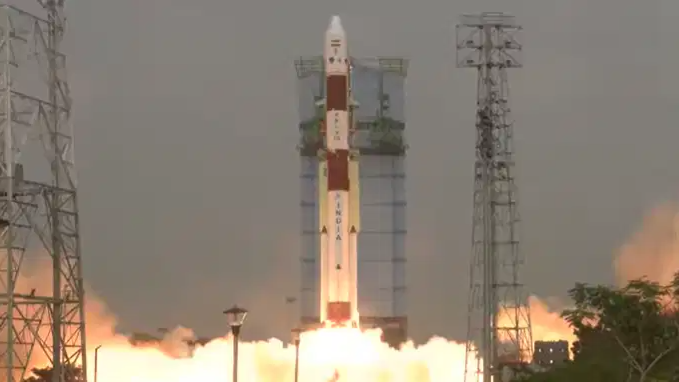
India’s Polar Satellite Launch Vehicle (PSLV) mission on Monday encountered an anomaly after liftoff, with the Indian Space Research Organisation (ISRO) confirming that a deviation was observed during the rocket’s third stage of flight.
ISRO Chairman Dr V. Narayanan said that mission data is currently being analysed and that a detailed update would be shared once the assessment is complete. He stopped short of declaring the mission either a success or a failure.
Also Read | AI-powered humanoid robots emerge as next frontier in industrial automation, says Perceptyne CEO
The PSLV-C62 mission, ISRO’s 64th flight of the launch vehicle, lifted off from the Satish Dhawan Space Centre in Sriharikota at 10:18 am. The launch was considered significant as it marked a key return-to-flight mission for PSLV following a failure in 2025.
Mission objectives and payloads
PSLV-C62 was carrying a total of 15 satellites, including the primary payload EOS-N1 and a defence surveillance satellite named Anvesha, developed by the Defence Research and Development Organisation (DRDO). EOS-N1 and 14 co-passenger satellites were planned to be placed into a Sun Synchronous Orbit, while the Kestrel Initial Demonstrator (KID) satellite was intended for a controlled re-entry trajectory.
The Anvesha satellite has been designed to provide advanced imaging capabilities along with strengthening India’s capacity for high-precision mapping and monitoring of strategic locations.
Also Read | X complies with Union govt order, takes down obscene content linked to Grok
The mission has also marked an important milestone for India’s private space industry. Hyderabad-based Dhruva Space contributed seven satellites to the launch, which makes it the first time a single Indian private company deployed such a large number of spacecraft on a PSLV mission. The participation highlighted the growing role of private firms in India’s expanding space ecosystem.
ISRO officials said further clarity on the mission’s outcome would be available after a complete review of telemetry and flight performance data.