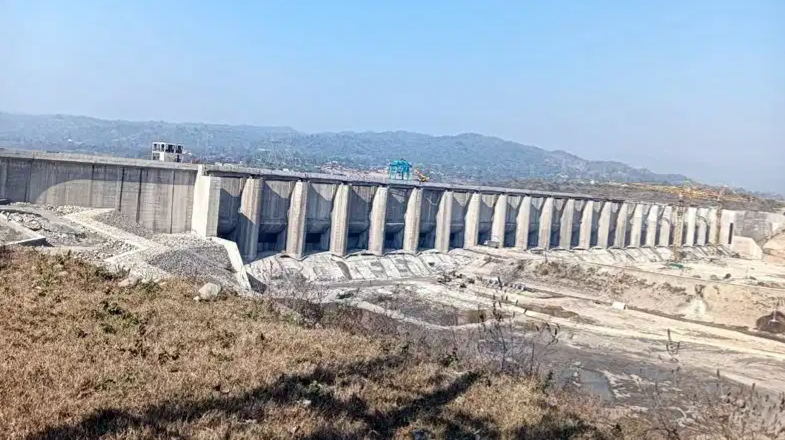
India is preparing to stop the flow of surplus water from the Ravi into Pakistan as the Shahpur Kandi dam nears completion. The move comes after New Delhi placed the Indus Waters Treaty in abeyance. Jammu and Kashmir minister Javed Ahmed Rana said the project is almost ready and will soon redirect water to drought-hit areas.
The dam, located on the Punjab-Jammu and Kashmir border, is expected to be completed by March 31. Once operational, it will divert excess Ravi water to Kathua and Samba districts instead of letting it flow into Pakistan, NDTV reported.
What is the Shahpur Kandi project?
The Shahpur Kandi Dam was first planned in 1979 to utilise India's share of the Ravi waters. The foundation stone was laid in 1982 by former Prime Minister Indira Gandhi. However, disputes between Punjab and Jammu and Kashmir delayed construction for decades. It was declared a national project in 2008, NDTV said.
The dam costs Rs. 3,394.49 crore. Punjab is funding around 80 per cent, while the Centre is covering the rest. It stands 55.5 metres high and includes a 7.7-km hydel channel. Officials say it will irrigate about 5,000 hectares in Punjab and over 32,000 hectares in Kathua and Samba.
Also Read | 'Nice to be back': Google CEO Sundar Pichai arrives in India for AI Summit
Currently, surplus Ravi water flows through Madhopur into Pakistan. The new dam will redirect this water within India.
Former irrigation minister Taj Mohideen said the Indus Waters Treaty does not govern the dam because India has exclusive rights over the Ravi.
Indus Waters Treaty in abeyance
On April 23, 2025, a day after 26 Indians were killed in Pahalgam by Pakistan-linked terrorists, India put the Indus Waters Treaty in abeyance.
Also Read | Delhi issues traffic advisory as top leaders arrive for AI Impact Summit: Check affected routes
The decision came alongside Operation Sindoor. It signalled a shift in India's Pakistan policy. Under the treaty, Pakistan had rights over the Indus, Jhelum, and Chenab rivers. India controlled the Ravi, Beas, and Sutlej. Nearly 80 to 90 per cent of Pakistan's agriculture depends on the Indus system, and its storage capacity covers barely a month of flow.
With the treaty paused, India is fast-tracking hydro projects in the Indus basin. These include Sawalkote, Ratle, Bursar, Pakal Dul, Kwar, Kiru and Kirthai I and II. Work on the Sawalkote project has already been accelerated.