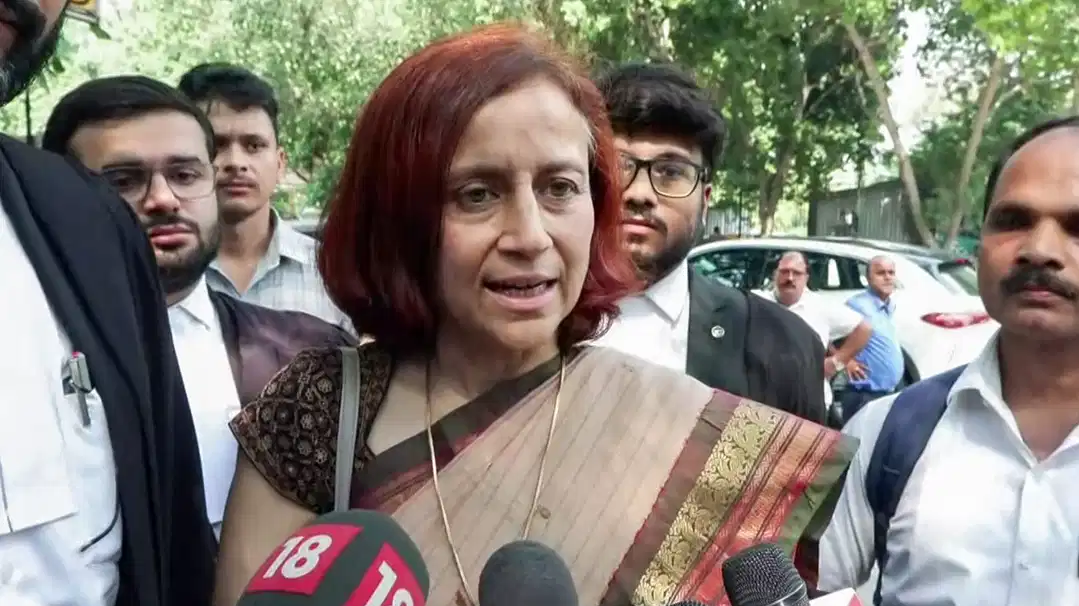
Gitanjali Angmo, jailed activist Sonam Wangchuk's wife, has told PTI that her husband's arrest shows the condition of democracy in India, and said that the government's case against Wangchuk lacks merit, for which the authorities are asking for more court dates.
Angmo added that her husband's detention is an "open and shut case," and that he should be released from prison for "procedural lapses" by the authorities.
The case against Sonam Wangchuk
Sonam Wangchuk was taken to Jodhpur jail after being detained under the strict National Security Act (NSA) on September 26. The arrest came two days after protests in Ladakh over demands for statehood and Sixth Schedule status, which left four people dead and 90 injured. Wangchuk is a Magsaysay Award-winning climate activist and educator.
"It's not just about Sonam Wangchuk as an individual, but about the state of democracy in this country, about the use of power for illegal detention of people who have been working for this country. If it can happen to Sonam, it can happen to anybody else," Gitanjali Angmo told PTI. She added, "It has been quite an uphill task, getting the detention order and meeting Sonam needed a habeas corpus to be filed in the Supreme Court, and even after that was filed, to get his handwritten notes was a challenge."
Also Read | Inside North Goa's double murder: Russian man nabbed for killing 2 women with same name, same age
Gitanjali Angmo alleges procedural lapse
Under the NSA, authorities are required to give the detainee all relevant documents, including those explaining the grounds of detention, within five days, or at most 10 days, Angmo said.
"But these four videos were given to him on the 28th day, on October 23. This is a very big procedural lapse, based on which the detention order should be made void ab initio and quashed," she said.
Angmo added, "In a way, it is an open and shut case just on this alone because it violates Section 8 of the National Security Act. Corollary to this is that because he did not get these videos, he was denied a chance to make an effective representation, Section 11 of the NSA, in front of the advisory board."