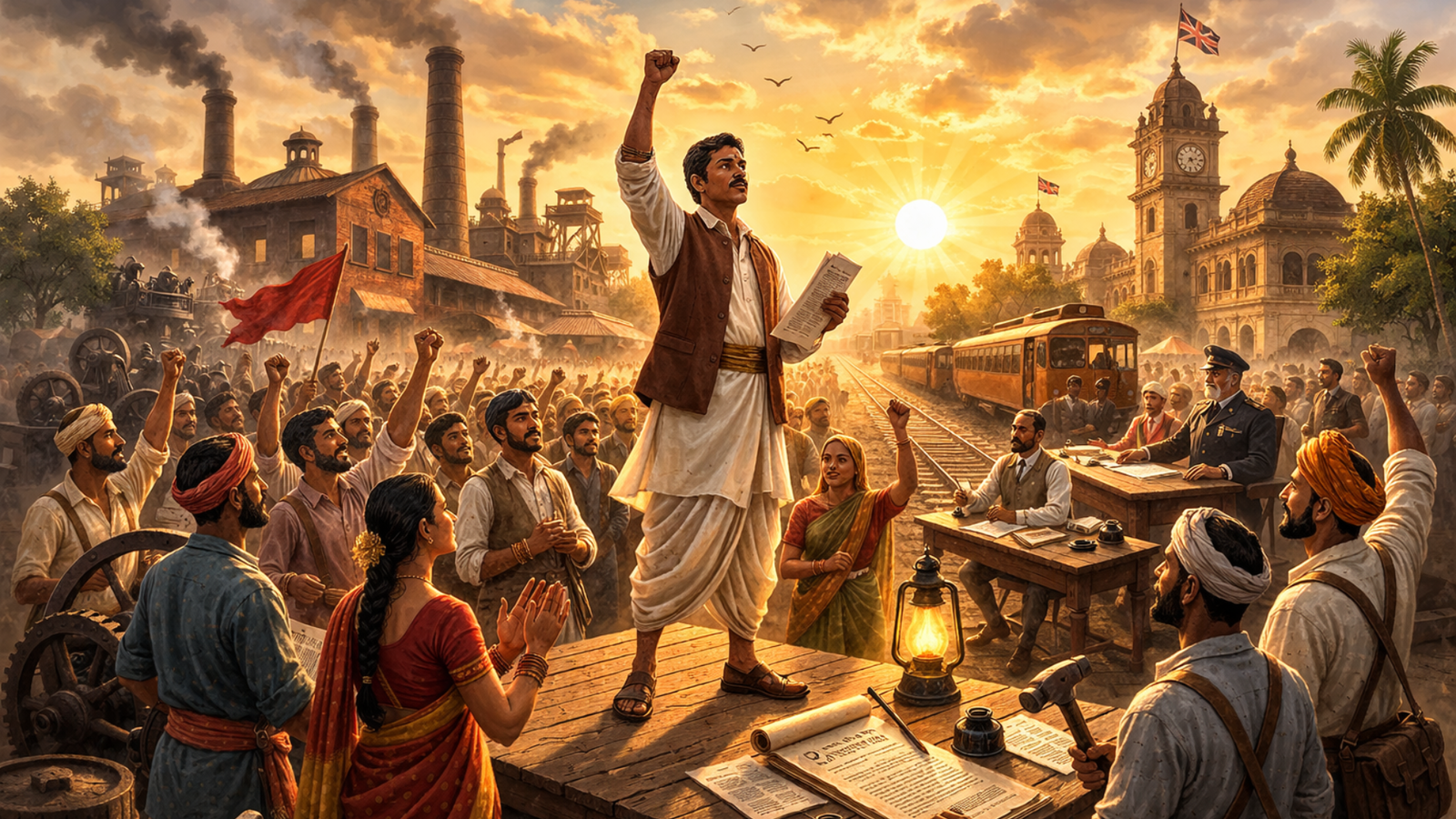
For many Indians, Sundays were a welcome respite—a day to sleep in, enjoy a hearty family meal, and catch one’s breath from the frenetic pace of the week. It seems almost second nature now, a permanent part of the landscape. But the weekly day of rest was not always a part of India’s working life.
There was a time when factory workers worked seven days a week, with no guarantee of a day off. The Sunday holiday that we take so much for granted today was hard-won after years of struggle under British rule.
The struggle for a weekly day of rest
The late 1800s were tough times in Bombay’s factories, particularly in the textile mills. Long hours, hard labour, and no weekly day of rest. It was a grind, and a grind that was taking a toll on the workers’ bodies and minds.
Into this scene came Narayan Meghaji Lokhande, a voice for the workers who would not be silenced. He was deeply troubled by the plight of the workers and began agitating for a weekly day of rest. From 1881 to 1884, he led protests, submitted memoranda to the British government, and mobilised close to 10,000 workers to support his cause.
Also Read | What is Groundhogging? Here’s why you keep falling for the same ‘type’ every time
The movement did not die down soon. It continued for almost seven years, mounting pressure on the colonial government.
June 10, 1890: A turning point
The British government finally declared Sunday a weekly holiday for workers in India on June 10, 1890. This marked an important milestone in the country’s labor history, as it was the first time that workers could look forward to one day of rest in a week.
The decision to choose Sunday was not arbitrary. It was based on administrative convenience and religious considerations. The British, who were ruling India at the time, followed Sunday as their day of prayer as Christians. Hence, it was convenient for them to declare Sunday as the weekly holiday.
Also Read | Planning a Getaway? Visit Lavasa, the ‘Little Italy of India’
Lokhande also presented a cultural argument. Sunday has religious significance in some Hindu sects, associated with the Sun God and Lord Khandoba.
A practice rooted in history
The tradition of Sunday as a day of rest is not a recent phenomenon in Indian society. It dates back to 321 CE, when Constantine the Great declared Sunday a day of rest for the entire Roman Empire. Over the years, this tradition has been imbibed in European administration and has been incorporated into British administrative systems.
During the British rule in India, this long-standing tradition was instrumental on Sunday being recognised as a holiday.
Today, Sunday, appears to be just another day. However, its presence in the Indian calendar is the result of years of trade unionism and the struggle for dignity at work.