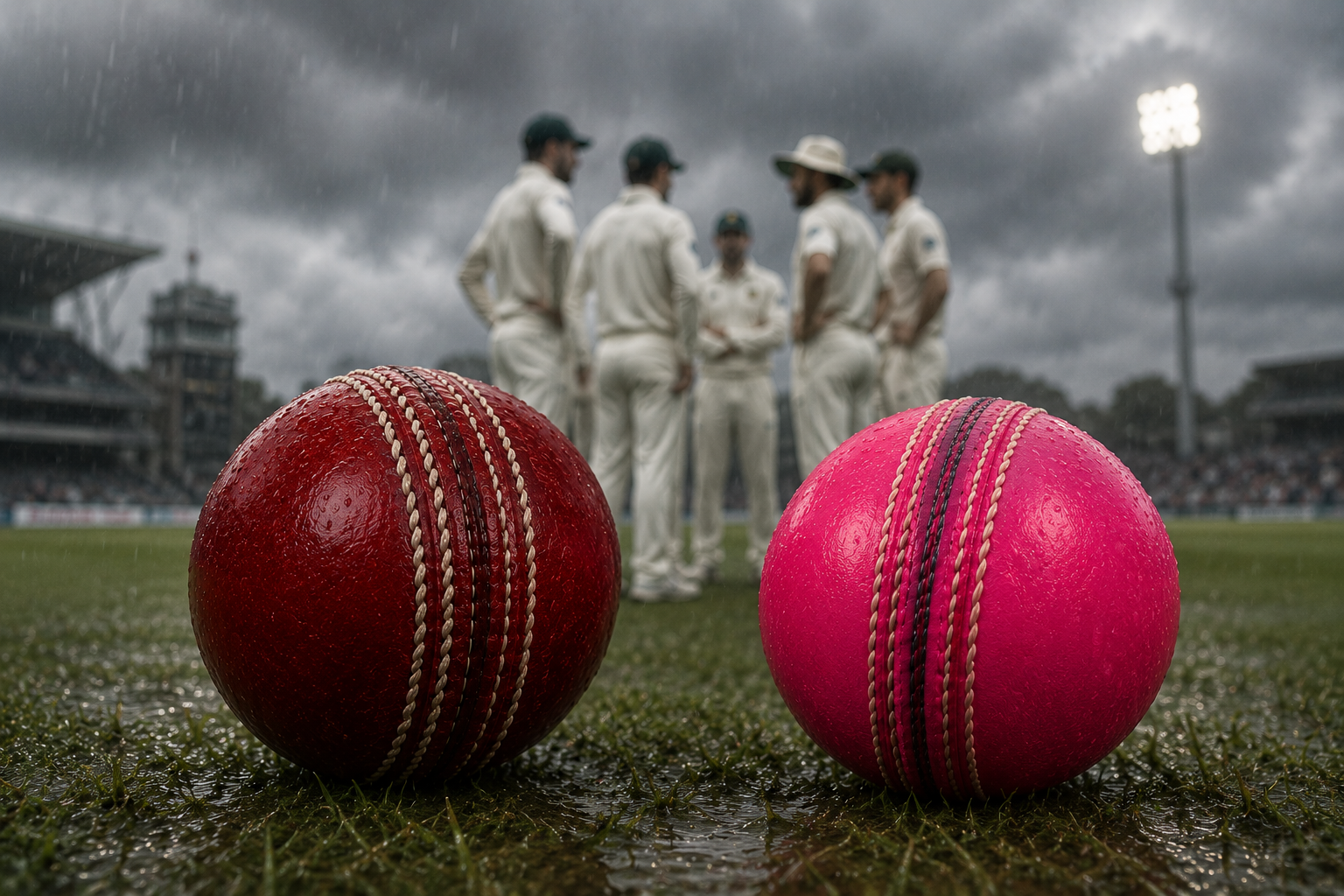
The ICC has approved a trial that could help reduce interruptions caused by bad light in Test cricket. Under the proposed change, matches may switch from a red ball to a pink ball when fading light threatens to halt play, allowing more overs to be completed.
The move was discussed and approved during the ICC Board meetings in Ahmedabad. While Test matches will continue to start with the traditional red ball, officials could permit a switch to the pink ball later in the day if visibility becomes an issue. The pink ball is easier to see under artificial lights and has already been used successfully in day-night Test matches.
Aim is to reduce lost playing time
Bad light has long been one of the biggest reasons for stoppages in Test cricket, often frustrating players and spectators alike. The ICC believes the trial could help keep matches moving and ensure valuable playing time is not lost unnecessarily.
Also Read | Jakub Meník stuns Rublev, reaches maiden French Open quarterfinal
The proposal is not mandatory. Teams will need to agree to the arrangement before a match or series begins. This gives cricket boards flexibility to decide whether they want to adopt the trial in their home Test fixtures.
🚨 ICC Board Meeting Highlights:
— Shadman Sakib Arnob (@arnuX05) June 1, 2026
▪️ Trial approved for switching from the red ball to the pink ball under floodlights during bad light in Tests.
▪️ T20I innings break reduced from 20 minutes to 15 minutes.
▪️ Coaches will be allowed on the field during drinks breaks.
▪️ Hawk-Eye… pic.twitter.com/Uoni26qBai
The ICC is also expected to continue exploring improvements in lighting technology and visibility standards in collaboration with the Marylebone Cricket Club (MCC).
Questions remain over playing conditions
While the idea has been welcomed as a practical solution to bad light interruptions, it also raises questions about how a pink ball could affect the balance between bat and ball. Pink balls are known to behave differently from red balls, particularly under lights, where they can offer greater assistance to fast bowlers.
Also Read | Serena Williams returns to tennis, accepts Queen’s Club doubles wildcard
Teams and cricket boards will closely monitor the trial to assess its impact on playing conditions. If successful, the change could become a significant step in modernising Test cricket while preserving the traditional format.
By allowing play to continue safely in fading light, the ICC hopes the red-to-pink ball switch can help maximise action on the field and reduce one of the game’s most persistent challenges.