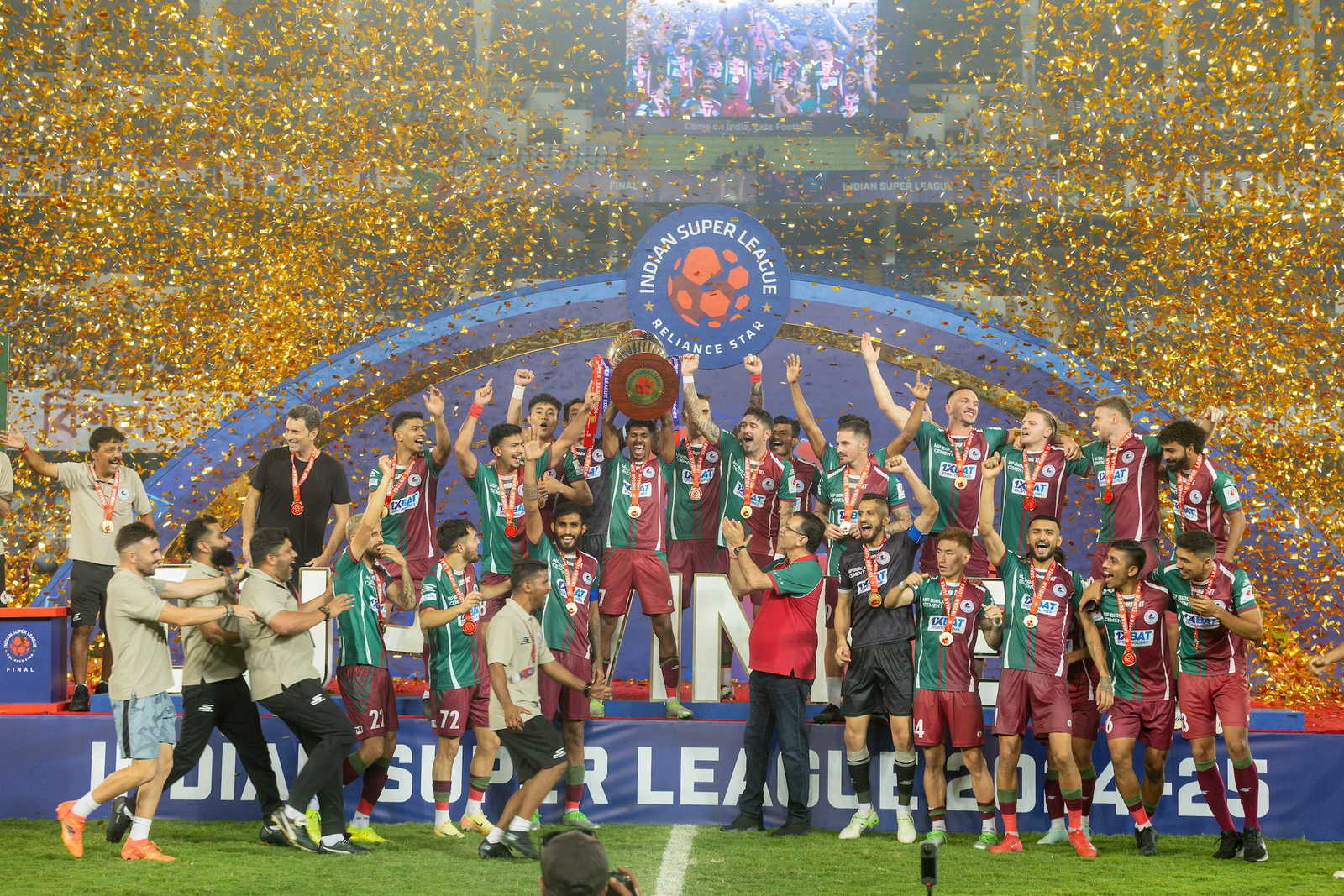
After months of uncertainty, clashes, disagreements and more than anything insecurities, ISL is expected to kick off really soon as the AIFF officially confirmed with a media advisory headlined “Dates for ISL to be announced next week.”
On January 3rd. The AIFF emergency committee met with the AIFF-ISL coordination committee and decided on the procedures to start the tournament as soon as possible. Though the tournament format is yet to be decided.
The delay started when the Football Sports Development Limited backed off to renew the master rights plan with AIFF, following months of uncertainty continues and Indian football's future was in jeopardy.
Sunil Chhetri, Gurpreet Singh Sandhu, Sandesh Jinghan and other prominent footballers came together in video and asked FIFA to help Indian football in this difficult situation. Following that the process has get fast track to move.
ALSO READ | IWL 2025–26 match preview: Defending champions East Bengal FC set to face NITA FA in a top-table clash
Key decisions and financial structure
AIFF has finally agreed to the club's proposal and is ready to help with 10 crore to proceed with the tournament and also agreed on the late entry fee matter and told the clubs to give it late whenever it is possible. The Tournament needs approximately 33 crore to 35 crore to kick off with a short schedule whether the clubs will be ready to give another 22-25 Crore it is yet to be finalised.
Broadcasting rights are also not finalized along with the payment structure and tournament format.
Odisha FC, who completely disagreed to participate at first, has also shown interest now.
Options for tournament structure
Option 1: Conference-Based League Structure
Competition Format
The league will consist of 14 clubs, divided equally into two conferences to optimise scheduling and logistics.
East Conference: 7 teams
West Conference: 7 teams
League Phase
Teams compete in a home-and-away round-robin format within their respective conference only.
No inter-conference fixtures are played during the league stage.
Each conference produces 42 matches, ensuring balanced competition within groups.
Championship Phase
The top four teams from each conference qualify for the championship stage.
A single-leg knockout format is used to determine the league champion, increasing competitive intensity while limiting fixture congestion.
ALSO READ | Brazil legend Roberto Carlos hospitalised in São Paulo after heart issues
Relegation Phase
The bottom three teams from each conference enter a single-leg relegation round.
Final standings in this phase determine relegation outcomes.
Venues and Logistics
All matches are conducted at two centralised venues.
This model is designed to significantly reduce travel demands, accommodation costs, and overall operational expenditure.
Option 2: Single-Leg Unified League Format
Competition Format
All 14 clubs compete in a single, unified league table without conference divisions.
League Phase
Each team plays every other team once, resulting in a total of 91 matches across the season.
The format ensures equal opposition while maintaining a compact calendar.
Home and Away Allocation
Each club is assigned 6 or 7 home matches, with the remaining fixtures played away.
Home–away distribution is determined through a randomised fixture draw to maintain fairness.
Title Determination
There are no playoffs or knockout stages.
The final league table alone decides the champion, placing emphasis on season-long consistency rather than short-format results.
ALSO READ | Meet Lumumba Via: Congo super fan steals spotlight at African Cup of Nations
Venues and Logistics
Matches may be played at centralised venues or a limited-host model, allowing organisers to manage operational costs while retaining scheduling flexibility.
As of now, ISL’s return is important , if the ISL starts soon it will be a big victory itself amid financial instability and differences.
Dates for ISL to be announced next week.#IndianFootball ⚽️ pic.twitter.com/wzcatqVYQI
— Indian Football (@IndianFootball) January 3, 2026