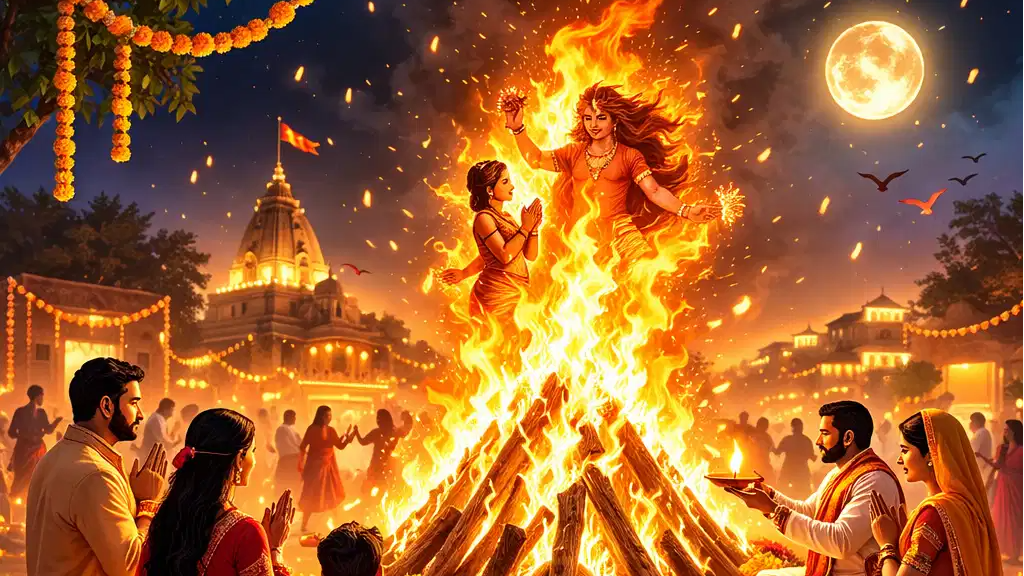
The celebration of Holika Dahan, also known as Choti Holi, will begin on March 3, 2026, and will mark the commencement of the Holi celebrations in India. The ritual, which takes place on the full moon or 'Purnima' in the Hindu month of Phalguna, is a celebration of the victory of good over evil and has its own significance in Hindu religious history.
The 'auspicious time for the celebration of Holika Dahan, i.e., the muhurat, will be between 6:22 PM and 8:50 PM on March 3, 2026. The celebration is a symbol of the burning of evil, and negativity and people gather around the fire during this time.
The celebration has its own significance and is related to the story of Prahlad and Hiranyakashipu, in which Prahlad, a devotee of Lord Vishnu, was saved by divine grace, while the demoness Holika was burnt alive.
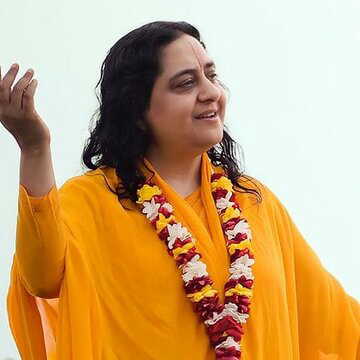
Also Read | Who is Raseshwari Devi Ji? The Bhakti Yoga teacher connecting ancient wisdom with Gen Z
Holika Dahan 2026: Date and shubh muhurat
As per the Hindu calendar, the full moon phase begins in the evening of March 2 and continues until the evening of March 3.
Key timings for Holika Dahan 2026:
Purnima Tithi begins: March 2, 2026 – 05:55 PM
Purnima Tithi ends: March 3, 2026 – 05:07 PM
Bhadra Punchha: March 3 – 01:25 AM to 02:35 AM
Bhadra Mukha: March 3 – 02:35 AM to 04:30 AM
Holika Dahan Muhurat: March 3 – 06:22 PM to 08:50 PM
Devotees usually perform the ritual after sunset while ensuring that the ceremony does not take place during Bhadra Kaal, which is considered inauspicious in Vedic astrology.
Significance of Holika Dahan
The significance of Holika Dahan is both religious and symbolic for the Hindu community.
Victory of good over evil
As per the Hindu religious books, the king of demons, Hiranyakashipu, had decided to kill his son, Prahlad, for worshipping Lord Vishnu. To achieve this, his sister, Holika, had decided to burn Prahlad in a fire with her own body, wearing a cloak that would protect her from the fire. However, the plan did not go as intended, and while Holika was burnt, Prahlad remained unscathed, protected by the grace of God.
Burning of negativity
The burning fire also symbolises the burning of ego, negative thoughts, and other negative qualities like jealousy and anger. The burning fire is believed to cleanse the mind and bring positive energy for the upcoming year.
Why Bhadra Kaal matters for the ritual
In Vedic astrology, the period known as Bhadra Kaal is considered unsuitable for performing sacred rituals. Religious traditions advise avoiding Holika Dahan during this time, as it is believed to bring obstacles or negative outcomes.
Therefore, devotees wait until the Bhadra period ends before lighting the ceremonial bonfire.
Also Read | Why is Kashi’s Holi called Masane ki Holi?
Rituals and worship associated with Holika Dahan
On this day, special prayers are also held for Kshetrapaal, a deity that is believed to protect homes and communities. Kshetrapaal is a form of Bhairav, a deity in Hindu mythology.
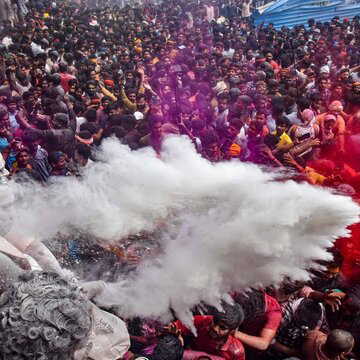
The traditional rituals include lighting a four-faced mustard oil lamp in front of the bonfire and making homemade sweets like malpua, poode, or semolina halwa. Communities and families gather around the bonfire, pray and celebrate the festival before the vibrant colors of Holi are played the next day.