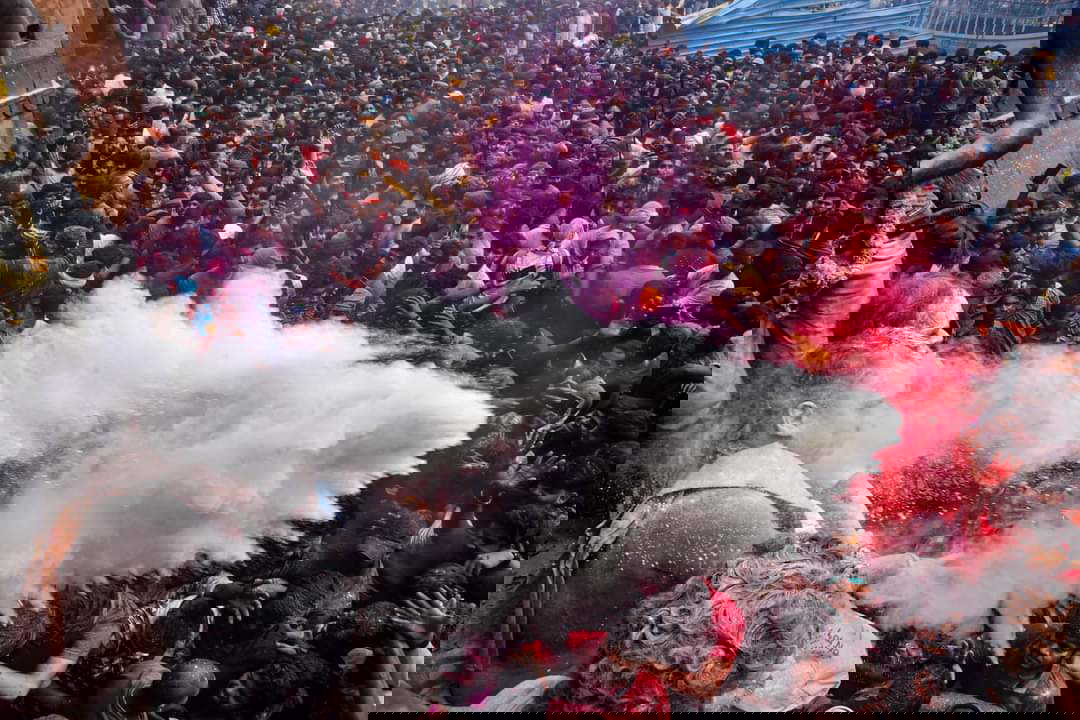
While most of India welcomes Holi with bright colours and water, the ancient city of Varanasi, also known as Kashi. The city observes a distinctive and profound form of the festival on Rangbhari Ekadashi and the days that follow. Locally called Masane ki Holi or “ash Holi". This ritual blends spirituality with reflection on life, death and detachment.
Rooted in Shiva’s cremation ground
In Kashi, which Hindus regard as the eternal abode of Shiva, the celebration takes place at sacred cremation sites such as Manikarnika and Harishchandra ghats along the Ganges. There, instead of vibrant powdered colours, devotees apply ashes from funeral pyres to one another.
The ritual is rooted in local beliefs about Shiva’s nature. In Hindu mythology, Shiva is often depicted as the ascetic who dwells in cremation grounds, embracing impermanence and detachment from the physical world. Devotees believe that on the day of Masane ki Holi, Shiva himself celebrates with his attendants, spirits, ghosts and ganas, using the ash (bhasma) that symbolises life’s final transformation.
Spiritual message of impermanence
The use of bhasma, funeral ash, gives a profound philosophical tone to the celebration. Unlike the playful revelry of colour of Holi elsewhere, Ash Holi reflects a conscious recognition of mortality and rebirth. In Varanasi, where death is viewed not as an end but as a passage toward liberation (moksha), this ritual embodies acceptance of life’s transient nature.
For many participants, smearing ash is not merely symbolic but a devotional act that aligns them with Shiva’s own transcendence of ego and attachment. The chanting of sacred mantras and the rhythmic beat of drums add to the ritual’s spiritual intensity.
Also Read | Six-planet ‘parade’ on February 28: Here’s what Indian skywatchers can expect
Controversy and restrictions
Despite its deep symbolism, Masane ki Holi has drawn criticism in recent years. Scholars from the Kashi Vidvat Parishad, a body of Sanskrit experts, have argued that playing Holi at a cremation ground is not sanctioned by traditional scriptures and that such festivities can disrupt the solemn environment of funeral rites.
Also Read | Six-planet alignment on February 28: Which Indian cities can see the rare planetary parade best?
Local custodians of the cremation ghats have also expressed concerns about crowding and disorder at Manikarnika, leading authorities to impose restrictions on public access and confine celebrations closer to temple premises.
Masane ki Holi in Kashi remains one of the most evocative and spiritually charged Holi traditions in India. By choosing ash over colour, devotees embrace a ritual that reflects the city’s unique ethos. It is a place where life, death and devotion converge and where Holi becomes not just a festival of joy, but also a meditation on existence itself.