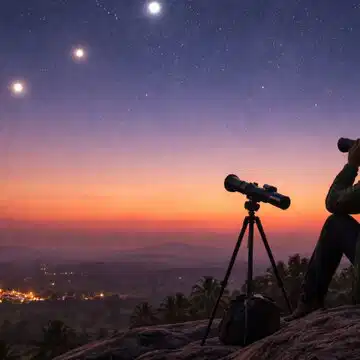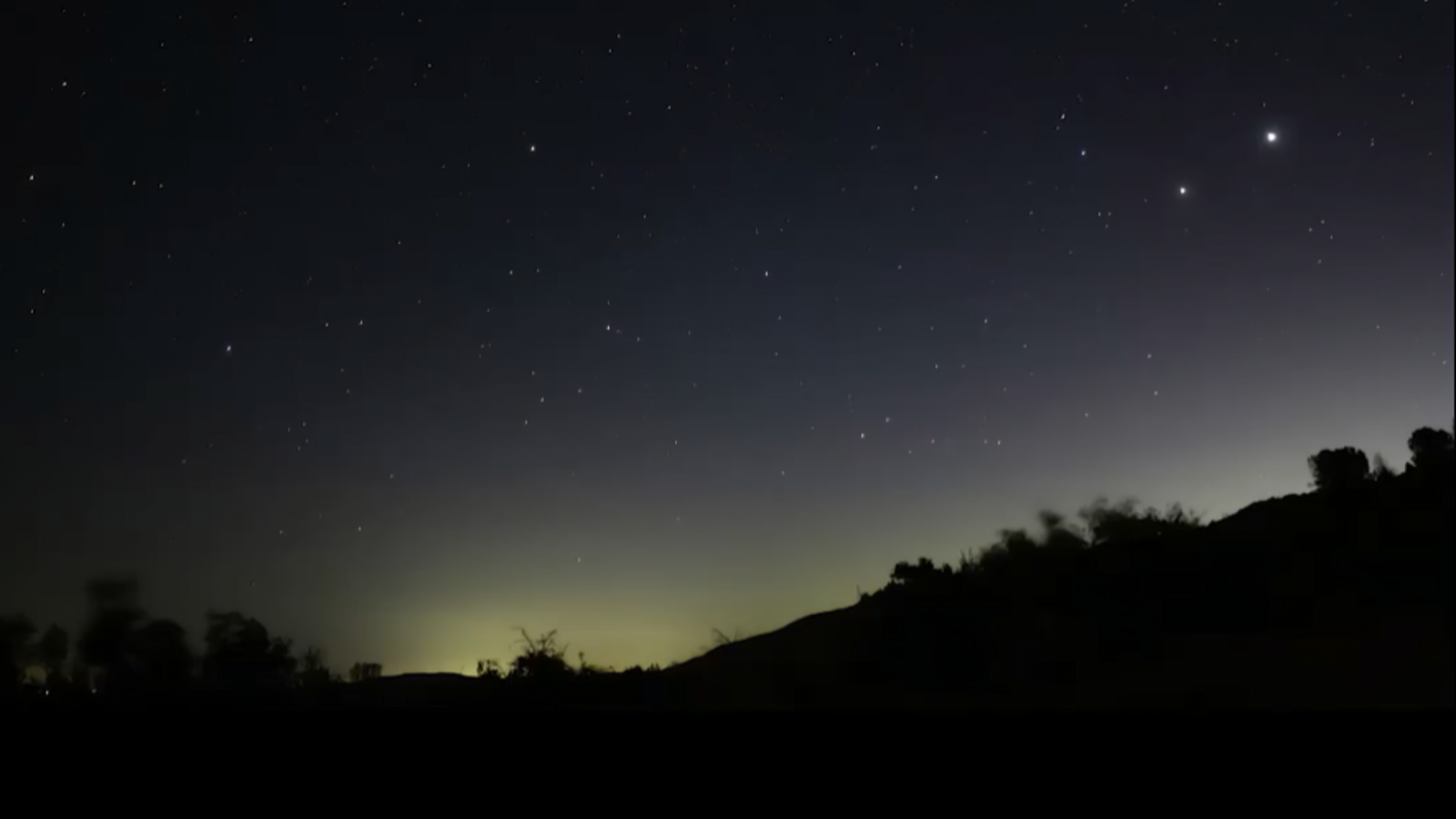
A rare alignment of the planets is set to illuminate the evening sky on February 28. The alignment would allow sky gazers in India a chance to spot six planets in a single arc in the sky. Mercury, Venus, Jupiter, Saturn, Uranus, and Neptune would appear in the sky shortly after sunset on February 28. These planets would appear in the western sky in a rare alignment.
The alignment would appear in the sky 30-45 minutes after the sun sets. The timing would vary from 6:15 pm to 8:00 pm IST.
Where it will be visible?
The alignment would appear in the sky from most parts of the country. As long as the sky is clear and buildings or trees do not obstruct the western horizon, the alignment would appear in the sky. Metro cities such as Delhi, Mumbai, Kolkata, Bengaluru, and Chennai would offer a clear view of the alignment from rooftops and terraces. Even in the presence of urban lights, the alignment would still appear in the sky.
Also Read | National Science Day 2026: History, theme and why it matters today
A clearer view would appear in the skies in places such as Ladakh, rural Rajasthan, parts of Madhya Pradesh, and Tamil Nadu. To get a clearer view of the alignment, one could head to the Jawadhu Hills in Chennai.
How many planets can you spot in the "planetary parade" now visible in the evening sky?https://t.co/EoTnf8jXtf pic.twitter.com/RQPXus6Eh1
— NASA Solar System (@NASASolarSystem) February 26, 2026
How to spot the planets?
As the sun disappears below the horizon, look westward. Venus will be the brightest object in view, easiest to spot. A bit lower down, Mercury will be visible, although fainter. A bit higher than those two, Saturn will be visible. And if you look still higher, Jupiter will be visible, shining boldly, and sometimes even touching familiar constellations like Orion or Gemini.
Also Read | Ramadan 2026: Sehri and Iftar Timings for February 28 across major Indian cities
All four of these planets will be visible without any aid. If you want to see Uranus and Neptune too, you will need binoculars or a small telescope. One more safety note before we proceed: do not look directly at the Sun until it is completely gone.
A unique addition from NASA
To mark the occasion, NASA’s Chandra X-ray Observatory has come out with sound versions of Jupiter, Saturn, and Uranus. It is a way of translating astronomical data into sound.