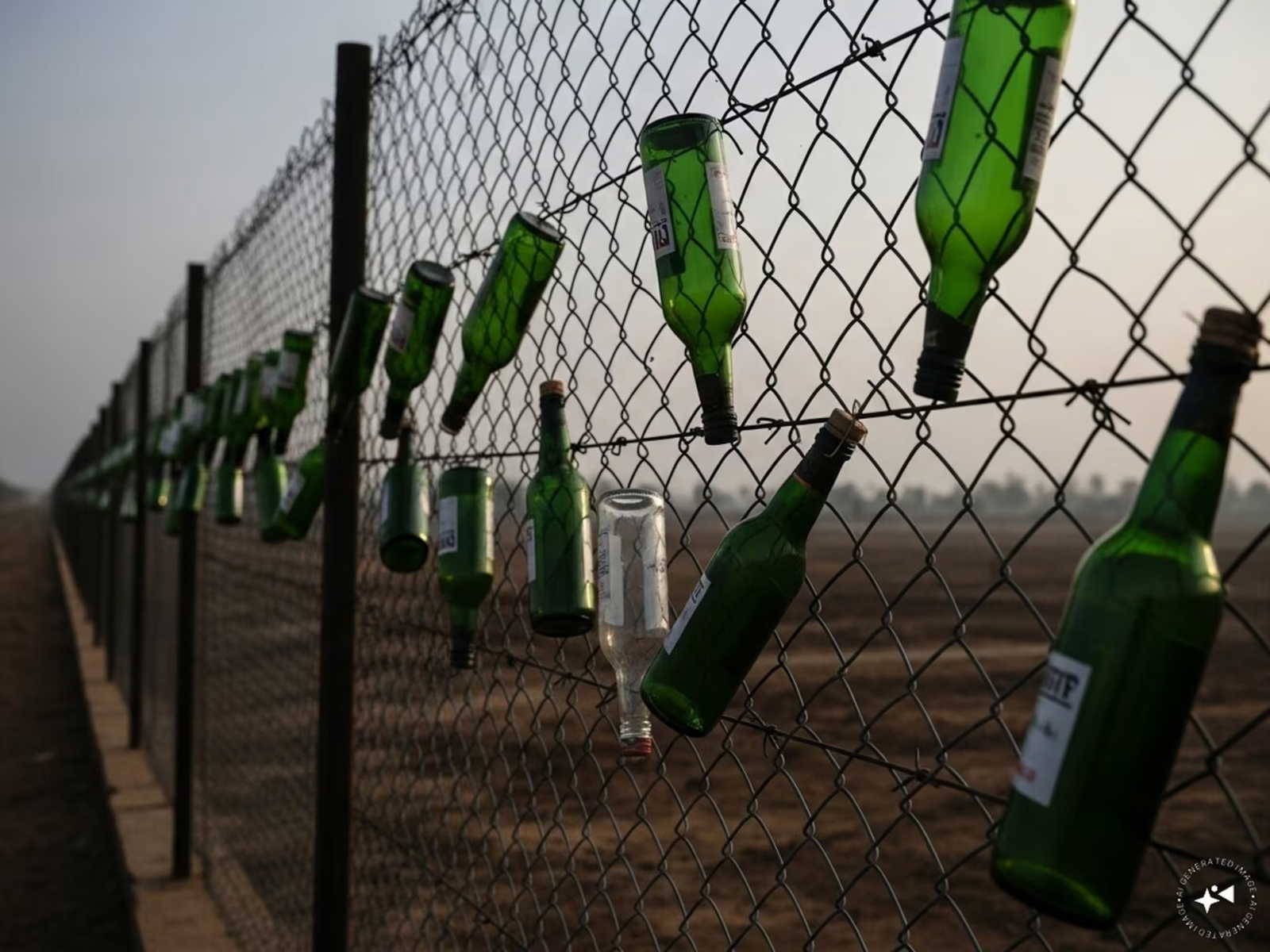
The India-Pakistan border shows empty glass bottles dangling from barbed wire. Why? There is a conscious reason behind the setup. The innovation might not just have a decorative or symbolic angle; the bottles are part of a simple but effective method used by Border Security Force (BSF) personnel.
These hanging bottles enhance surveillance and alertness along stretches of the frontier where high-tech systems are tough to maintain.
A low-tech yet effective alarm system
There are several parts of the India-Pakistan frontier that stretch across rugged terrain, forests and remote regions. The availability of electricity for cameras or sensors may not be feasible at all times. In these areas, the BSF and other border troops use a tried-and-tested “desi alarm” system.
The setup involves tying empty glass bottles at intervals along the barbed wire fencing. When someone, whether an intruder, touches or disturbs the fence, the bottles clink together, producing a loud metallic noise that carries into the night. These sounds act as an alert mechanism for soldiers stationed nearby.
This technique has long been used in areas where installing and maintaining modern equipment can be challenging due to a lack of infrastructure or harsh weather conditions.
Why does it work?
The dangling of bottles due to any external disturbance provides an audible cue. A clear clatter stands out in otherwise quiet border zones, especially at night. The guards can immediately react to the sound and investigate. The mechanism is very easy to set up. The electric fences or electronic sensors may malfunction or need regular maintenance, and glass bottles only need to be tied securely to the fencing.