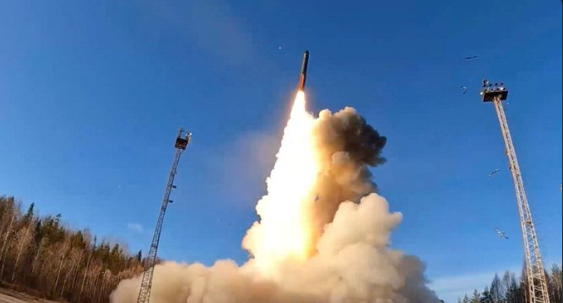
Russia has once again drawn global attention to its nuclear arsenal after President Vladimir Putin announced the successful test of the RS-28 Sarmat missile. Known in the West as “Satan II”, the missile is being projected by Moscow as one of the most powerful nuclear weapons systems ever developed, per a report by News18.
The Sarmat is intended to replace the ageing Soviet-era R-36M Voyevoda missile system, which NATO had earlier nicknamed “Satan”. Russian officials say the new missile will enter deployment later this year as part of the country’s ongoing military modernisation drive.
Also Read | 'Is this edited or work done…?' Social media divided as Anushka Sharma reappears on screen after years
What is the RS-28 Sarmat missile?
The RS-28 Sarmat is a super-heavy intercontinental ballistic missile (ICBM) developed by Russia’s Makeyev Rocket Design Bureau. It is a liquid-fuel missile designed for long-range nuclear strikes and can reportedly carry multiple nuclear warheads.
According to Russian claims, the missile can travel over 18,000 kilometres and may also use unconventional flight paths, including routes over the South Pole, to avoid missile defence systems, as per News18.
Why is it called Satan II?
The name “Satan II” is not Russia’s official designation. It comes from NATO’s earlier nickname for the Soviet-era R-36 missile system, known as “Satan”. Since the Sarmat is replacing that missile family, Western media and defence analysts began referring to it as “Satan II”.
Russia has successfully tested its nuclear capable Sarmat intercontinental ballistic missile, described by President Vladimir Putin as the worlds most powerful missileÂ. The missile, known in the West as Satan II, is expected to enter combat service by 2026.
” The Pioneer (@TheDailyPioneer) May 13, 2026
Moscow says the pic.twitter.com/3EESIh1aWl
What makes the missile significant?
Russian President Vladimir Putin described Sarmat as “the most powerful missile system in the world”. He claimed the missile’s warhead yield is “more than four times greater” than Western equivalents and said it could bypass existing and future missile defence systems, according to News18.
Reports suggest the missile can carry multiple independently targetable warheads, also known as MIRVs, allowing it to strike several targets at once. It is also believed to support hypersonic glide vehicles such as Avangard.
Also Read | ‘Not allowed’: Viral Vande Bharat ticket video triggers suspension of railway TTE
A key part of Russia’s nuclear modernisation
The Sarmat programme is part of Russia’s broader effort to modernise its nuclear triad, which includes land-based missiles, submarines and strategic bombers. Putin first unveiled the missile publicly in 2018 while presenting a new generation of Russian strategic weapons.
Although the missile has faced delays and failed tests in previous years, Russian officials now say successful deployment will strengthen the country’s strategic deterrence capability.