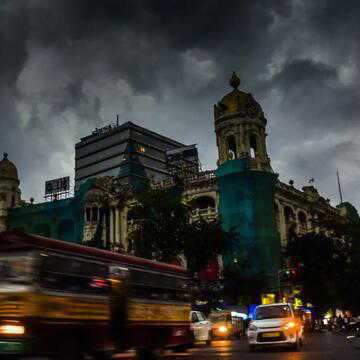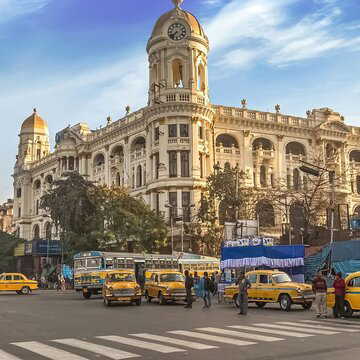
A narrow lane lined with modest houses. Damp walls marked with cow-dung cakes. A gas lamp stood at one end and a bamboo cart at the other. It looked like an ordinary Kolkata neighbourhood of the 1940s.
But American photojournalist Margaret Bourke-White's camera captured something far more disturbing. The lane was covered with bodies.
Men lay motionless across the street. Some were mutilated, some crushed, others disfigured beyond recognition. Torn clothes, broken spectacles and scattered slippers lay among the dead. Vultures circled overhead and fed on the corpses. Blood had dried on the ground.
The photograph, often referred to as "Vultures of Calcutta", became one of the most haunting visual records of the communal violence that erupted during the Great Calcutta Killings of August 16, 1946.
Why the Great Calcutta killings still matter
The violence of 1946 was not just another chapter in Bengal's history. For many political observers, it marked a turning point that influenced the debate around Bengal's future.
Several right-wing leaders and historians have argued that the events of August 1946 strengthened demands for the partition of Bengal. According to this view, the foundations of what later became West Bengal can be traced back to the tensions and political developments that followed the riots.
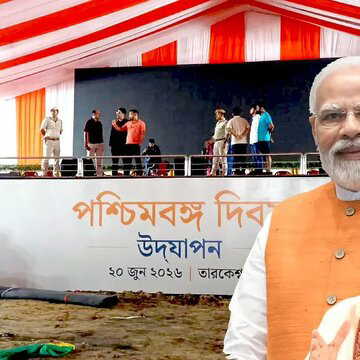
The debate has gained renewed attention after the decision to observe June 20 as "West Bengal Day".
Why is June 20 being observed as West Bengal Day?
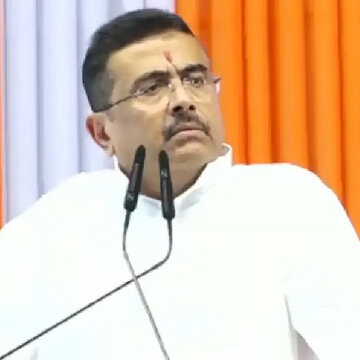
Leader of Opposition Suvendu Adhikari recently announced that June 20 would be observed as West Bengal Day. While the date has been marked at Lok Bhavan since 2023 and earlier by the BJP's refugee cell, this is the first time it is being observed officially in this manner.
The BJP maintains that June 20 holds historical significance because of the events that unfolded during the final months before Independence. This stands in contrast to the previous Trinamool Congress government's preference for observing Bangla Divas on Poila Boishakh.
Also Read | West Bengal Day 2026: Thai anthuriums, Ooty lilies adorn Tarakeswar as preparations enter final phase
The political crisis before partition
The anti-partition movement of 1905 had united Bengalis across communities against British attempts to divide Bengal. However, four decades later, circumstances were very different.
Following the Great Calcutta Killings, concerns grew among sections of Bengal's Hindu population regarding their future in a Muslim-majority Pakistan.
At the time, Bengal's Prime Minister was Huseyn Shaheed Suhrawardy. A secret report prepared by the British Eastern Command after the riots reportedly described him as the "King of Goondas".
The report stated: "There is not a person in Calcutta who has a good word to say about Suhrawardy... he foresaw what was likely to happen and very probably allowed it to happen." The document is preserved in the National Archives.
The proposal for an undivided Bengal
Amid growing uncertainty, Suhrawardy proposed the idea of an independent and undivided Bengal. Addressing a press conference in New Delhi on April 27, 1947, he said: "I have always held the view that Bengal cannot be divided. I am in favour of a united and greater Bengal."
The proposal received support from Sarat Chandra Bose, elder brother of Netaji Subhas Chandra Bose. By then, Sarat Bose had left the Congress and formed the Socialist Party. Other leaders, including Kiran Shankar Roy and Abul Hashim, also backed the plan.
As political negotiations intensified, Bengal appeared to face two possible futures. It could join Pakistan as an undivided province, or it could become an independent state separate from both India and Pakistan.
How Tarakeswar became part of the story
Tarakeswar entered the political spotlight on April 5, 1947, when the Bengal Provincial Hindu Mahasabha held its conference there. At the gathering, Syama Prasad Mookerjee strongly advocated the creation of a separate Hindu-majority homeland within India.
On the second day of the conference, he raised the slogan: "We want our motherland and we shall achieve it."
He also declared, "Either now or never." Support for the demand came from several prominent figures, including historian Jadunath Sarkar, scientist Meghnad Saha and linguist Suniti Kumar Chatterji.
The BJP has chosen Tarakeswar as the venue for its West Bengal Day programme this year. Prime Minister Narendra Modi is expected to attend the event.
Suvendu Adhikari's explanation of June 20
While announcing the observance, Suvendu Adhikari highlighted the significance of the date. He said, "On June 20, 1947, we got a homeland for Bengali Hindus. We did not have to go to East Pakistan, which is present-day Bangladesh. We are able to live in India."
BJP state president Samik Bhattacharya also described the occasion as an important moment in Bengal's history. According to him, "June 20 is not merely a date. It is a historic reminder of Bengal's struggle to preserve its existence, self-respect and distinct identity."
The vote that led to the creation of West Bengal
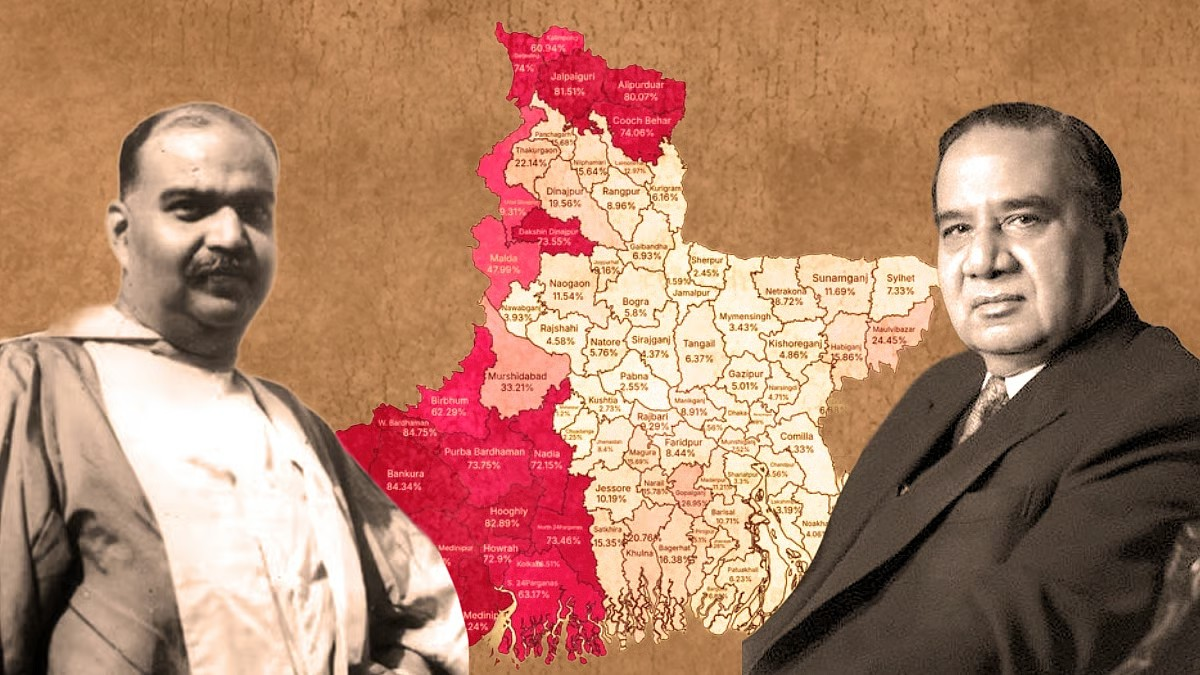
On June 3, 1947, the British government announced its partition plan.The future of Bengal was left to the Bengal Legislative Assembly, which was asked to vote on the issue. Three separate votes were held.
Also Read | Red alert in Bengal as monsoon unleashes heavy rain across India
In the first vote, all members participated. Congress proposed that Bengal remain united and become part of India. The proposal was defeated by 126 votes to 90.
Muslim-majority members then voted separately and supported the proposal for an undivided Bengal joining Pakistan by 106 votes to 35. Finally, Hindu-majority members voted 58 to 21 in favour of partitioning Bengal.
Under the agreed framework, support for partition from either side would be sufficient. The decision paved the way for the creation of West Bengal.
Why the date remains politically sensitive
The observance of June 20 continues to divide political opinion. The Trinamool Congress and Left parties argue that Bengal's partition cannot be viewed as a celebratory event because it was accompanied by communal violence, displacement and human suffering.
Former Chief Minister Mamata Banerjee had earlier written, "Since Independence in 1947, we have never observed a specific State Day in West Bengal. History tells us that communal forces gained strength in many places because of Partition. This may be an event of a political party driven by vengeance, but it can never be an event of a government."
Veteran CPM leader Biman Bose also opposed the observance, saying: "The pain of Partition is still alive in the minds of millions. In that context, we do not believe in celebrating such a foundation day."
A debate rooted in history
Supporters of June 20 argue that the date represents the preservation of a homeland within India. Critics view it through the lens of Partition and the suffering that followed.
More than seven decades later, the debate remains unresolved. For some, the birth of West Bengal symbolises security and belonging. For others, it is inseparable from memories of displacement, violence and loss.
The discussion around West Bengal Day continues to reflect these competing interpretations of history, ensuring that the events of 1947 remain part of Bengal's public conversation even today.