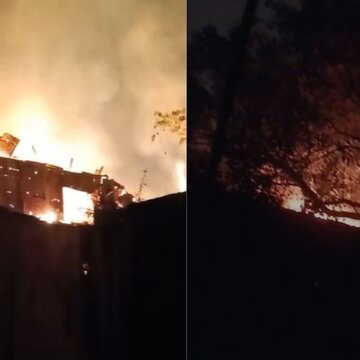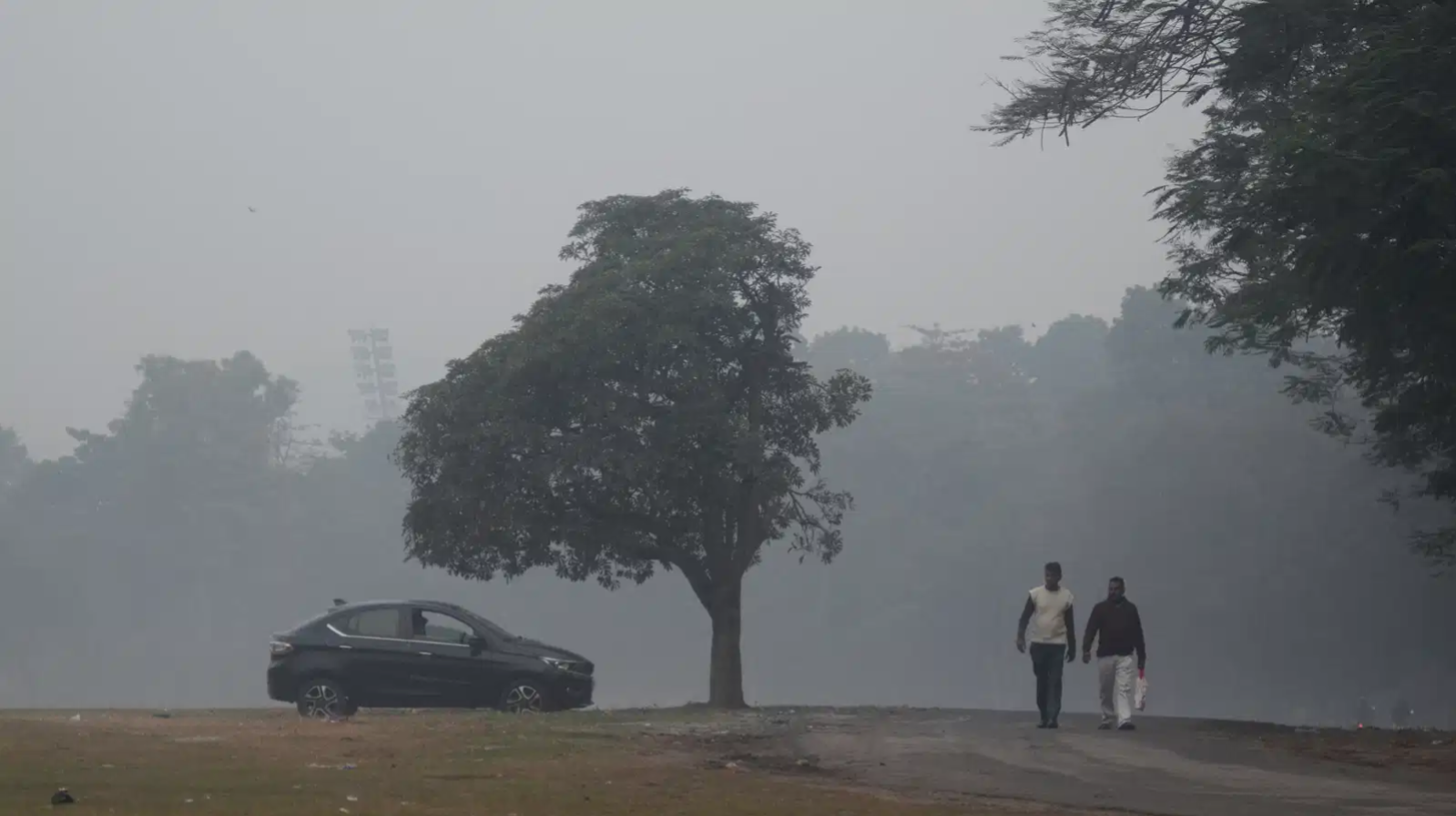
Kolkata’s atmosphere is gasping for breath under this three-pronged assault. Through the day, residents breathe in exhaust fumes, swirling construction dust, and air robbed of natural greenery.
Air pollution levels in Kolkata, Howrah, Bidhannagar, Dum Dum, South Dum Dum, North Dum Dum, and Baranagar are rising rapidly.
The Urban Development Department has issued a new set of instructions to Kolkata and the adjoining municipalities. The directive calls for planting tree species that can absorb more carbon dioxide than ordinary trees and develop deep roots that reach far into the soil.
ASLO READ| Devastating fire breaks out at North Kolkata factory, multiple fire engines rushed to the scene
Kolkata's air quality could improve in years with right trees: Expert
Environmental experts told Ei Samay that if this plan is carried out properly, Kolkata’s deteriorating air could see a “significant improvement” in just a few years.
Interestingly, trees with deep root systems, such as peepal, banyan , neem, sirish, and mahua, anchor themselves deep into the ground and live long lives. These species are capable of taking in higher levels of carbon dioxide compared to other trees, thereby reducing the city’s carbon footprint.
Officials have also clearly stated that no concrete should be laid around the base of these trees and that proper care is essential.
Environmental specialists argue that two major factors are fueling the rising pollution: the shrinking of green cover and the surge in vehicle numbers.
Kolkata's new tree-planting blueprint revealed
Notably, Kolkata lost around 15,000 trees taller than six feet during Cyclone Amphan in 2020. Although new saplings have since been planted, civic officials admit this is nowhere near enough to offset the loss.
By the Numbers: Trees over 6 ft tall in Kolkata are 4,27,000; total species are 138; trees lost to storms in the last 5 years are 21,000.
The department also noted that neighbourhoods with fewer trees are Sealdah, Hatibagan, Cossipore, Park Circus, Haridevpur, and Kasba.
Explaining the strategy, an official from the department told Ei Samay, “Trees whose roots will go deep into the soil and will not easily topple during storms and heavy rain are the ones we have recommended for planting.”
ALSO READ| BLO app introduces duplicate voter search option to identify fake cards
Swati Nandi Chakraborty, Kolkata Municipality’s environmental advisor, added, “The leaf structure of peepal, banyan, neem, sirish, and mahua trees is such that they can absorb dust particles, sulfur dioxide, and nitrogen oxides. As a result, they play an important role in controlling air pollution.”
Botanist Akramul Haque also cautioned, “Before planting trees, it is essential to check the soil quality of the area and identify where water or electricity lines run,” he said. “If there are electric or water lines underground, the roots face difficulty in growing deep.”